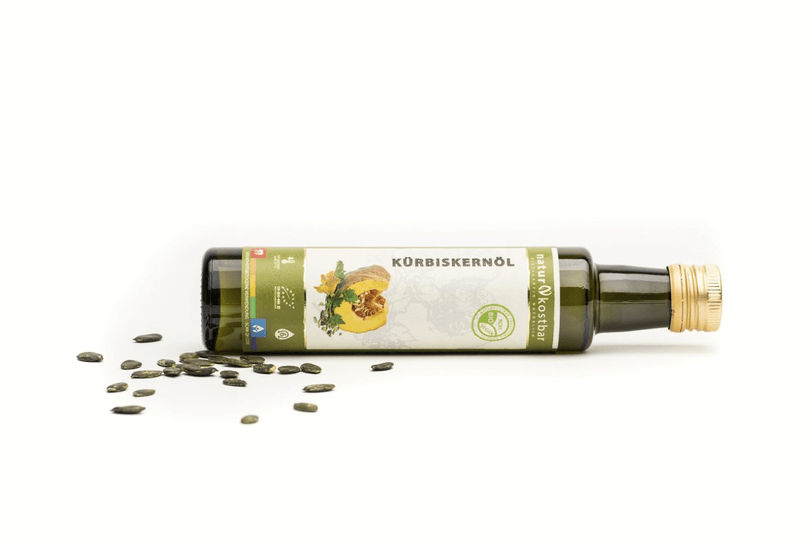
Pumpkin seed oil organic

| Quantity | Unit price |
|---|---|
| To 2 |
CHF 15.10
|
| From 3 |
CHF 14.35
|
Available, delivery time: 1-4 days
Product information "Pumpkin seed oil organic"
Cold-pressed organic pumpkin seed oil from Naturkostbar
The organically grown apricot kernels come from Turkey. The apricot kernels are gently cold-pressed in the Naturkostbar factory in Uetendorf. The water-cooled oil press ensures that the temperature remains below 37°C. This preserves the valuable ingredients in the oil and makes it a special treat.
This apricot kernel oil is 100% pure and contains no other oils.
What is the best way to use apricot kernel oil?
The high-quality apricot kernel oil refines salad dressings and dips with its sweet flavour and typical persipan note. We recommend storing it in the fridge after first opening.
Apricot kernel oil is also ideal for skin care, whether as a fragrant massage oil or as a soothing aftersun oil. It is slowly absorbed into the skin and strengthens the skin's elasticity.
Why not heat apricot kernel oil?
Cold-pressed oils (except coconut oil) are sensitive to heat and are therefore mainly suitable for cold cooking. Toxic compounds can form when heated to high temperatures, e.g. frying.
Does apricot kernel oil contain hydrocyanic acid?
Apricot kernel oil contains hardly any hydrocyanic acid. The acid from the kernels volatilises during pressing. Apricot kernel oil is safe to consume and enriches your diet.
Additional information
Ingredients: 100% organic apricot kernel oil
Organic certificate: CH-BIO-086
Allergens: Apricot kernels
Nutritional values of apricot kernel oil per 100g
Apricot kernel oil is a high-quality source of energy with a high proportion of unsaturated fatty acids. The oil contains plenty of vitamin B1, which protects our cells from oxidative stress.
It also contains the green colouring agent chlorophyll.
| Nutritional values Ø | per 100g/100ml | %1 |
|---|---|---|
| 1 Reference quantity for an average adult (8400kJ/2000kcal) | ||
| Energy | 3400kJ (830kcal) | 40% |
| fat | 92g | 131% |
| of which saturated fatty acids | 17g | 85% |
| of which monounsaturated fatty acids | 28g | 187% |
| of which polyunsaturated fatty acids | 47g | - |
| Carbohydrates | - | - |
| thereof sugar | - | - |
| dietary fibre | - | - |
| protein | - | - |
| salt | - | - |
| B-carotene (provitamin A) | - | - |
| Vitamin A | - | - |
| Vitamin B1 | - | - |
| vitamin B2 | - | - |
| Vitamin B3 | - | - |
| Vitamin B6 | - | - |
| Vitamin B12 | - | - |
| Vitamin C | - | - |
| Vitamin D | - | - |
| Vitamin E | 4mg | 33% |
| Vitamin K | - | - |
| biotin | - | - |
| calcium | - | - |
| chloride | - | - |
| chromium | - | - |
| iron | - | - |
| fluoride | - | - |
| Folic acid/folacin | - | - |
| iodine | - | - |
| potassium | - | - |
| copper | - | - |
| magnesium | - | - |
| manganese | - | - |
| molybdenum | - | - |
| pantothenic acid | - | - |
| phosphorus | - | - |
| selenium | - | - |
| zinc | - | - |
Login
Accessory Items
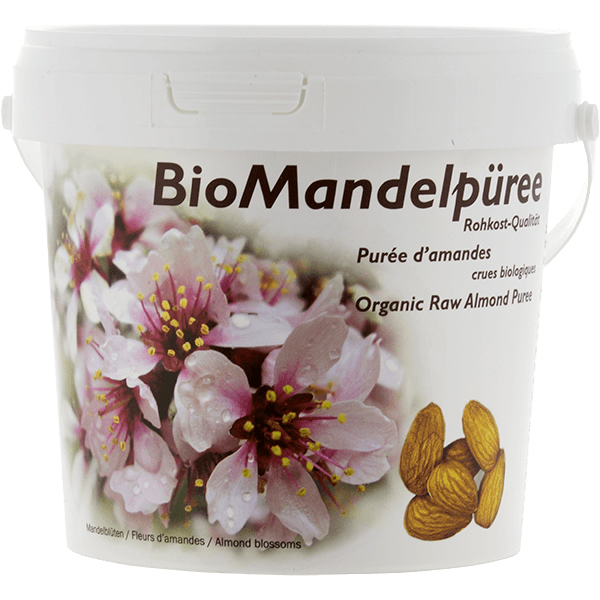
Organic Almond Butter (Almond Paste) from Soyana, raw food quality Urs Hochstrasser, a Swiss raw food pioneer, helped develop this white organic almond purée and has been using it in his gourmet raw food cuisine for over 20 years. Almond purée is sometimes also referred to as almond butter. Characteristics of Soyana Organic Almond Puree White almond butters are usually made from blanched almonds. The brown skin of the almond can be removed more easily using hot steam or by briefly boiling them in simmering water. In contrast, Soyana almond purée is one of the few products of raw food quality and is never heated above 40°C during production. To ensure the almonds can still be peeled easily, they are soaked in water. Only carefully selected Sicilian organic almonds are used in its production. You can find out why this raw almond purée is a blessing for us all in the YouTube video from ‘Welt der Gesundheit’ featuring Urs Hochstrasser, dated 21 July 2022. Why eat almond butter? Almond purée is highly nutritious, has a delicious almond flavour and a slightly sweet note. Thanks to its creamy consistency, it’s not only ideal for smoothies but can also be enjoyed on its own as a snack. Almond butter contains lecithin (even more than eggs) and helps to emulsify (mix) fats and water. This is very important for achieving the light, airy texture of smoothies and sauces (including vegan mayonnaise). Recommendations for use Almond purée is suitable in vegan cooking as a substitute for dairy products in milkshakes, smoothies and soups eggs in sauces, creams and desserts of all kinds (e.g. with carob powder). as well as for spreads. Tip 1: Mix 3 tablespoonsof almond puréewith 5dl of water to make a nutritious almond milk in no time at all. If you like it sweet, apple syrup, agave syrup and yacon syrup, as well as carob powder, are all suitable for sweetening. Tip 2: Vegan Sauce Royale by Urs Hochstrasser. Place 2–3 tablespoons of almond purée, the juice of one lemon and one orange, and 1 dl of water into an open blender. Then, whilst the blender is running, slowly pour in 2.5dl of apricot kernel oil and, from time to time, 1dl of water. You can experiment with the amounts of oil and water. The more oil you use, the thicker the consistency will be. Finally, season to taste. The sauce royale can be stored in the fridge for 1 week. Good best-before date We regularly order new batches from Soyana, which is why the best-before date for the almond purée is usually between 9 and 12 months. It’s therefore worth ordering at least 3 jars, as this entitles you to a 5% volume discount and free delivery (on orders of CHF 100 or more). Nutritional values for organic almond purée per 100g Energy 2582 kJ / 625 kcalTotal fat 55.6g, of which - of which saturated fatty acids 4.2g - of which monounsaturated fatty acids 39g - of which polyunsaturated fatty acids 10.8g - of which cholesterol 0 gCarbohydrates 5.2g, - of which sugars 4.9gDietary fibre 10.4gProtein 20.8gWater 4.5g Calcium 249mg (31% *of the recommended daily intake)Iron 3.96 mg (28% *)Sodium 16.8 mgPhosphorus 498 mg (71% *)Magnesium 198 mg (53% *)Potassium 813 mg (40% *) VitaminsA 18.1 µgE 24.7 mg (205% *)B1 0.21 mg (19% *)B2 0.53 mg (37% *)Niacin (PP or B3) 3.1 mg (19% *) Nutritional information is taken from the Soyana website. Organic certificates Link to Easy-Cert organic farm information
Content: 1000 Gramm (CHF 3.79 / 100 Gramm)
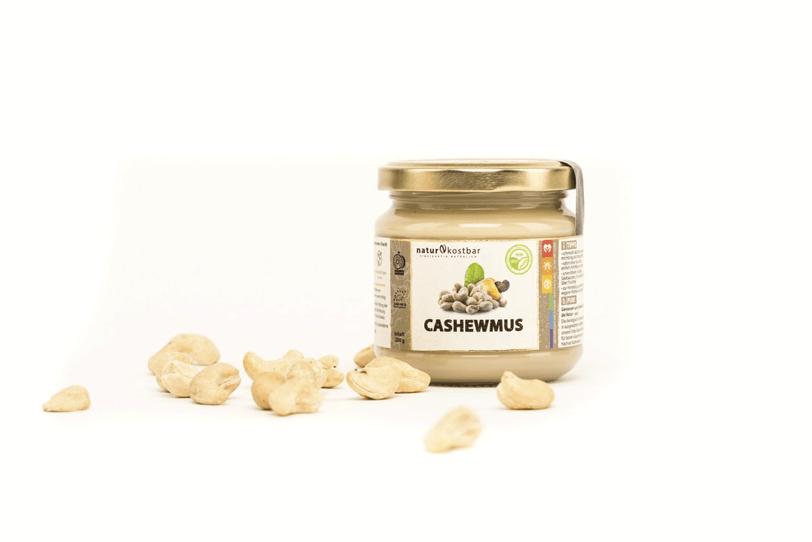
We only stock Naturkostbar cashew butter in a small 200g jar as standard. The large 550g jar for CHF 39.90 can be pre-ordered at any time -> info@samaranatura.ch or 044 586 27 27. Organic cashew butter from Naturkostbar in raw food quality Naturkostbar produces its own cashew butter using a traditional, slow stone grinding process. The cashews are stone-ground for up to 48 hours to produce this unique nut butter with an unprecedented velvety-silky consistency. Why we love cashew butter Cashews provide many polyunsaturated fatty acids, minerals such as iron, zinc and potassium as well as large amounts of vitamin B. Hardly any other food contains such a high proportion of the essential amino acid tryptophan as cashew nuts. Use Tip: Enjoy a fresh cashew milk: 1-2 tablespoons of cashew butter to 3 litres of water briefly in the blender. Can be sweetened with agave nectar, dates or honey. Tastes delicious as a spread with honey, serves as a base for many recipes, refines your muesli, yoghurt, salad dressing, fruit salad, ice cream, fruit shake. Quality: Raw food, stone-ground for 48 hours at max. 33° degrees Ingredients: 100% cashew nuts, from certified organic farming Origin of raw materials: Vietnam Certification: CH-BIO-086 Nutritional information organic cashew butter per 100g Energy / nutrient per 100gg/mg/μg%11 reference quantity/daily dose for an average adult (8400kJ/2000kcal) Energy 2460kJ (593kcal) 29% fat 45.2g 65% of which monounsaturated fatty acids 23.8g 159% of which polyunsaturated fatty acids 7.8g - of which saturated fatty acids 7.8g 39% Carbohydrates 26.6g 10% thereof sugar 5.9g 7% Protein 18.2g 36% salt - - Dietary fibre 3.6g 7% Vitamin A - - Vitamin C 0.5mg 1% Vitamin D - - Vitamin E 6.3mg 53% Vitamin K - - B-carotene (provitamin A) - - Vitamin B1 0.42mg 38% Vitamin B2 0.1mg 7% Vitamin B3 1.1mg 7% Vitamin B6 0.4mg 29% Vitamin B12 - - magnesium 270mg 72% copper - - manganese - - selenium - - iodine 10µg 7% Folic acid/folacin 25µg 13% Chloride 18mg 2% potassium 660mg 33% biotin - - Pantothenic acid 0.9mg 15% calcium 40mg 5% phosphorus 540mg 77% iron 5.2mg 37% Zinc 4mg 40% Molybdenum - - fluoride - - chromium - -
Content: 200 Gramm (CHF 7.75 / 100 Gramm)
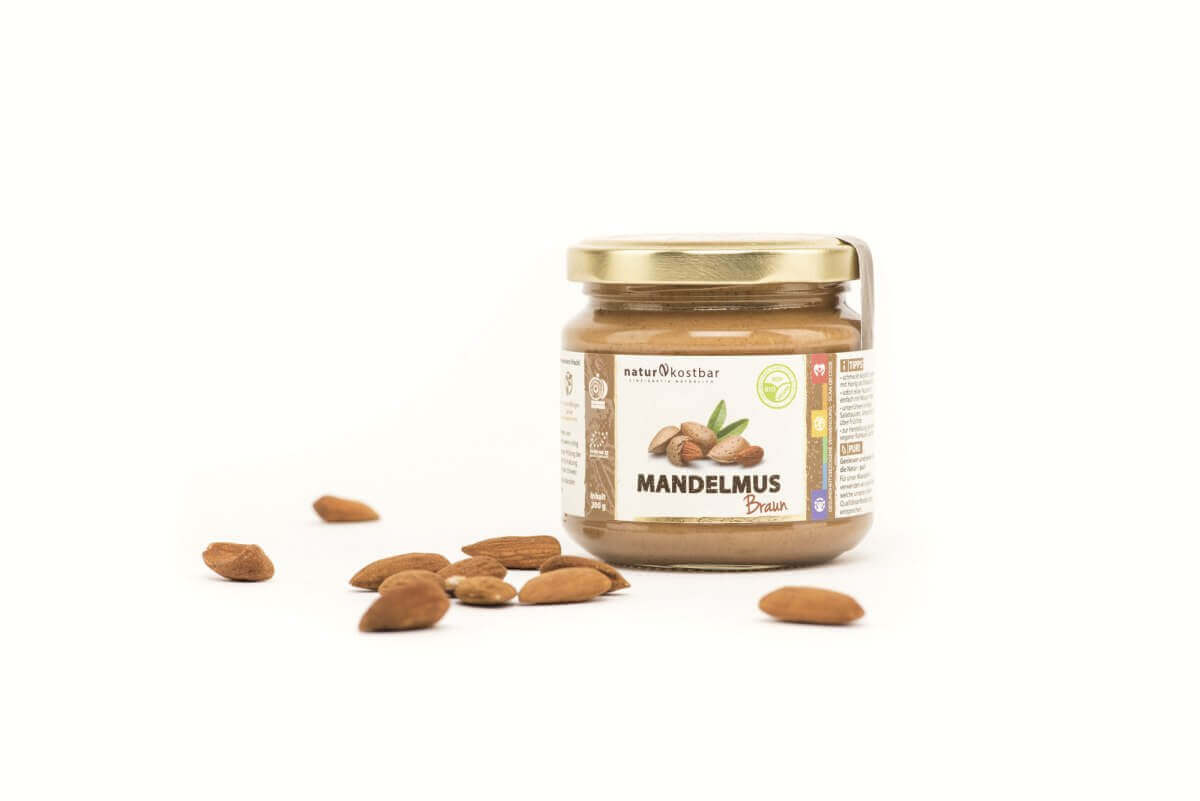
We only stock Naturkostbar's brown almond butter in a small 200g jar as standard. The large 550g jar for CHF 27.50 can be pre-ordered at any time -> info@samaranatura.ch or 044 586 27 27. Brown organic almond butter Naturkostbar carefully produces organic almond butter (also known as almond butter or almond puree) in raw food quality. We usually have 2 sizes in our range: 200g (standard version) and 550g. To change the size, please adjust on the right-hand side under "Weight variants". The unpeeled organic almond kernels are ground to a smooth and creamy paste in a gentle stone grinding process at 38 degrees Celsius for 2 to 3 days. This ensures that the nutrients and delicious flavour are optimally preserved. Why we love almond paste Almonds are not only super tasty, they also contain lots of polyunsaturated fatty acids, protein, minerals (magnesium, calcium and copper), vitamins E, B2 and B3 as well as thiamine and folic acid. Use Almond butter is suitable for refining vegetable dishes, salad dressings, yoghurts, desserts, ice cream, smoothies/shakes and as a delicious spread. Our tip: With 1-2 tablespoons of almond butter, 3 litres of water, a few dates and a pinch of cinnamon, you can mix a delicious and nutritious almond milk in no time at all. Alternatively, you can sweeten it with agave syrup, yacon syrup or apple syrup. You can also experience pure enjoyment by simply savouring a spoonful of almond butter slowly. You can find a variety of possible uses in our recipe collection. Origin of brown almond butter The brown almond butter is handmade by Naturkostbar in Uetendorf near Thun. The organic almonds (raw food quality) come from Spain. Ingredients 100% unpeeled almond kernels, from certified organic farming. Nutritional information Brown almond paste Energy / nutrient per 100gg/mg/μg%11 reference quantity/daily dose for an average adult (8400kJ/2000kcal) Energy 2508kJ (607kcal) 30% fat 53g 76% of which monounsaturated fatty acids 36g 240% of which polyunsaturated fatty acids 11.9g - of which saturated fatty acids 5.08g 25% Carbohydrates 3.9g 2% thereof sugar 3.5g 4% Protein 22.3g 45% salt 0.03g 1% Dietary fibre 12.6g 25% Vitamin A - - Vitamin C - - Vitamin D - - Vitamin E 12mg 100% Vitamin K - - B-carotene (provitamin A) - - Vitamin B1 0.3mg 27% Vitamin B2 0.4mg 29% Vitamin B3 4.2mg 26% Vitamin B6 0.1mg 7% Vitamin B12 - - magnesium 240mg 64% copper - - manganese - - selenium - - iodine 2µg 1% Folic acid/folacin 48µg 24% chloride 40mg 5% potassium 760mg 38% Biotin 10µg 20% Pantothenic acid 0.5mg 8% calcium 270mg 34% phosphorus 510mg 73% iron 4.8mg 34% Zinc 6mg 60% Molybdenum - - fluoride - - chromium - -
Content: 200 Gramm (CHF 5.95 / 100 Gramm)
Similar Items
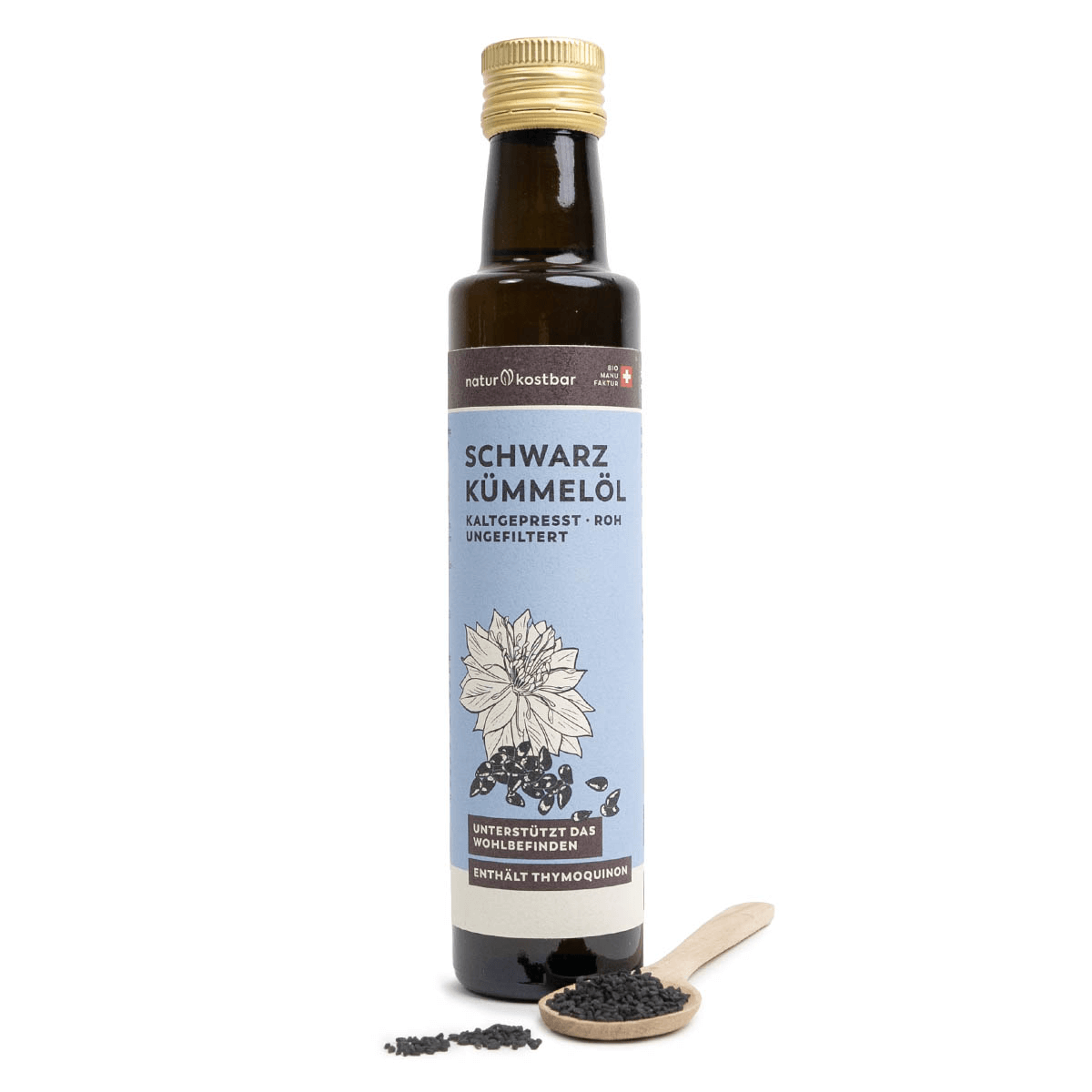
Buy black cumin oil | Cold-pressed & certified organic This certified organic black cumin seed oil is extracted from Egyptian Nigella sativa seeds and cold-pressed at below 37°C in the Naturkostbar Manufaktur in Bern. Black cumin seed oil is a very strong oil with a wonderful flavour. Due to its pungent flavour, it is recommended to mix black cumin oil drop by drop with another cold-pressed oil (e.g. olive oil). Why is black cumin oil healthy? Black cumin seed oil has a high-quality fatty acid spectrum. Due to the high proportion of polyunsaturated fatty acids and the optimum ratio of omega-3, omega-6 and omega-9 fatty acids, it is a particularly valuable edible oil. Unsaturated fatty acids are essential for our organism, i.e. we must consume them through food. They are an essential component of our cells. Black cumin seed oil also contains a considerable amount of essential oils. The high vitamin E content can protect our cells from oxidative stress. How to use black cumin seed oil? Black cumin seed oil is ideal for flavouring Arabic dishes, sauces and pestos or salad dressings. Also delicious in muesli! As a retailer, we are not allowed to make any health claims, so we recommend researching on the internet or in books for use in allergies, hay fever, psoriasis, immune system, ticks. What should I bear in mind when using black cumin oil? Black cumin oil, like other cold-pressed oils (except coconut oil), is sensitive to heat and is therefore mainly suitable for use in cold dishes. Toxic compounds can be formed when heated to high temperatures, e.g. frying. Origin and processing Black cumin thrives in the dry, hot climate of Egypt. Naturkostbar imports black cumin seeds from certified organic farmers with a special appreciation of nature and works closely with local partners. At the factory in Uetendorf near Thun, the organic black cumin seeds are carefully pressed in a water-cooled oil mill. The cooling prevents heat build-up during pressing and the temperature of the oil remains below 37°C at all times. The black cumin oil is not filtered, but the sedimentation process allows the sediment to settle naturally at the bottom before the oil is bottled. Although this process is more complex and takes considerably longer, it ensures that all the valuable fatty acids, vitamins and flavours are optimally preserved. Thymoquinone content Naturkostbar only uses high-quality Egyptian black cumin seeds, which are known for their special quality and natural thymoquinone content. The thymoquinone content of Egyptian black cumin is typically in the range of 0.5 % to 1.5 % - a value that is also used as a guideline for Naturkostbar black cumin oil. It should be noted that black cumin seeds are natural raw materials and the thymoquinone content can vary slightly from batch to batch, depending on harvest conditions and vintage. Two size variants We stock black cumin seed oil in both 100ml and 250ml bottles. Select "Weight variants" on the right-hand side. Nutritional values of black cumin seed oil per 100g value%*1*1 Reference quantity/daily dose for an average adult (8400kJ/2000kcal) Energy 3400kJ (830kcal) 40% fat 92g 131% of which monounsaturated fatty acids 21g 140% of which polyunsaturated fatty acids 55g of which saturated fatty acids 16g 80% Carbohydrates - - thereof sugar - - protein - - salt - - Vitamin E 30mg 250% Swiss Organic Farming Ordinance CH-BIO-086.

Organic camelina oil, cold-pressed from Swiss camelina seeds Update: Naturkostbar has discontinued camelina oil. As an alternative, we have now added the oil from Oelerei Fehraltorf to our range. It is also made from Swiss organic camelina in raw food quality. This golden-yellow organic camelina oil is obtained from Swiss camelina seeds and pressed at temperatures below 30 degrees Celsius. To maintain the raw food quality, the producer uses a special water-cooled oil mill. Camelina oil is very rich (approx. 35%) in omega 3 fatty acids, also known as alpha-linolenic acid. In contrast to linseed oil, camelina oil has a much longer shelf life (becomes bitter much less quickly) and still has a high proportion of polyunsaturated fatty acids. Use of camelina oil With its wonderful taste, which is reminiscent of peas, camelina oil is ideal for flavouring vegetable dishes, salads and dip sauces. Like most cold-pressed oils, this camelina oil is sensitive to heat and is therefore primarily suitable for use in cold dishes. Toxic compounds can form when heated to high temperatures, e.g. when frying. To preserve the quality of the oil for as long as possible, we recommend storing camelina oil in the refrigerator. Nutritional values of camelina oil per 100g Energy value 3400kJ/830kcalFat 92gof which monounsaturated fatty acids 29gof which polyunsaturated fatty acids 53gof which saturated fatty acids 9gCarbohydrates 0gthereof sugar 0gDietary fibre 0gProtein 0gSalt 0.0gVitamin E 17.5mg (146%*) * Reference quantity/daily dose for an average adult (8400kJ/2000kcal)

Cold-pressed Swiss organic hemp oil 100ml Update: Special offer on the current batch with best before 12.2026 for CHF 10 instead of 15. At the oil mill in Fehraltorf, this hemp oil is pressed from Swiss organic hemp seeds using a water-cooled oil press (to prevent heat build-up) at a temperature below 37°C. It is rich in omega-3 (alpha-linolenic acid) and omega-6 (linoleic acid) fatty acids, which are also present in an optimal ratio of 1:3. Hemp is a very undemanding, mostly annual plant. Thanks to its hardiness, it can be grown very well in Switzerland without the use of pesticides. Apart from the rainy summer of 2021, hemp consistently yields very good harvests. Organic-certified Swiss producer and seeds The oil mill uses a water-cooled oil press to extract high-quality edible oils exclusively from organic seeds. Organic certification: BTA CH-BIO-086. In addition to this Swiss hemp oil, our range includes various other cold-pressed organic edible oils from Oelerei: camelina oil, walnut oil and freshly pressed linseed oil. Uses of hemp oil With its wonderful flavour, hemp oil is ideal for adding flavour to vegetable dishes and salads. A homemade salad dressing made with hemp oil tastes great and is good for you. Hemp oil is also suitable for use on the skin and hair, as it can have a regenerating and cell-renewing effect. Note 1: Cold-pressed oils (except coconut oil) are heat-sensitive and are therefore mainly suitable for use in cold dishes. When heated to high temperatures, e.g. when frying, toxic compounds may form. Note 2: Store in the fridge after opening. Nutritional values for Swiss organic hemp oil per 100g Nutritional values (average)per 100g/100ml%11Reference intake for an average adult (8400 kJ/2000 kcal) Energy 3,400 kJ (830 kcal) 41.5% Fat 92 g 131.43% of which saturated fatty acids 9g 45% of which monounsaturated fatty acids 18g 120% of which polyunsaturated fatty acids 65g 433% Carbohydrates - - of which sugars - - fibre - - Protein - - Salt - - Vitamin E 5.9 mg49.17%

Top-quality linseed oil made from Swiss organic linseeds | Fresh, cold-pressed and unfiltered The next pressing will take place on Monday 19 October. Please place your pre-order by 11.00 am on Monday 19 October at the latest. The freshly pressed linseed oil will be dispatched on Wednesday 21 October via Post Pack Priority, so parcels should be delivered on Thursday. Now also available as a monthly subscription For regular customers who don’t want to have to keep remembering the pressing dates, we offer a monthly subscription. We’ll then automatically process your order in the week leading up to the pressing. If you’d like to pause, adjust or add other products to your order, simply let us know your requirements a week before the pressing. What makes our linseed oil special? Delicious: Freshly pressed linseed oil doesn’t taste bitter at all (in the first few weeks), but has a mild, nutty flavour. Organic: The brown organic linseeds from producer Jakob Bachofner come from his own fields in Fehraltorf in the Zurich Oberland. Cold-pressed: Thanks to the mill’s water-cooling system, the oil temperature remains between 28–32°C throughout the pressing process – ensuring raw food quality! Regional: Fehraltorf is just 10 km from our warehouse in Wetzikon. Delivery to your home is CO₂-neutral via Swiss Post.Monthly pressing from September to June: Jakob Bachofner from the Oelerei presses the linseed oil from organic linseeds grown in his own fields in Fehraltorf – fresh and using a water-cooled press to produce raw food quality oil at 28–32°C – taste the difference. It is not filtered, but left to stand in a cool place for one day to allow the sediment to settle. The linseed oil is then bottled, taken to the warehouse and dispatched the very same day. A very small amount of sediment (which is slightly darker) may settle at the bottom of the bottles. This can be consumed without any concerns. Why is linseed oil so healthy? With approximately 50 per cent alpha-linolenic acid (omega-3), linseed oil is one of the richest sources of this important fatty acid. Just one tablespoon of linseed oil meets an adult’s daily requirement of 2g of alpha-linolenic acid. Omega-3 fatty acids are of great importance to our metabolism. They are key building blocks of our cell membranes, have anti-inflammatory effects, protect cells against premature ageing and strengthen the immune system. You can find more interesting information about omega-3 fatty acids in ourhealth guide. Food & skincare: How to use linseed oil? Fresh linseed oil is a real delicacy! Linseed oil is perfect for cold and lukewarm dishes such as salads, potatoes and muesli. It can also simply be enjoyed on its own (1 tablespoon daily). Linseed oil is also suitable for external use on very dry skin. Recipes with linseed oil for inspiration We’ve been keen consumers of linseed oil ourselves for many years, which is why we’re happy to share our favourite recipes here for your inspiration: Raw almond milk with a fresh apple and linseed oil Budwig cream muesli (made with low-fat quark and linseed oil) Golden milk with linseed oil Chia pudding with linseed oil Apple and cinnamon porridge with linseed oil Wholemeal bread with cottage cheese, linseed oil and sprouts Vegan mayonnaise with almond butter and linseed oil Gschwellti (jacket potatoes) with linseed oil Potato salad with linseed oil Tomato and onion salad with basil and linseed oil Experiment:Drizzle the linseed oil, along with a little salt, over half an avocado. What’s your favourite linseed oil recipe? Let us know and we’ll be happy to add it to the list. Freshly pressed linseed oil available by pre-order only Due to its sensitivity to heat and short shelf life, we do not keep linseed oil in stock; instead, we only accept pre-orders from September to June, which are then fulfilled once a month. During the warmer months, orders are dispatched with cooling packs. Ordering process for freshly pressed linseed oil made from Swiss linseeds To place a pre-order, simply buy the linseed oil online as usual, send us an email at info@samaranatura.ch or give us a quick call on 044 586 27 27. On Monday morning, we place our order with Jakob Bachofner at the Oelerei. He presses the linseed oil on Monday. The freshly pressed organic linseed oil then needs to rest for a day in cold storage to allow sedimentation (settling of the suspended particles). On Wednesday morning, the oil is bottled and I take the bottles straight to my social logistics partner in Wetzikon. On Wednesday, he dispatches all orders (linseed oil along with any other items ordered) via Post Pack Priority (at no extra cost of CHF 2), so you should receive your order on Thursday of the same week. Order deadlines for autumn 2026Sunday 18 October 2026Sunday 15 November 2026Sunday 13 December 2026 Shelf life The minimum shelf life after pressing is 3 months. Please always store the linseed oil in the fridge, even before opening the bottle for the first time. This slows down the oxidation process, which occurs very rapidly in linseed oil. Our linseed oil is specially bottled in dark purple Mironglas to protect it from sunlight and the associated premature oxidation. To further extend the shelf life, there are two options: some modern fridges have a 0-degree zone. Stored there, the linseed oil will keep for about a month longer; alternatively, you can freeze it, which extends the shelf life to 6 months. Once opened, the bottle should be consumed within 3–4 weeks. Important notes Linseed oil and camelina oil are not the same thing. Whilst linseed oil is pressed from linseeds, camelina oil is derived from camelina. Camelina oil has a longer shelf life but contains a lower proportion of alpha-linolenic acid/omega-3, at around 35 per cent. Cold-pressed oils (except coconut oil) are heat-sensitive and are therefore mainly suitable for use in cold dishes. When heated to high temperatures, e.g. when frying, toxic compounds may form. Change to bottles Due to the massive price increase for Mironglas (approx. 40 per cent) and the new closure system featuring a plastic ball, Jakob Bachofner has been looking for alternatives. For the standard glass bottles used for cooking oils, the purchase of a capping machine would have been necessary, which would not have been cost-effective for the small production volumes at the oil mill in Fehraltorf. A BPA-free tinplate bottle in a matt black design from Germany has now emerged as the best alternative, see image top left. The advantages over glass are its lighter weight and lower energy consumption during production. Furthermore, the risk of breakage is significantly lower, meaning less packing material is required during dispatch. Tinplate has a high recycling rate, as it is collected alongside aluminium at all recycling centres. Any other packaging options would have resulted in price increases. We are delighted that, at a time when almost everything is becoming more expensive, we are able to offer linseed oil at the existing prices. Nutritional values for organic linseed oil per 100g Energy 3475 kJ / 830 kcalFat 93g- of which saturated fatty acids (palmitic acid and stearic acid) 8g- monounsaturated fatty acids (oleic acid) 19g- polyunsaturated fatty acids (linoleic acid and alpha-linolenic acid) 67gCarbohydrates 0gof which sugars 0gProtein 0gSalt 0g Compared with other oils, linseed oil has a very high proportion of polyunsaturated fatty acids. Depending on the seed, it contains 10–30 per cent linoleic acid (omega-6 fatty acid) and 40–70 per cent alpha-linolenic acid (omega-3 fatty acid), which the body can convert into DHA (docosahexaenoic acid) and EPA (eicosapentaenoic acid). Origin Switzerland, cold-pressed by Jakob Bachofner in Fehraltorf using linseeds from his own fields in Fehraltorf, ZH. Reuse of the Miron bottles In principle, the bottles made from high-quality Miron glass can be rinsed out and reused as desired. We recommend leaving the labels on, as they do not come off easily even after a cycle in the dishwasher or when cleaned with spirit. The labels are not water-soluble because the bottles are stored in the fridge. When the bottles are taken out, condensation forms, which would then cause the labels to peel off. Furthermore, a paper label would quickly look dirty if a drop of oil ran down it. According to feedback from the producer, the labels are best removed using orange oil. Local producer Since summer 2021, Jakob Bachofner from the Oelerei in Fehraltorf has been pressing our linseed oil once a month. As well as the excellent quality, we appreciate the short distance of just 10 kilometres between the oil production facility and our warehouse in Wetzikon. This enables us to send you the linseed oil on the day it is bottled (every Wednesday). It hardly gets any faster than that, unless you select ‘Collection from warehouse’ as your delivery method and come to collect the linseed oil in person from the warehouse on Wednesday afternoons from 3.30 pm. Jakob “Köbi” Bachofner produces all his oils using a water-cooled oil mill, certified organic in accordance with the Swiss Organic Farming Regulations (CH-BIO-086). Here are a few pictures of the cultivation and harvest of the linseeds from Fehraltorf. The linseed blossoms unfurl Close-up of linseed pods The flax is ready for harvest Mowing with a disc mower Drying the flax in the sun for 2 days Threshing the flax with a combine harvester The water-cooled oil mill for pressing raw-food-grade linseed oil Jakob Bachofner in the field
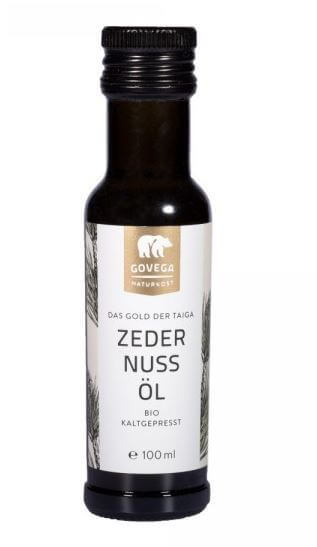
Cold-pressed organic cedar nut oil - the gold of the taiga The precious, amber-coloured cedar nut oil has been used throughout Russia for centuries. The flavour is pleasantly nutty. Why consume cedar nut oil? Siberian cedar nut oil is generally regarded as strengthening. In addition, various cosmetics in Russia contain cedar nut oil due to its beneficialproperties for maintaining healthy skin .Cedar nut oil is one of the few oils with a high vitamin E content (approx. 30 mg per 100 g). Vitamin E can help protect cells from oxidative stress. It contains over 26% monounsaturated fatty acids (monounsaturated fatty acids) and over 65% polyunsaturated fatty acids (polyunsaturated fatty acids). We regularly use cedar nut oil in cold dishes because we love the flavour and like to vary the oils a little. What makes Siberian cedar nut oil special? Due to the careful processing and cold pressing of the organic cedar nuts from the Altai Mountains in Siberia, many vital substances are retained. How to use cedar nut oil? The oil tastes particularly delicious with leaf or mixed salads, slightly warm dishes and raw food specialities. Take 1 teaspoon (3 ml) up to 3 times a day. Like most cold-pressed oils, heating significantly damages the quality. It should therefore only be used for cold to slightly warm dishes. Advice: Store in a cool, dry place away from light, as cedar nut oil is very sensitive to UV light. In particular, direct sunlight should be avoided. Store in the refrigerator after first opening. How is cedar nut oil produced?The organic cedar nuts are cold-pressed at regular intervals in Germany using stamp presses. Nutritional values of cedar nut oil Nutritional facts per 100 g / in 100 g Energy 3429 kJ (902 kcal) Fat 92.5 gof which saturated 7.4 gMonounsaturated fatty acids 24.6 gPolyunsaturated fatty acids 60.5 gCarbohydrates 0 gthereof sugar / sugars 0 gProtein 0 gSalt 0 mgVitamin E 30.6 mg = 255 %* *) Reference quantity for an average adult (8400 kJ / 2000 kcal)
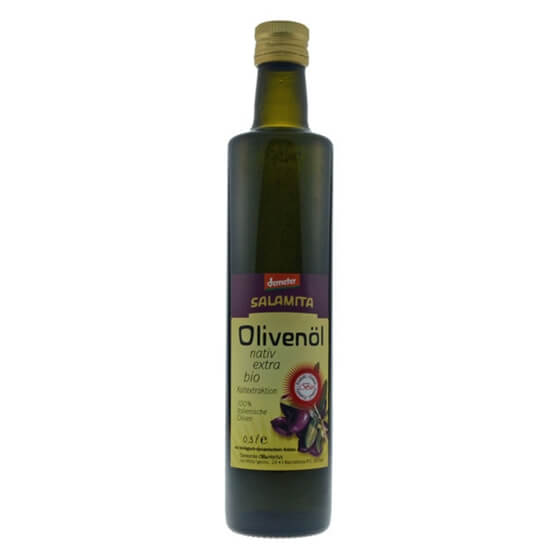
Salamita extra virgin olive oil from Sicily The cold-pressed organic Demeter olive oil of the highest quality grade "extra virgin" comes from 100% Italian olives. It is gently produced by mechanical pressing and fulfils the highest requirements in terms of flavour and composition. The Sicilian olives owe their tart and intense flavour to the fertile soils and benefit from the Mediterranean climate and the heat-retaining lava rock during the ripening process. Producer Founded in 1972 by the Salamita brothers, the co-operative has been practising organic farming since the beginning. As early as 1974, they switched to biodynamic farming in accordance with Rudolf Steiner's antroposophical philosophy. Their ongoing commitment was an important contribution to the development of the biodynamic movement in Sicily. Use This olive oil is perfect for flavoursome salad dressings and dips, but of course also for enhancing starters and main courses such as mashed potatoes, soups or vegetables. Certification Demeter, organic code: IT-BIO-007. Nutritional values of Salamita olive oil per 100g Energy value 3758 kj (899 kcal) fat 72g - of which saturated fatty acids 16.5g Carbohydrates 0g - thereof sugar 0g protein 0g salt 0g
Content: 500 ml (CHF 3.91 / 100 ml)