
Update: Following numerous requests, we have once again added unshelled almonds in bulk packs (1kg bags) to our range. The current batch comes from Spain. For customers who are unsure, we offer 100g bags at a trial price. Organic almonds from Spain: large and sweet Our unpeeled organic raw almonds are lovely and large, crunchy, have a delicious flavour and are very nutritious. They come from organic producers in Spain. The almonds are cracked and gently dried at below 45°C to preserve their exceptional flavour and natural quality. Why eat almonds? Almonds are an excellent source of plant-based protein and fibre, making them an ideal snack for athletes, vegans and health-conscious people. Even a small portion of 30 grams (about a handful = approx. 23 nuts) provides around 6 grams of protein and 4 grams of fibre. The combination of these two components also offers health benefits. Uses Almonds are perfect as a nutritious snack on their own or as ‘trail mix’ mixed with goji berries, mulberries, raisins or cocoa nibs. They can also be used to make almond flour, almond drinks and desserts. Warning: Keep out of reach of small children (choking hazard). Despite careful processing, isolated pieces of shell and traces of other nuts may be present. Nutritional values for organic almonds per 100g Energy 2491 kJ/595 kcalFat 50gof which saturated fatty acids 4gCarbohydrates 9gof which sugars 4 gFibre 13gProtein 21gSalt < <0.1g
Content: 1000 Gramm (CHF 3.04 / 100 Gramm)
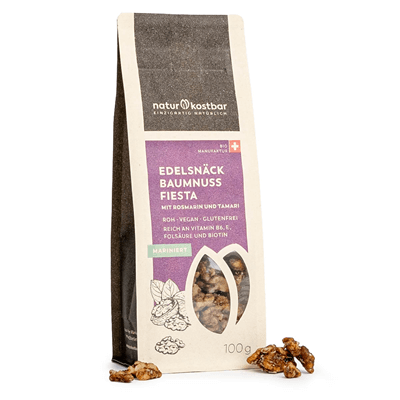
The sprouted, marinated walnuts are now called Edelsnäck Walnut Fiesta Naturkostbar germinates the wild-harvested Swiss walnuts and, after gently drying them (below 40°C), flavours them with a delicious rosemary and tamari marinade – mmm, absolutely delicious! Origin and processing The walnuts come from old, majestic walnut trees in the Swiss Seeland region. Local farmers harvest the wild walnuts by hand. A Swiss nutcracker carefully removes the hard shell. Naturkostbar allows the walnuts to sprout so that they can develop their full nutritional potential. The second important step in the processing is the marinating. The marinade contains Nama Organic Tamari soy sauce, rosemary,coconut blossom sugar, salt and garlic. Natural indulgence The result is crunchy, savoury-sweet tree nuts. They have a well-balanced nutty flavour and entice with a subtle rosemary aroma. ✓ Wild-harvested in Switzerland ✓ Organic, vegan and raw food quality ✓ Sprouted ✓ Gluten-free Uses for marinated walnuts These delicious rosemary walnuts are perfect for any aperitif, as a topping for salads or as brain food at the office. Ingredients Walnuts**, tamari*, coconut blossom sugar*, walnut oil, garlic powder*, rock salt. *from organic farming, **sprouted Nutritional information for marinated walnuts Energy / Nutrient per 100gg/mg/μg%*1*1 Reference intake/daily allowance for an average adult (8400 kJ/2000 kcal) Energy 2,792 kJ (677 kcal) 33% Fat 62.9 g 90% of which saturated fatty acids 5.63g 28% Carbohydrates 11.9g 5% of which sugars 5.2g 6% Protein 14.3g 29% Salt 1.25g 21%
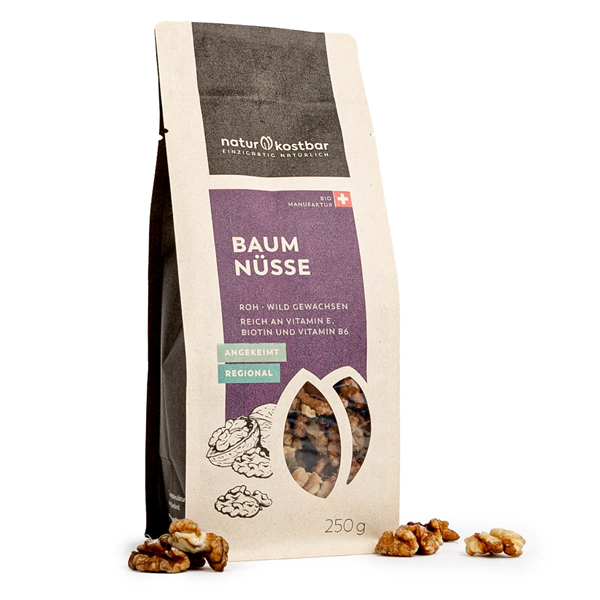
Sprouted walnuts – easier to digest The Swiss organic walnuts are soaked and sprouted at Naturkostbar Manufaktur for several hours. They are then dried for 24 hours at a maximum temperature of 42°C. The sprouting process neutralises the phytic acid present in the walnuts and significantly increases their nutrient density. It also makes the walnuts easier to digest, which in turn improves nutrient absorption. Uses for sprouted walnuts Like normal walnuts, the sprouted walnuts are ideal as a snack on their own or mixed with dried fruit and cocoa beans to make a delicious trail mix. Additional information Contents: 250g bag. Warning: May contain shell fragments. Origin and production: Organic walnuts from Switzerland, sprouted at the Naturkostbar Manufaktur in Uetendorf near Thun. Organic certification: CH-BIO-086 Nutritional information for sprouted walnuts Average nutritional valuesper 100g/100ml%11Reference intake for an average adult (8400 kJ/2000 kcal) Energy 3,060 kJ (742 kcal) 36% Fat 70.8 g 101% of which saturated fatty acids 6.3g 32% of which monounsaturated fatty acids 11.9g 79% of which polyunsaturated fatty acids 49.4g - Carbohydrates 7g 3% of which sugars 2g 2% Fibre 6.7g 13% Protein 15.9g 32% Salt - - Beta-carotene (provitamin A) - - Vitamin A - - Vitamin B1 0.36 mg 33% Vitamin B2 0.1 mg 7% Vitamin B3 1.3 mg 8% Vitamin B6 0.4 mg 29% Vitamin B12 - - Vitamin C - - Vitamin D - - Vitamin E 30 mg 250% Vitamin K - - Biotin 20 µg 40% Calcium 78 mg 10% Chloride 23 mg 3% Chromium - - Iron 3 mg 21% Fluoride - - Folic acid/folacin 140 µg 70% Iodine 2 µg 1% Potassium 420 mg 21% Copper - - Magnesium 140 mg 37% Manganese - - Molybdenum - - Pantothenic acid 0.8 mg 13% Phosphorus 360 mg 51% Selenium - - Zinc 4 mg 40%
Content: 250 Gramm (CHF 7.56 / 100 Gramm)
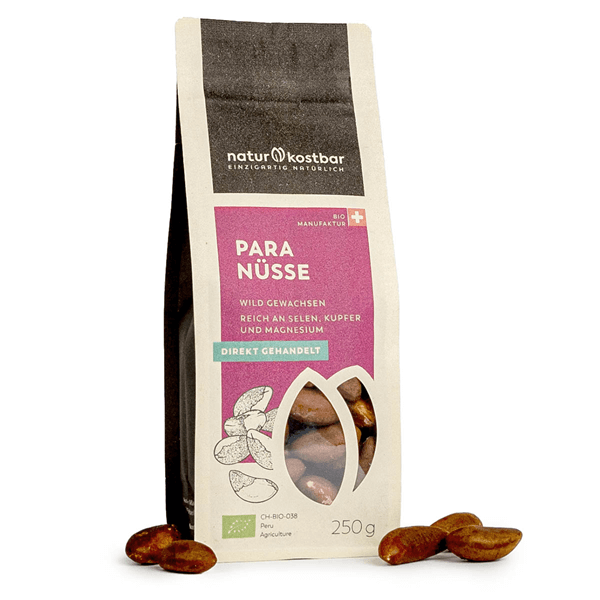
Wild Brazil nuts organic Update: Due to the discontinuation of PlantLife (bankruptcy), we have added Brazil nuts from Naturkostbar to our range. Brazil nuts from the Bolivian rainforest are highly valued for their crunchy texture and nutty flavour. They are one of the most characteristic nuts in the world in terms of flavour, appearance and impressive size. The sustainable, natural cultivation and harvest are fascinating: in the rainy season, the ripe pods fall from the trees before being collected by hand and cracked with machetes to reveal the nut kernels. PlantLife works closely with local cooperatives to conserve the rainforest by promoting sustainable farming methods. Paying a fair price for high-quality Brazil nuts is an incentive to save the rainforest from deforestation for agricultural purposes. Brazil nuts are a good source of vitamin E, magnesium, potassium and selenium. Use They are ideal for nibbling or crunching in muesli - but can also be easily grated or sliced and are an interesting flavour addition to cakes, pastries and desserts. Store in a dry place away from heat. For best-before date and origin, see bottom of pack. Warnings Small children can choke on nuts. May contain pieces of shell. May contain traces of other nuts. Nutritional values cashew curd per 100g Energy value 2829 kJ / 686 kcal Fat 67g - of which saturated fatty acids 17g Carbohydrates 3.6g - of which sugar 1.4gDietary fibre 8.1g Protein 14g Salt 0.04g Vitamin E 7.6mg (63%)* Magnesium 160mg (43%)*Potassium 645mg (32%)*Selenium 105µg (191%)* *according to nutrient reference values
Content: 250 Gramm (CHF 5.16 / 100 Gramm)
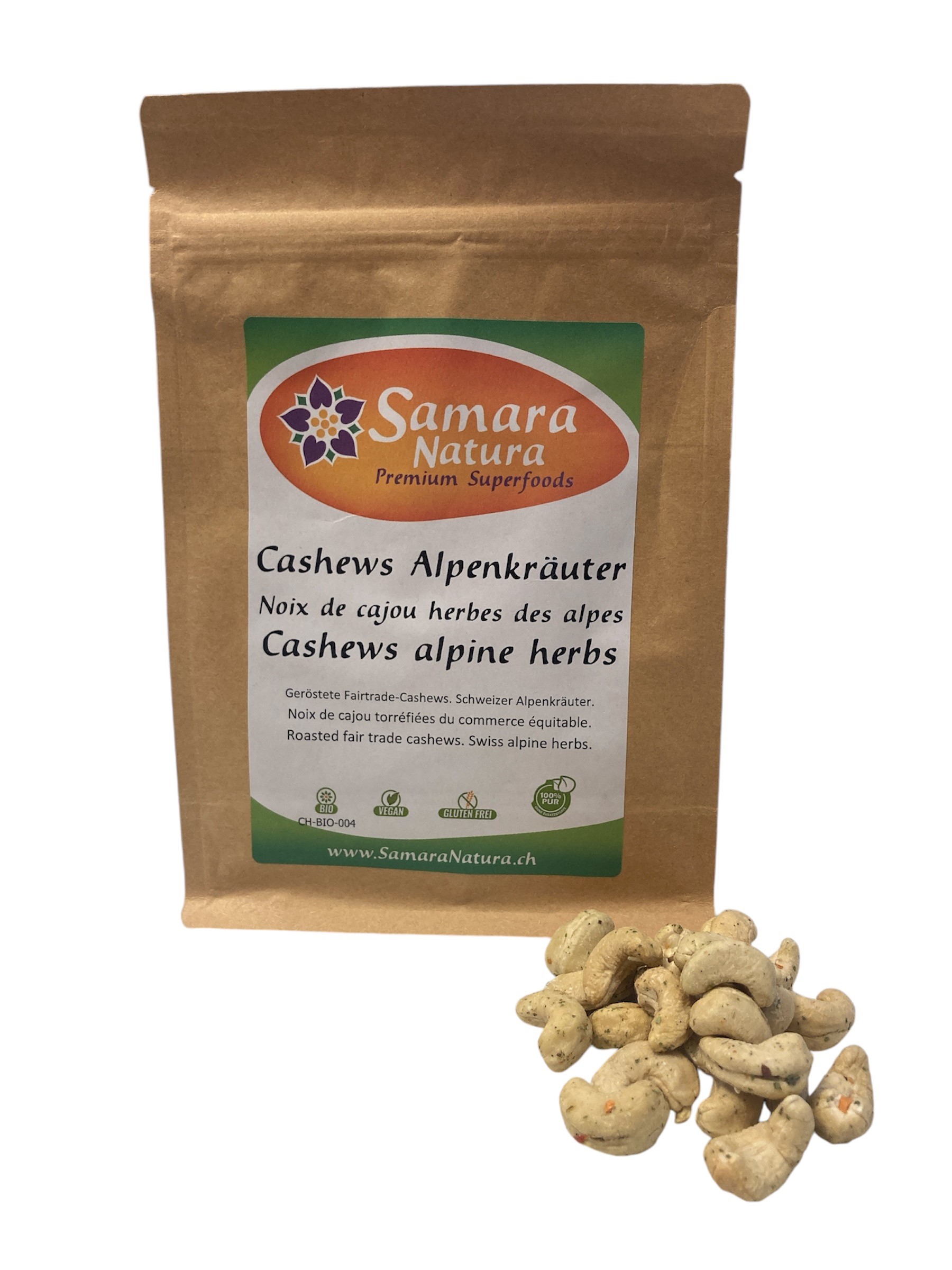
Organic Fairtrade cashews with alpine herbs and sea salt The cashews have a mild, sweet and nutty flavour and are a delicious source of nutrients. The cashew nuts are roasted in Switzerland and flavoured with Swiss organic Alpine herbs and sea salt. The result is flavoured cashews of the highest quality, incredibly tasty and crunchy. Origin Our organic Fairtrade cashews come from small farmers in Kerala (India) where they are carefully harvested, shelled and sorted by hand. Ingredients Roasted cashews (97.9%), sea salt (1.1%), alpine herb mix (0.8%), gum arabic.Caution: May contain traces of other nuts. Use We love these cashews as a snack on their own as an aperitif or simply between meals. They also make a wonderful gift. Nutritional values Organic Cashews Alpine Herbs per 100g Energy value 574kcal/2400kJFat 46.4g - of which saturated fatty acids 9.2gCarbohydrates 32.7gof which sugar 5gProtein 15.3gSalt 1.11g
Content: 250 Gramm (CHF 7.60 / 100 Gramm)
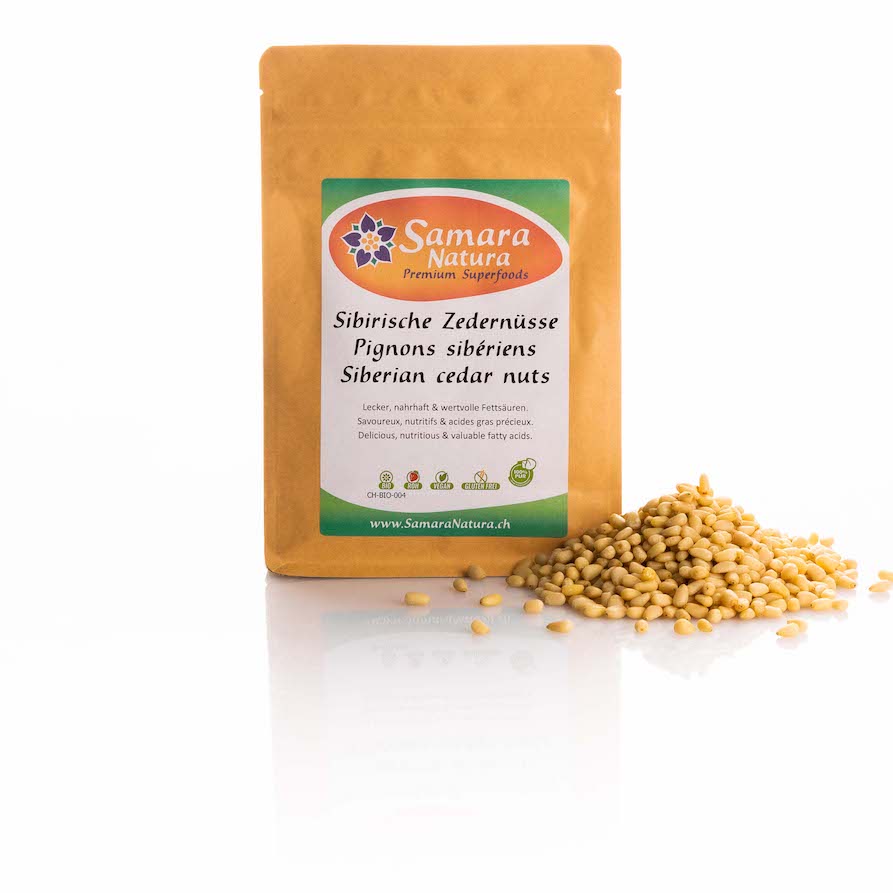
Update: The new batch has been packed and all sizes are available again: 250g, 500g and 1kg bags. Cedar nuts from Siberia – a treasure of nature Cedar nuts taste similar to other pine nuts, but are slightly sweeter and more flavourful. Unlike almost all pine nuts available in shops, our raw cedar nuts are not heat-treated. Why eat cedar nuts? Cedar nuts contain approx. 55% valuable unsaturated fatty acids, primarily linoleic and alpha-linolenic acid, as well as the rare pinolic acid. They are rich in tocopherols (vitamin E) – which act as antioxidants – as well as high-quality proteins (around 17 per cent). Furthermore, they contain many minerals (particularly magnesium, potassium and phosphorus), trace elements (copper, manganese and zinc), vitamins (K and B) and flavonoids. For centuries, the people of Siberia have valued the Siberian cedar (Pinus sibirica), a Swiss stone pine that is widespread in the region, not only as a source of valuable timber but also for its tasty and highly nutritious seeds, which are found inside the cedar cones. What makes our cedar nuts special? Virtually all pine nuts available on the market are heat-treated to extend their shelf life. Our cedar nuts, on the other hand, are completely untreated, which preserves their wide range of nutrients. Where do our pine nuts come from? They come from the Lake Baikal region in Siberia and are harvested by hand. The Siberian pine is a true treasure of Siberian nature and forms vast areas of unspoilt forest throughout northern Russia. These huge, magnificent trees (up to 40 metres tall) grow slowly, and the first cones bearing seeds only appear when the trees are around 30 years old. They are among the longest-living tree species in existence, as they can live for between 300 and 800 years! The evergreen cedar is a storehouse of cosmic light energy; throughout its long lifespan, it captures the energy rays from outer space in its millions of needles. Thousands of years ago, the peoples of antiquity already valued the properties of the cedar tree, which they called ‘the Eternal One’. The twigs were used to prepare a vitamin-rich drink, the resin to heal wounds and ulcers, and the seeds and their oil helped people survive the long, harsh winters in Siberia. How can cedar nuts be used in everyday life? Cedar nuts taste delicious on their own as a snack or mixed with dried fruit and other nuts, along with goji berries and cocoa nibs. They can be sprinkled over salads and other dishes or used in mayonnaise, creams and milk. Cedar nuts lend a certain elegance to your cooking. Cedar nuts and their oil are also excellent for skin care and regeneration. We recommend, particularly in summer, storing the cedar nuts in the fridge once opened. Customer review of the product “I really like cedar nuts. I enjoy mixing them with a bit of water and then using them to create either sweet or savoury dishes, depending on what I fancy. Vegan salad dressing, a cheese substitute … or simply snacking on a handful every now and then.” by Mirjam F. Nutritional values for cedar nuts per 100g Energy 2927 kJ/699 kcal,Fat 62g,of which saturated fatty acids 4g, monounsaturated fatty acids 15g, polyunsaturated fatty acids 41g,Carbohydrates 8 g, of which sugars 6gprotein 19g,salt <0.1g, Magnesium 270mg (72%*), Vitamin E 9 mg (75%*), Vitamin B1 0.6 mg (57%*). *of the recommended daily intake.
Content: 250 Gramm (CHF 7.98 / 100 Gramm)
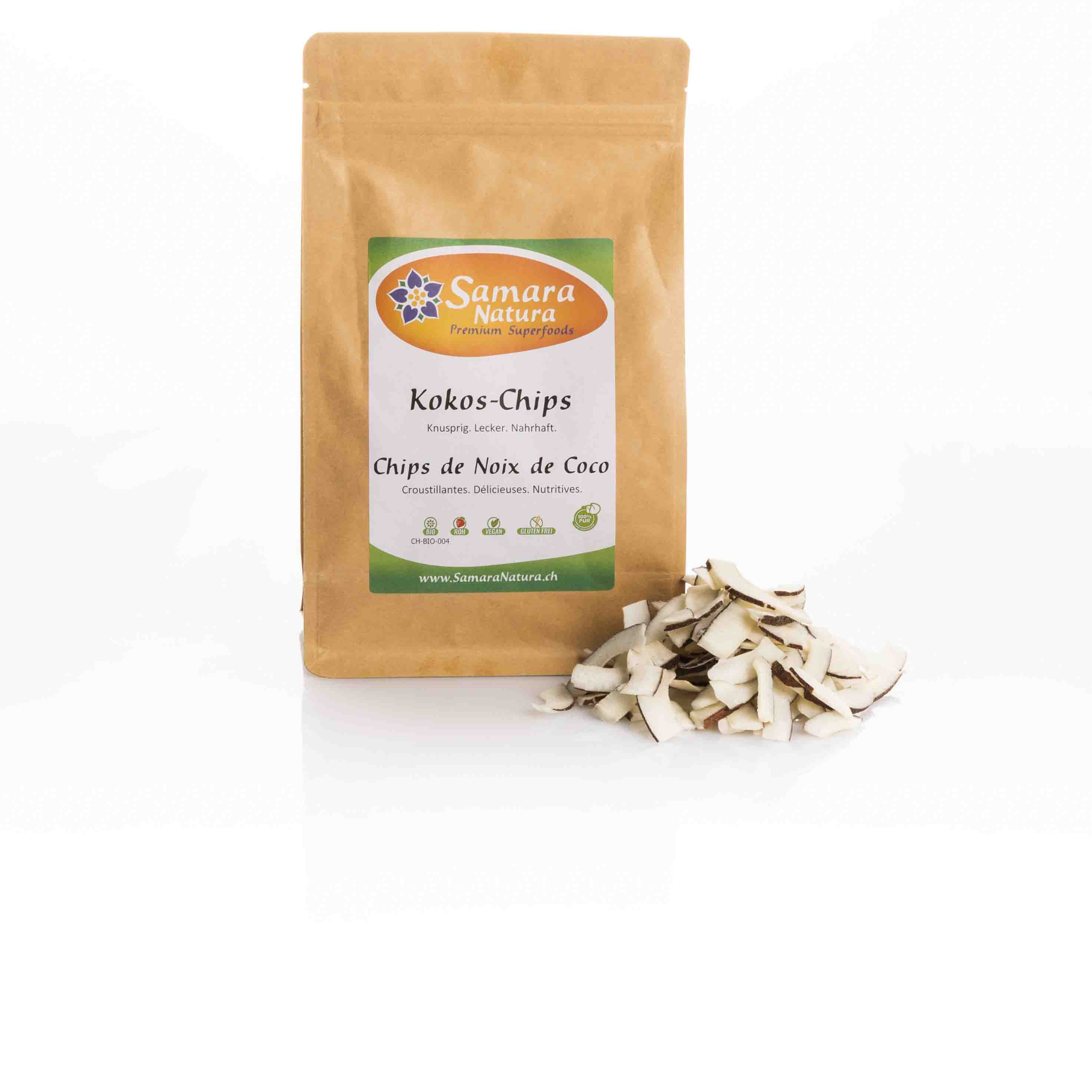
Why eat coconut chips (coconut flakes | 100% natural)? Update: The new batch is expected to arrive and become available by the end of 2026. In the meantime,we recommend thedesiccated coconut, which works well as an ingredient in muesli. Coconut chips are a nutritious, delicious, exotic snack for everyone and every occasion: A healthy snack (also for children)Brain food for mental activitiesA healthy, quick meal at the office or on the goHigh-energy food for athletesThe coconut, with its wonderful aroma, has become an indispensable part of our cooking and many baked goods. What makes our coconut chips special? Our raw-food-quality coconut chips are crispy and particularly aromatic. Given their size and shape, they could also be described as coconut strips. Other special features:Made from freshly harvested coconutsDried at low temperatures to preserve flavour and nutrientsUnroasted and free from colourings, flavourings and preservatives Uses A healthy snack for at home and on the go, whilst travelling, out in the countryside and after exercise.Enjoy coconut chips to add a special touch to muesli or desserts, for baking and in Asian cuisine.Tip: Try coconut chips with pineapple.Alternatively, discover ourdesiccated coconut. Interesting facts about coconut palms and the nutritional value of coconuts Coconut palms are ancient cultivated plants and have been grown for at least 3,000 years. The coconut is one of the most nutritionally complete foods; a person could survive on it alone for weeks without suffering from any nutritional deficiencies! In tropical countries, it is used as a substitute for breast milk. As well as valuable protein, dietary fibre and numerous minerals and vitamins, the coconut provides fructose as brain food and healthy fats. The medium-chain fatty acids in the coconut (known as MCT fats) are of great nutritional benefit. Nutritional values for coconut chips per 100g Energy 2805 kJ/670 kcalFat 65gof which saturated fatty acids 57gCarbohydrates 7gof which sugars 7gFibre 16gProtein 7gSalt <0.1g.
Content: 250 Gramm (CHF 0.76 / 100 Gramm)
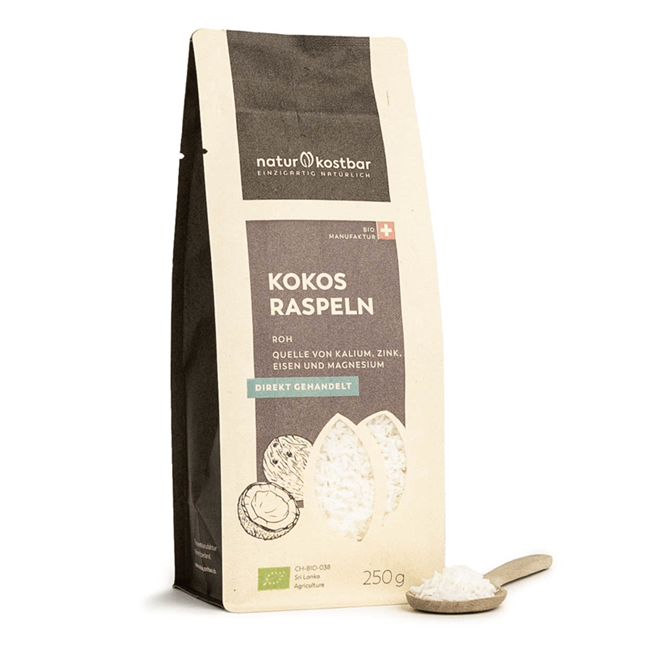
Organic shredded coconut from fresh coconuts Update: As the PlantLife coconut flakes are no longer available (discontinued), we have added those from Naturkostbar to our range as an alternative. Shredded coconut is a convenient way to enjoy the goodness of coconut without having to work your way through a thick, sturdy nut. PlatLife sources King shredded coconut from Sri Lanka, from certified organic farming areas. The farmers cultivate the land and improve their living conditions by working in harmony with nature to provide the best product. After harvesting, the coconut is opened, the coconut water is collected, the shell is removed and the fruity flesh is cut into cubes. The coconut flesh is then gently dried in the sun and then grated. Processing is carried out carefully by hand and under high hygienic conditions. This ensures that the dried organic grated coconut is of the best quality. They are unbleached and of raw food quality. Coconuts are rich in potassium, which contributes to the healthy functioning of the muscles and nervous system and helps the body to maintain normal blood pressure. The high iron content of coconuts stimulates the metabolism and at the same time supports brain function and the immune system. Store in a dry place away from heat. See bottom of pack for best before date and country of origin. Use Grated coconut is ideal for baked goods and desserts as well as for curries to give them a sweet flavour and texture. Warnings Small children can choke on nuts. May contain pieces of shell. May contain traces of other nuts. Nutritional values organic shredded coconut per 100g Energy value 2795 kJ / 680 kcal Fat 65g - of which saturated fatty acids 62g Carbohydrates 8.4g - of which sugar 7.3gDietary fibre 15g Protein 7.4g Salt 0.15gPotassium 380mg (19%)* Iron 2.3mg (16%)* *according to nutrient reference values
Content: 250 Gramm (CHF 2.09 / 100 Gramm)
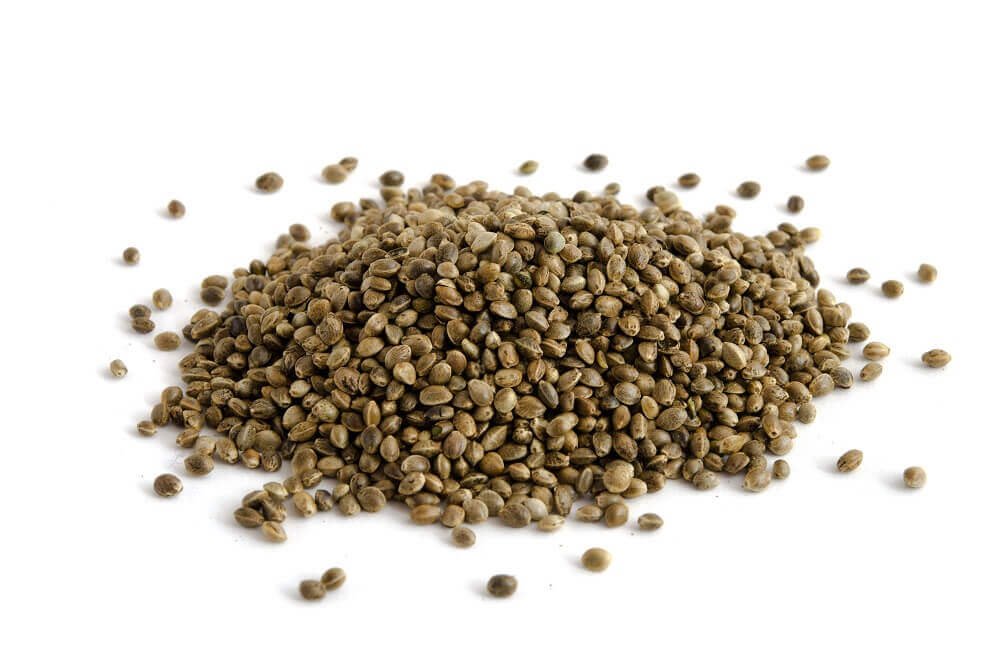
Unshelled hemp seeds from Austria (100% natural) Hemp seeds are characterised by an unusually high nutrient density. They are rich in easily digestible protein, essential fatty acids, vitamins, minerals, fibre and lecithin, in a perfect balance for our bodies. Hemp seeds possess an optimal ratio of omega-3 to omega-6 fatty acids for humans, generally considered to be 4:1. Hemp seeds are therefore excellent brain food, improve the appearance of the skin and promote oxygen supply to the cells. Hemp seeds are a good source of essential fatty acids (EFAs), including linoleic acid, alpha-linolenic acid and the rare gamma-linolenic acid. These fatty acids are required for the production of numerous hormones and for cell renewal. They support the functions of the human body in maintaining health and contribute to the normal development and growth of the organism. Omega-3 fatty acids are incorporated into cell membranes and are essential for their structure and function. Omega-3 fatty acids influence the regulation of blood lipids. As part of a balanced diet, they contribute to good health. An ideal food for athletes, as edible hemp builds muscle and increases stamina. Vegetarians also benefit from this rich and high-quality source of protein. Unlike hulled seeds, whole hemp seeds are high in fibre. Why we love hemp seeds Hemp seeds are a wonderful gift from nature. Not only are they one of the most nutritious foods on the planet, but also the most environmentally friendly food of all time! Hemp grows easily almost anywhere, requires no pesticides or herbicides, and can be used to produce almost everything we need in our modern society: clothing, paper, biodegradable plastic, fuel, cars and building insulation, to name but a few. What’s more, hemp seeds offer outstanding health benefits. They contain all the essential amino acids and essential fatty acids (including the rare gamma-linolenic acid!) that the body cannot produce itself and which are necessary for maintaining good health. Hardly any other plant source contains essential amino acids in such an easily digestible form, or the essential fatty acids in a ratio so ideal for humans! Because hemp seeds are so rich in important nutrients, we consume them in generous quantities every day. This is easy to do, as hemp seeds are a delicious and versatile food. SamaraNatura Organic Whole/Unshelled Hemp Seeds SamaraNatura hemp seeds are sourced from legal, officially approved cultivars grown in Germany and Austria without the use of pesticides or agrochemicals. The omega-3 content in hemp seeds is higher when the plant grows in a cooler climate, such as in Germany and Austria. Uses for whole hemp seeds Delicious on their own as a snack, sprinkled whole over salads, or ground and added to soups and other dishes (also lightly toasted); as an ingredient in smoothies and muesli. Beginners or children (2–9 years): 15–30 grams per day Teenagers (10–18 years): 30–50 grams Adults: 50–75 grams per day Competitive athletes: up to 140 grams per day Hemp seeds should only be eaten raw and not cooked. As hemp seeds do not contain the enzyme inhibitors typical of many seeds, they are perfectly fine to eat raw without having to soak them in water first. Hemp can also be consumed fresh in the form of milk by puréeing the seeds in water and then straining the mixture (see recipe). Nutritional values for whole/unhulled hemp seeds per 100g Energy 1955 kJ/475 kcal,Fat 34 g,of which saturated fatty acids 3.4g,monounsaturated fatty acids 5g,polyunsaturated fatty acids 24g,Carbohydrates 1.6 g,of which sugars 1g,fibre 39g,protein 22g.All figures are subject to the variations typical of natural products. Are hemp seeds gluten-free? According to the law, a product may be labelled ‘gluten-free’ if it contains no more than 20 mg of gluten per kg. This is certainly the case for unhulled hemp seeds, as well as all other hemp products, as hemp is naturally gluten-free. However, there are several reasons why hemp seeds may still contain traces of gluten: Cross-contamination during harvesting: The combine harvester used to harvest the hemp seeds usually also threshes other plants such as millet or cereals. Residues from previous harvests always get trapped in the crevices of the machine. Depending on how the combine harvester is used, this could unfortunately also mean that traces of wheat are present. Cross-contamination in the field: The farmer generally only grows hemp in the hemp field. However, the open field cannot be shielded from plants that are carried into the hemp field by the wind and which also grow there the following year.
Content: 500 Gramm (CHF 2.28 / 100 Gramm)
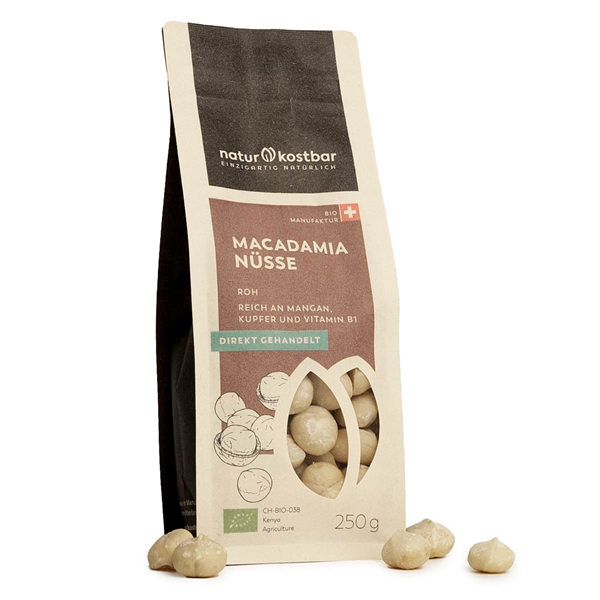
Organic macadamia nuts from Kenya Naturkostbar macadamia nuts are particularly large,crunchy and buttery sweet. Macadamia nuts are among the most expensive nuts in the world due to their difficult cultivation and fluctuating quality, which is why the macadamia nut is also known as the "queen of nuts". Origin and processing These macadamia nuts grow in one of the most fertile regions of Africa, at the foot of Mount Kenya. Due to the high altitude and the associated cold nights, the nuts are of a very high quality. The Kenyan farmers cultivate the nut trees in harmony with nature. After harvesting, the macadamia nuts are gently dried and shelled in the region. They are then imported directly to Switzerland by Naturkostbar. Use The natural macadamia nuts are a special snack thanks to their delicate, creamy sweet flavour. Of course, the delicious nuts can also be used for macadamia milk or in desserts, although macadamia nut is better suited to this. Nutritional information organic macadamia nuts per 100g Energy / nutrient per 100gg/mg/μg%11 reference quantity/daily dose for an average adult (8400kJ/2000kcal) Energy 3021kJ (734kcal) 36% fat 73.1g 104% of which monounsaturated fatty acids 59.1g 394% of which polyunsaturated fatty acids 1.5g - of which saturated fatty acids 12.5g 63% Carbohydrates 5.1g 2% thereof sugar 4.8g 5% protein 8.5g 17% salt 0g 0% Dietary fibre 10.5g 21% Vitamin A - - Vitamin C 6.1mg 8% Vitamin D - - Vitamin E 0.6mg 5% Vitamin K - - B-carotene (provitamin A) - - Vitamin B1 0.73mg 66% Vitamin B2 0.1mg 7% Vitamin B3 2.4mg 15% Vitamin B6 0.3mg 21% Vitamin B12 - - magnesium 120.8mg 32% Copper 0.6mg 60% Manganese 4.8mg 240% selenium - - iodine - - Folic acid/folacin 10µg 5% chloride - - potassium 366mg 18% biotin - - pantothenic acid - - Calcium 75.8mg 9% Phosphorus 196.3mg 28% Iron 3.2mg 23% Zinc 1.3mg 13% Molybdenum - - fluoride - - chromium - -
Content: 250 Gramm (CHF 6.84 / 100 Gramm)
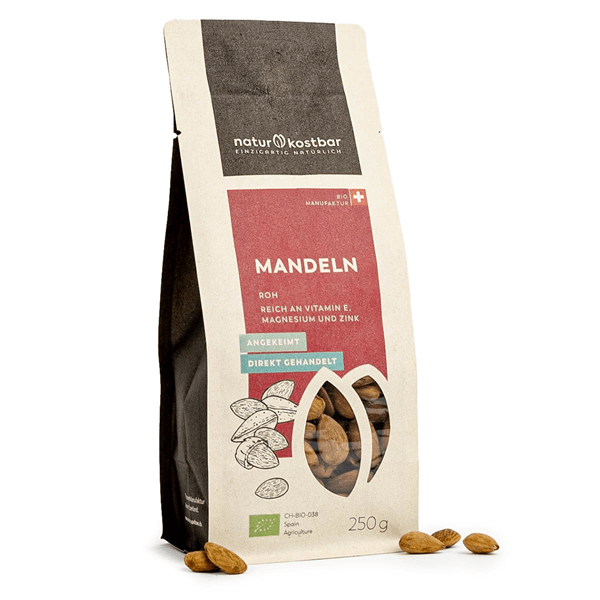
Organic sprouted almonds – double the magnesium and calcium content These organic almonds from Spain are soaked and sprouted at the Naturkostbar factory for several hours. They are then dried for 24 hours at a maximum temperature of 42°C. The sprouting process neutralises the phytic acid present in the almonds and significantly increases their nutrient density. It also makes the almonds easier to digest, which in turn improves nutrient absorption. An analysis of the magnesium and calcium content of raw and sprouted almonds reveals clear differences: Magnesium mg/kg Calcium mg/kg Unsprouted almonds 1140 1430 Sprouted almonds* 2470 3320 *Measured by Wessling Group AG on behalf of Naturkostbar. Uses for sprouted almonds Like normal almonds, sprouted almonds are ideal as a snack on their own or mixed with dried fruit and cocoa nibs to make trail mix. Additional information Contents: 250g bag. Warning: May contain shell fragments. Origin and production: Organic almonds from Spain, sprouted at the Naturkostbar factory in Uetendorf near Thun. Organic certification: CH-BIO-086 Nutritional values for sprouted almonds Nutritional values (average)per 100g/100ml%11Reference intake for an average adult (8400 kJ/2000 kcal) Energy 2508 kJ (607 kcal) 30% Fat 53 g 76% of which saturated fatty acids 5.08g 25% of which monounsaturated fatty acids 36g 240% of which polyunsaturated fatty acids 11.9g - Carbohydrates 3.9g 2% of which sugars 3.5g 4% Fibre 12.6g 25% Protein 22.3g 45% Salt 0.03g 1% Beta-carotene (provitamin A) - - Vitamin A - - Vitamin B1 0.3 mg 27% Vitamin B2 0.4 mg 29% Vitamin B3 4.2 mg 26% Vitamin B6 0.1 mg 7% Vitamin B12 - - Vitamin C - - Vitamin D - - Vitamin E 12 mg 100% Vitamin K - - Biotin 10 µg 20% Calcium 270 mg 34% Chloride 40 mg 5% Chromium - - Iron 4.8 mg 34% Fluoride - - Folic acid/folacin 48 µg 24% Iodine 2 µg 1% Potassium 760 mg 38% Copper - - Magnesium 240 mg 64% Manganese - - Molybdenum - - Pantothenic acid 0.5 mg 8% Phosphorus 510 mg 73% Selenium - - Zinc 6 mg 60%
Content: 250 Gramm (CHF 5.70 / 100 Gramm)
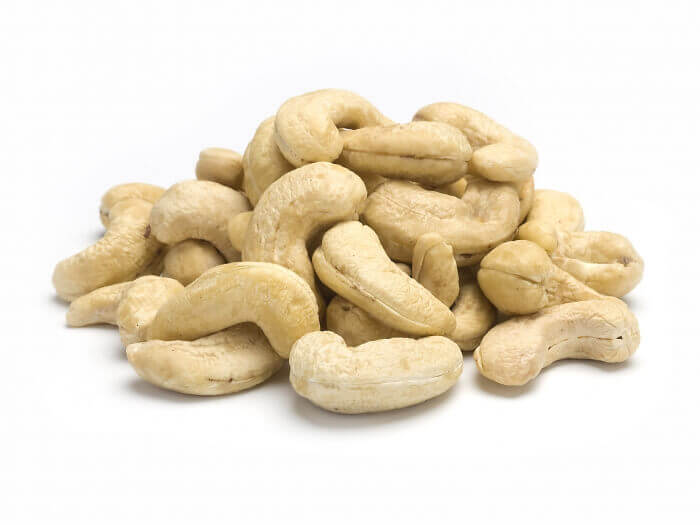
Organic cashews Jumbo - hand-cracked and Fairtrade The popular Jumbo cashews (240 size) are available again in 500g and 1kg bags. Jumbo cashews from Kerala (India) are among the best cashews in the world. They come from small farmers in Kerala (India) where they are carefully harvested, shelled and sorted by hand. They are gently dried in the sun to protect the nutrients and flavours as well as possible. Unlike most other cashews, they are truly raw food quality, i.e. hand-cracked, unsteamed and unheated. This not only preserves the nutrients much better, but also results in exceptional quality! The cashews are extra large, incredibly tasty and crunchy. They impress with their mild, sweet and nutty flavour. The cashews are very light to beige in colour.We have tried countless cashews over the years, but these cashews are among the best we have ever had. The grading size is 240, which means that there are 240 cashews of this size in a pound bag (1 pound equals 454g). The larger the value (e.g. 320), the smaller the cashew nuts. Origin Our organic Fairtrade cashew nuts come from small farmers in Kerala (India) where they are carefully harvested, shelled and sorted by hand. They are gently dried in the sun to protect the nutrients and flavours as much as possible. The farmers belong to the Elements & Fairtrade Alliance Kerala (FTAK). By buying these Fairtrade jumbo cashews, you are supporting these Fairtrade smallholder groups in improving their living conditions through hard and honest labour. Use We love these cashews as a snack on their own or mixed with fresh or dried fruit. Sprinkle cashews on salads, in muesli or use them for cashew milk, cashew puree and many vegan desserts such as pudding and cheesecake. Tip: The combination of cashew nuts with goji berries and/or cocoa nibs creates a very special flavour experience. Caution : Keep out of the reach of children. May contain traces of other nuts. Nutritional values organic cashew nuts jumbo per 100g Energy value 2310kJ/ 553 kcal fat 43.8g of which saturated fatty acids 7.8g Carbohydrates 30.2g of which sugar 5.9g protein 18.2g salt 0.03g
Content: 1000 Gramm (CHF 3.60 / 100 Gramm)
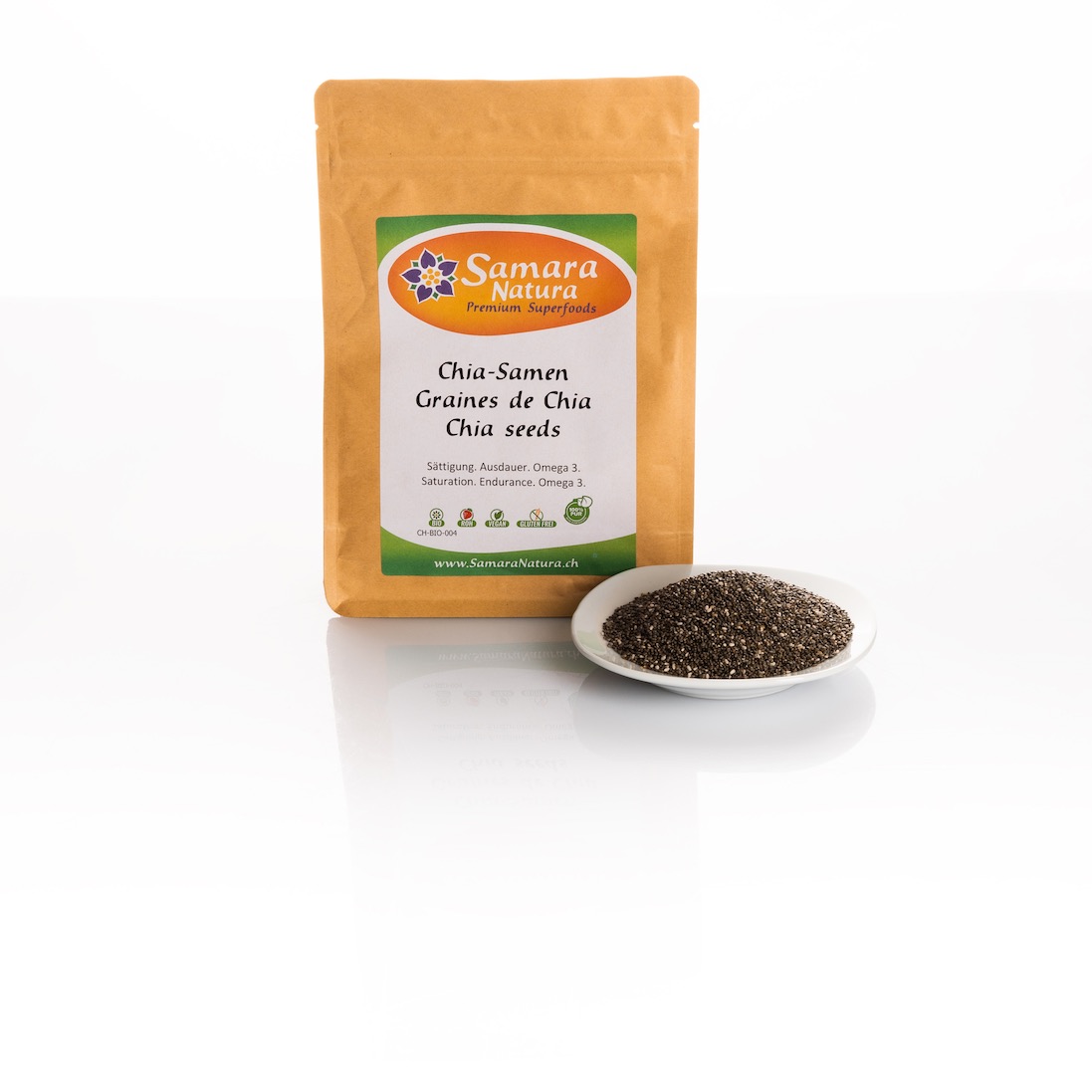
Organic chia seeds (100% natural) - the little power seeds Chia seeds are an ancient superfood that was used by the Mayas, Aztecs and Incas as early as 3500 BC. They come from the desert plant Salvia hispanica, which grows in southern Mexico. Chia means starch in the Mayan language and was considered "running food" because messengers could run all day long with the help of these tiny seeds. Why consume organic chia seeds? Easy to use: Almost unnoticed, the body gets an extra dose of nutrients and can absorb food much better. At the same time, it gets an extra dose of energy and more well-being for mind and soul. Chia seeds contain many antioxidants that not only scavenge free radicals and highly reactive oxygen compounds. They are important for cell maintenance and function. They help to maintain cell function. The antioxidants also prevent the seeds from spoiling quickly. The seeds are very filling as they absorb ten times their weight in water and form a gel. Athletes all over the world now include chia as part of their diet during training sessions. Chia seeds are rich in high-quality proteins, calcium and omega-3 and have an optimal ratio of omega-3 to omega-6 fatty acids. Last but not least, chia is a very inexpensive, concentrated food. 1/3 cup of dry chia seeds makes 500g of chia gel. Depending on how much gel you use, this 500g will probably last you an average of four days. You really don't need more than 1-2 tablespoons of chia gel per day. What makes our organic chia seeds special? Highest quality Cultivation without pesticides and agrochemicals Processed without the use of heat Purification only via a "shaking process" Use in the daily diet The most common way to eat chia is to soak the seeds first, which then turns into a jelly-like mass. The seeds can absorb a large amount of liquid very quickly, ten times their volume in less than 10 minutes. Chia gel Add 1/3 cup of seeds to 2 cups of water. Stir the mixture and place it in the fridge, tightly covered. A gel (approx. 500g) will form within 10 minutes and can be consumed immediately. A longer soaking time of several hours is advisable, as this makes the nutrients easier to utilise. Chia gel will keep for several days in the fridge and you can use some of it whenever you like. You can add it to smoothies, salad dressings, desserts and mueslis or simply eat it on its own. Whole seeds Sprinkle the dry seeds on salads or add to muesli mixes. You can also try grinding the seeds in a coffee grinder and adding the resulting chia flour to smoothies, soups, bread, etc. Chia sprouts are used similarly to alfalfa sprouts in salads, sandwiches and other dishes. As chia seeds absorb a lot of water, they can lead to dehydration in the body. It is therefore important to drink enough water or - even better - to use seeds that have already been soaked. How much to eat Based on the Food and Commodities Ordinance LGV - Novel Food, the maximum daily intake of chia seeds is 15g (or a maximum of 5% for use in bread products). This amount must not be exceeded. Nutritional values of chia seeds per daily portion (15g) Energy value 275kJ/67kcal fat 4.7g of which saturated fatty acids 0.6g of which polyunsaturated fatty acids 3.6g Omega-3 fatty acids 2.8g Carbohydrates 0.7g thereof sugar 0.1g Dietary fibre 4.7g protein 3.2g salt 0.005g
Content: 250 Gramm (CHF 3.04 / 100 Gramm)
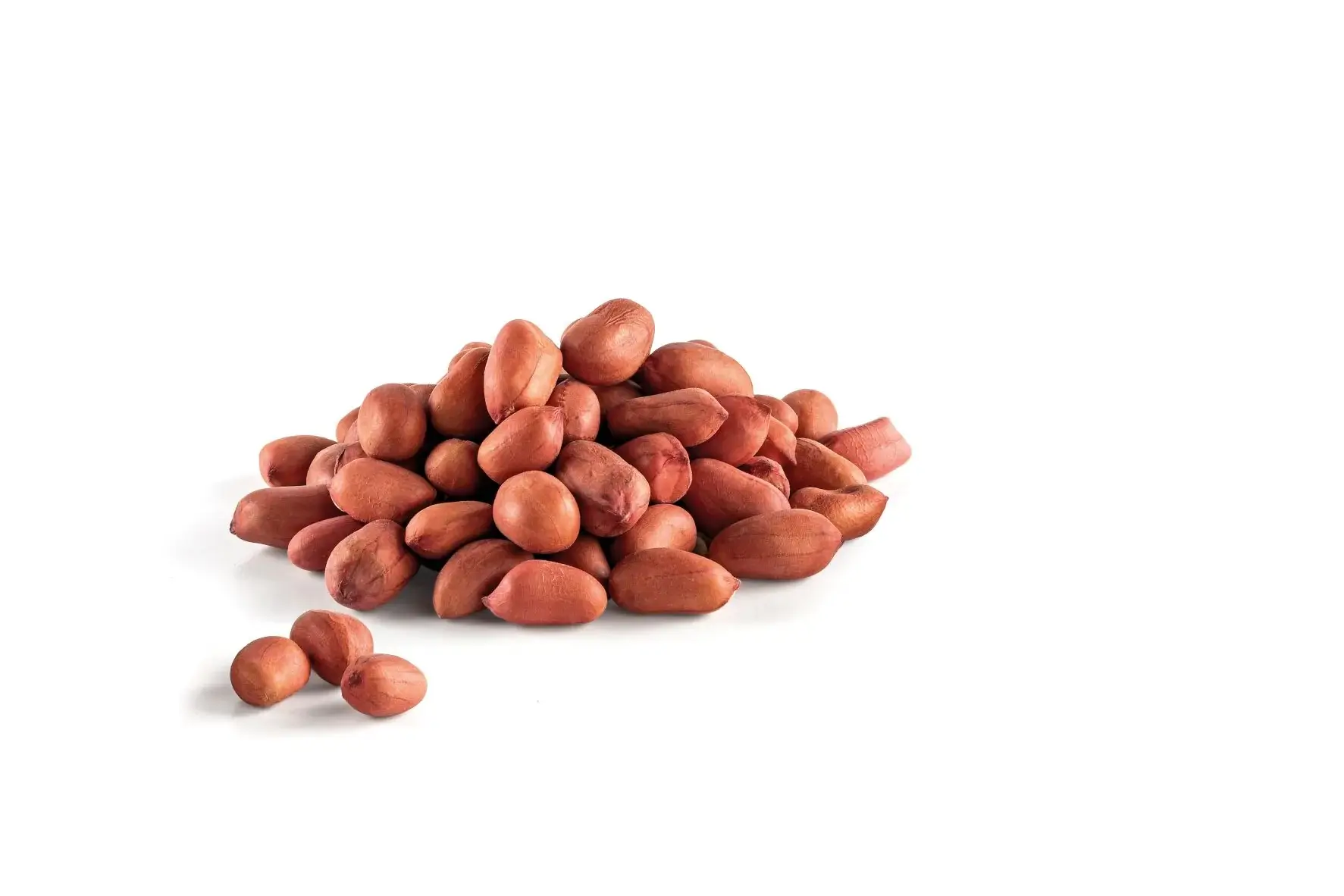
Redskin Organic Peanuts The red-skinned, unsalted and unroasted peanuts are different from the typical nuts at the bar, even at first glance. They can be recognised by their incredibly rich colour and unmistakable taste. The peanuts come from remote mountain regions along the old Silk Road in Uzbekistan, where they have been grown sustainably and organically for decades. To preserve their pure, natural flavour, they are gently dried using solar drying. When you open a pack of these high-quality nuts, you are sure to get curious looks. Everyone immediately recognises that these peanuts are different from all the others. Peanuts are a good source of vitamin B1, E, phosphorus, magnesium and potassium. Store in a dry place away from heat. See bottom of pack for best before date. Use Their delicate flavour and the absence of salt and sugar make peanuts the ideal snack. They are also suitable as a topping for salads and for preparing meals and homemade peanut butter. Warnings Small children can choke on nuts. May contain pieces of shell. May contain traces of other nuts. Nutritional values of Redskin Organic Peanuts per 100g Energy value 2431 kJ / 588 kcal Fat 48g - of which saturated fatty acids 6.4g Carbohydrates 7.5g - of which sugar 2gDietary fibre 12g Protein 25g Salt 0.05g Vitamin B1 0.9mg (82%)*Vitamin E 10.3mg (86%)* Phosphorus 341mg (86%)*Magnesium 163mg (43%)* Potassium 661mg (33%)* *according to nutrient reference values
Content: 250 Gramm (CHF 4.80 / 100 Gramm)
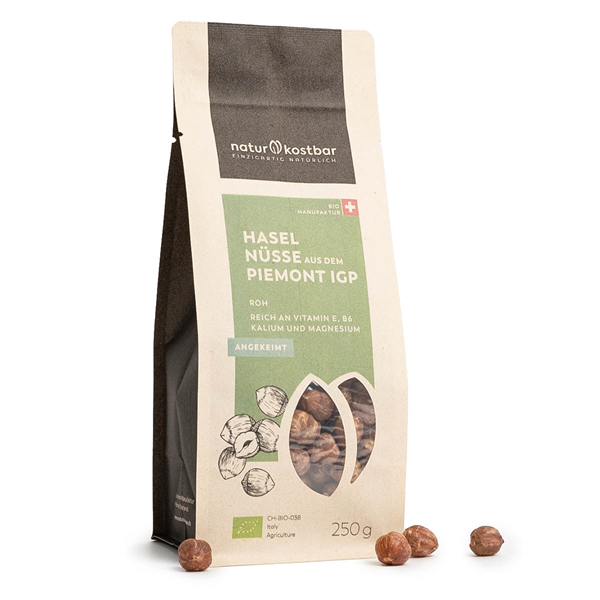
Organic sprouted hazelnuts - double the magnesium and calcium content The organic hazelnuts from Piedmont are soaked and sprouted in the Naturkostbar factory for several hours. They are then dried for 24 hours at a maximum temperature of 42° C. Germination neutralises the phytic acid present in the hazelnuts and significantly increases the nutrient density. In addition, the hazelnuts can be digested better, which also improves nutrient absorption. Use of sprouted hazelnuts Like normal hazelnuts, sprouted hazelnuts are suitable as a snack on their own or mixed with dried fruit and cocoa beans to make a delicious trail mix. Additional information Contents: Bag with 250g. Caution: May contain pieces of shell. Origin and production: Organic hazelnuts from Piedmont (Italy), sprouted in the Naturkostbar Manufaktur in Uetendorf near Thun. Organic certificate: CH-BIO-086 Nutritional values of sprouted hazelnuts Nutritional values Øper 100g/100ml%11 Reference quantity for an average adult (8400kJ/2000kcal) Energy 2650kJ (643kcal) 32% fat 59.5g 85% of which saturated fatty acids 4.2g 21% of which monounsaturated fatty acids 46.6g 311% of which polyunsaturated fatty acids 6.5g - Carbohydrates 6.9g 3% thereof sugar 4.3g 5% Dietary fibre 9.7g 19% Protein 15.2g 30% salt 0.01g 0% B-carotene (provitamin A) - - Vitamin A - - Vitamin B1 0.27mg 25% Vitamin B2 0.1mg 7% Vitamin B3 1.3mg 8% Vitamin B6 0.5mg 36% Vitamin B12 - - Vitamin C - - Vitamin D - - Vitamin E 27mg 225% Vitamin K - - biotin - - calcium 160mg 20% chloride 11mg 1% chromium - - iron 3.6mg 26% fluoride - - Folic acid/folacin 41µg 21% iodine 6.5µg 4% Potassium 720mg 36% Copper - - magnesium 160mg 43% manganese - - molybdenum - - Pantothenic acid 1.2mg 20% phosphorus 320mg 46% selenium - - Zinc 2.9mg 29%
Content: 250 Gramm (CHF 7.56 / 100 Gramm)
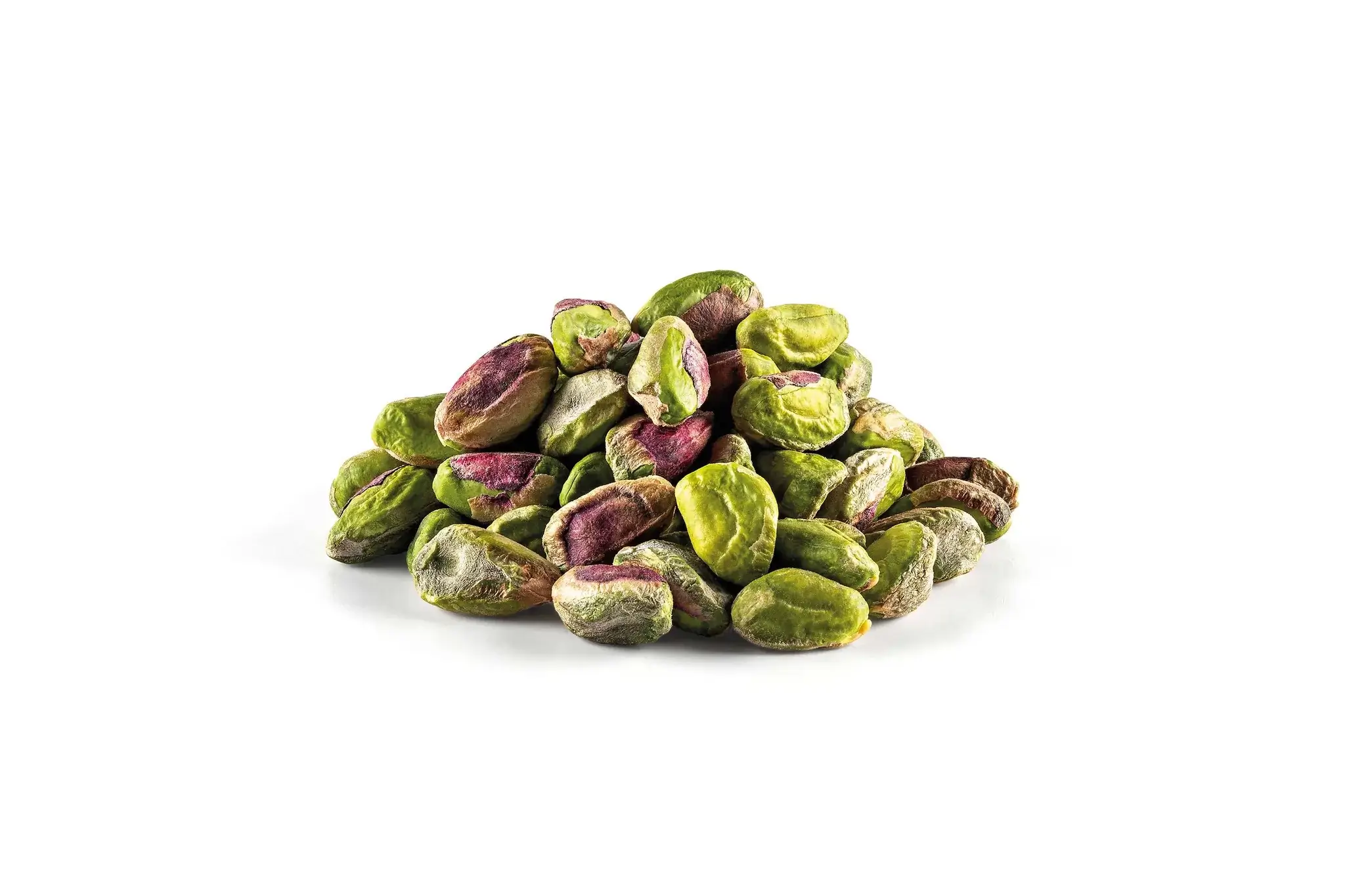
Organic Pistachio Kernels 250g Update: Unfortunately, the new batch of organic pistachios from Spain has been delayed, but will be packed and available on 24 July 26. Our shelled, raw pistachios have an intense and delicious flavour. They come from Spain. The pistachios are carefully harvested and processed, ensuring that their nutrients are preserved as much as possible. They are unroasted, unsalted and contain no additives whatsoever.Pistachios are sometimes referred to as ‘green gold’ because of their colour. Theybelong to the cashew family and are very popular due to their unique flavour and versatility. Our pistachios are raw, organic and of high quality. They are a source of protein, fibre, vitamin E and other minerals. Natural pistachios also contain natural melatonin. Store in a dry place away from heat. The best-before date is usually 1 year. Uses They are ideal as a high-quality snack, as a topping for salads, or for cooking and garnishing (e.g. grated over chocolate desserts). Warnings Small children may choke on nuts. May contain small pieces of shell. May contain traces of other nuts. Nutritional values for pistachios per 100g Energy 2543 kJ / 615 kcal Fat 52g - of which saturated fatty acids 6.8g Carbohydrates 12g - of which sugars 2.3gFibre 11g Protein 21g Salt 0.02gVitamin E 5.2mg (43%)*Magnesium 160mg (43%)* Iron 7.3mg (52%)* *according to nutrient reference values
Content: 250 Gramm (CHF 8.55 / 100 Gramm)
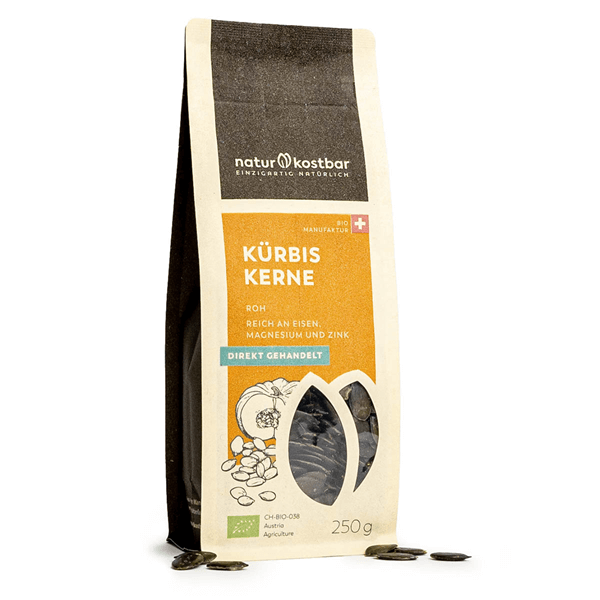
Pumpkin seeds: crunchy seeds full of energy Why and how to use them? Inside the large autumn fruits, the pumpkin seeds develop their fine flavour and are enriched with important vitamins, minerals, polyunsaturated fatty acids and protein. Enjoy the organic pumpkin seeds on their own as a snack, combine them with nuts and fruit or use them to flavour your dishes. They go perfectly with salads, muesli and savoury dishes. They also cut a fine figure in bread dough or as a decoration on vegetable dishes. The pumpkin seeds even release their delicious flavour when made into pesto. What makes these pumpkin seeds special? These pumpkin seeds are organically grown on an Austrian family farm. After harvesting, they are gently and slowly dried to preserve all their valuable nutrients. The raw seeds are then sent directly to the factory in Uetendorf. Ingredients Organic pumpkin seeds from Austria. Nutritional information Nutritional values Øper 100g/100ml%1 Energy: 2364kJ/565kcal 28,25% Fat: 44.00g 62,86% of which saturated fatty acids: 9.37g 46,85% of which monounsaturated fatty acids: 10.60g 70,67% of which polyunsaturated fatty acids: 23.60g 157,33% Carbohydrates: 4.70g 1,81% of which sugar: 2.10g 2,33% Dietary fibre: 8.80g 17,60% Protein: 35.00g 70,00% salt: 0.10g 1,67% Vitamin E: 4.00mg 33,33% Vitamin B1 (thiamine): 0.22mg 20,00% Vitamin B2 (riboflavin): 0.30mg 21,43% Vitamin B6: 0.10mg 7,14% Calcium: 41.00mg 5,13% Phosphorus: 830.00mg 118,57% Iron: 12.50mg 89,29% Magnesium: 402.00mg 107,20% Zinc: 7.00mg 70,00% Iodine: 12.00µg 8,00% Manganese: 1.00mg 50,00% Fluoride: 0.10mg 2,86% Potassium: 814.00mg 40,70% Chloride: 80.00mg 10,00% 1 Reference amount for an average adult (8400kJ/2000kcal)
Content: 250 Gramm (CHF 3.38 / 100 Gramm)
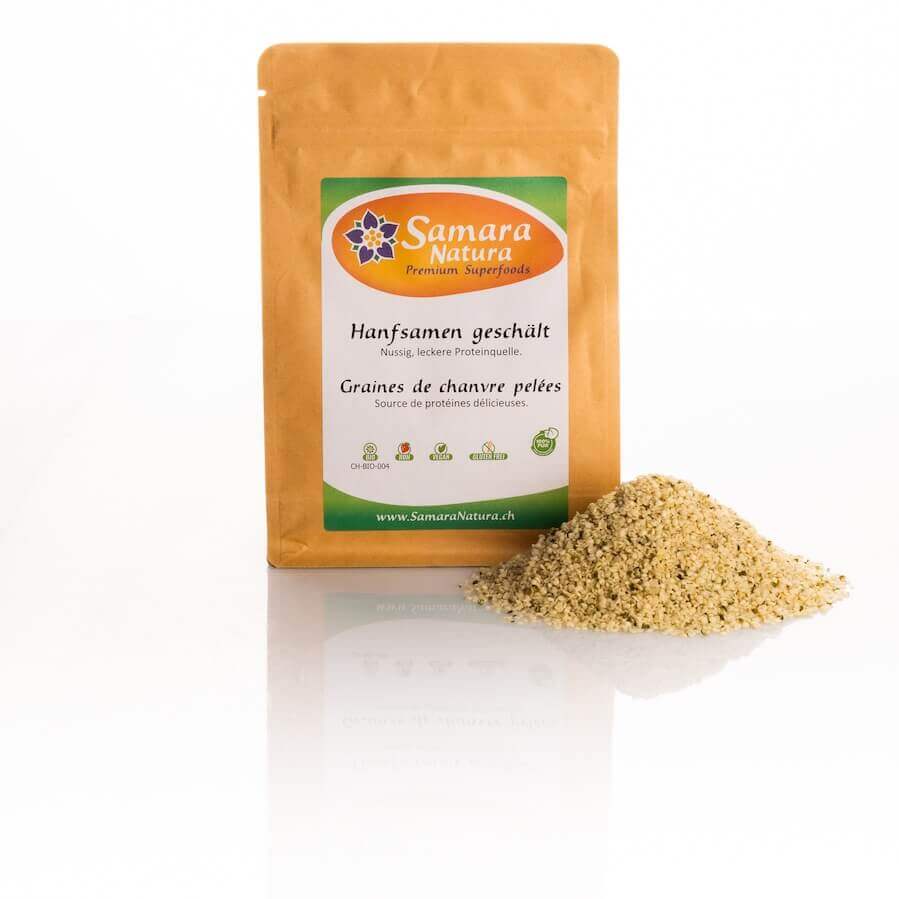
Hulled hemp seeds - protein-rich power food Hemp seeds are characterised by an unusually high nutrient density. Rich in easily digestible protein, essential fatty acids, vitamins, minerals, antioxidants, fibre and lecithin in perfect balance for our bodies. Hemp has an optimal functional ratio of omega-3 to omega-6 fatty acids for humans, which is generally considered to be 4:1. Hemp seeds are therefore an excellent brain food, beautify the skin and promote the oxygen supply to the cells. Hemp seeds are a good food for the supply of EFS, linoleic acid, alpha-linolenic acid and the rare gamma-linolenic acid. These fatty acids are required for the production of numerous hormones and for cell renewal. They support the functions of the human body to maintain health and contribute to the normal development and growth of the organism. Omega-3 fatty acids are incorporated into the cell membrane and are necessary for its structure and function. Omega-3 fatty acids have an influence on blood lipid regulation. They contribute to health as part of a balanced diet. An ideal food for athletes, as edible hemp builds muscle and increases endurance. Vegetarians also benefit from this rich and high-quality source of protein. In contrast to whole seeds, hulled hemp seeds have a low fibre content. Why we love hulled hemp seeds Hemp seeds are a wonderful gift from nature. Not only are they one of the most nutritious foods on the planet, they are also the most environmentally friendly food ever! Hemp grows easily everywhere, requires no pesticides or herbicides and is suitable for the production of almost everything we need in our modern society: Clothes, paper, biodegradable plastic, fuel, cars, building insulation, just to name a few. In addition, hemp seeds offer outstanding health benefits. They contain all the essential amino acids and essential fatty acids (including the rare gamma-linolenic acid!) that the body cannot produce itself and that are necessary for maintaining healthy human life. Hardly any other plant source contains essential amino acids in such an easily digestible form or essential fatty acids in such an optimal ratio for humans. Because shelled hemp seeds are so rich in important nutrients, we consume plenty of them every day. A feat that is easy to accomplish, as hulled hemp seeds are a delicious and versatile food. SamaraNatura hulled hemp seeds Our hulled hemp seeds are obtained from legal, officially authorised cultivars that are grown in Austria without pesticides or agrochemicals. The omega-3 content in hemp seeds is higher when the plant grows in cooler climates, such as in Germany and Austria. Use of hulled hemp seeds Delicious on their own or sprinkled over salads, soups and other dishes; as an ingredient in smoothies, muesli and desserts. Beginner or child (2-9 years): 15-30 grams per day Teenager (10-18 years): 30-50 grams Adults: 50-75 grams per day Competitive athletes: up to 140 grams per day Hemp seeds should only be eaten raw and should not be cooked with food. As hemp seeds do not contain the enzyme inhibitors typical of many seeds, they can be eaten raw without having to soak them in water first. You can also drink hemp fresh in the form of milk by pureeing the peeled seeds in water and straining them if necessary (see recipe). Weight variants As we have constantly received requests for larger packaging units, we now offer the following bag sizes: 250g, 500g, 1kg and 12.5kg. To change the size, simply click on "Weight variants" at the top right. Nutritional values of hulled hemp seeds per 100g Energy value 2627kJ/635kcalFat 55gof which saturated fatty acids 4.8gOmega-3 fatty acids 10gCarbohydrates 2.8gof which sugar 1.9gDietary fibre 4.1gProtein 29gSalt 0.03g
Content: 250 Gramm (CHF 5.13 / 100 Gramm)
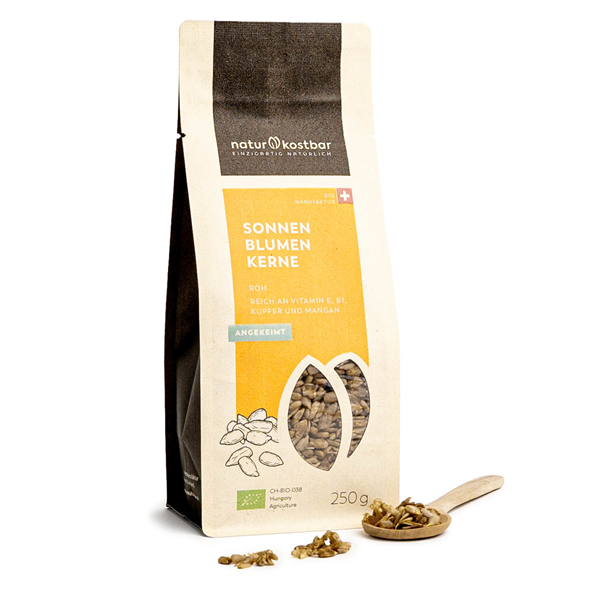
Sunflower seeds sprouted - better digestible These sprouted organic sunflower seeds are easier to digest due to the sprouting process and have more enzymes and a significantly higher nutrient density. The sunflower seeds come from a family farm in Transylvania, Romania. The small farm specialises in sprouted raw food and processes the harvest of numerous organic farmers from Europe. The mindful, natural philosophy is reflected in the excellent quality of the sunflower seeds. Contents: Bag with 250g. Use These sprouted sunflower seeds have a mild, nutty flavour. Thanks to their crunchy consistency, sunflower seeds add flavour to salads, muesli, porridge, dips and are a perfect snack between meals. Nutritional information sprouted sunflower seeds Energy / nutrient per 100gg/mg/μg%*1*1 Reference amount/daily intake for an average adult (8400kJ/2000kcal) Energy 2749kJ (665kcal) 33% fat 61.4g 88% of which saturated fatty acids 6.7g 34% Carbohydrates 5.7g 2% thereof sugar 2.6g 3% Protein 20g 40% salt 0.04g 1%
Content: 250 Gramm (CHF 2.62 / 100 Gramm)
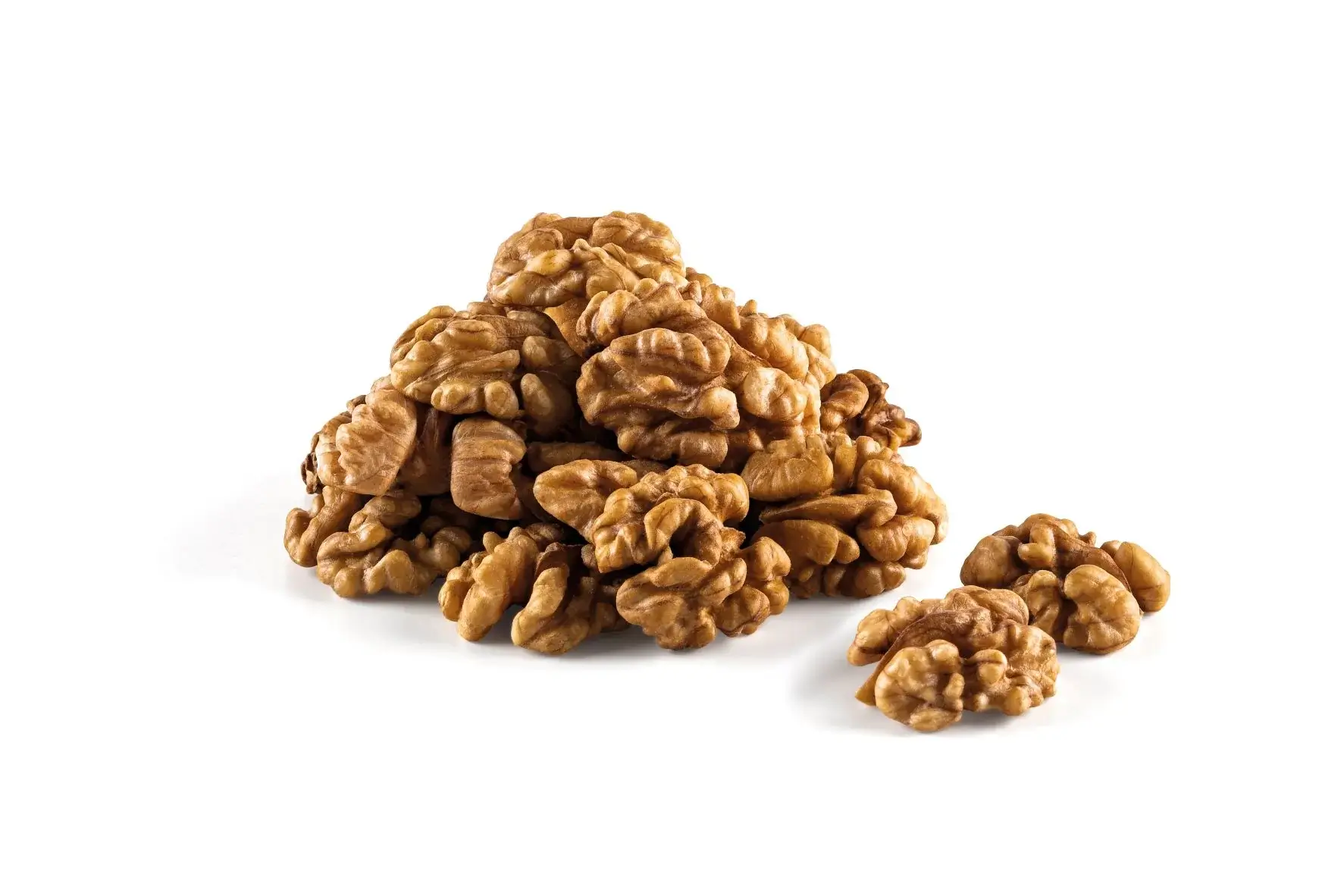
Organic Fairtrade tree nuts Update: The organic Fairtrade tree nuts are sold out and will be discontinued. As an alternative, we recommend the sprouted Swiss tree nuts from Naturkostbar. The untreated organic Fairtrade tree nuts are crunchy, complex in flavour and very nutritious. They ripen on wild walnut trees in the mountains of Samarkand (Uzbekistan), close to the ancient Silk Road. They are harvested by small farmers. Harvesting and careful processing are carried out using traditional methods. After shelling, sorting and drying in the sun, the beautiful nuts are ready to eat. They are 100% natural. Even the ancient Romans and Greeks were great fans of the delicious tree nuts and wrote extensively about their health benefits and uses. Even today, tree nuts are recognised as a source of omega-3 fatty acids. Store in a dry and cool place (normal room temperature). Best before date 30.04.2025. Origin (grown and processed) in Uzbekistan. Usage Due to their size, our delicious walnut halves are the perfect addition to muesli, salads, for baking (e.g. banana bread) or as a snack or trail mix when travelling. Warnings Small children can choke on nuts. May contain pieces of shell despite careful processing. May contain traces of other nuts. Nutritional values tree nuts per 100g Energy value 2786 kJ / 675 kcalFat 63g - of which saturated fatty acids 6.7gCarbohydrates 11g - of which sugar 6.9gFibre 6.1gProtein 14gSalt 0.01gOmega-3 fatty acids 7.5mg
Content: 250 Gramm (CHF 5.60 / 100 Gramm)
Das Spezielle an unseren Nüssen ist, dass Sie in Bio- und Rohkostqualität sind. Das Nüsse nicht automatisch roh sind, zeigt sich exemplarisch am Fall der Cashewnüsse. Bei diesen wird in der Regel vor dem Öffnen Dampf injeziert um das Brechen der Nuss zu reduzieren. Zudem werden viele Nüsse maschinell geknackt, was natürlich wirtschaflich interessanter ist, jedoch immer auch Wärme entsteht. Handgekanackte Nüsse sind aufgrund der manuellen Arbeit zwar teurer, aber deutlich genussvoller und Ernährungstechnisch deutlich interessanter.