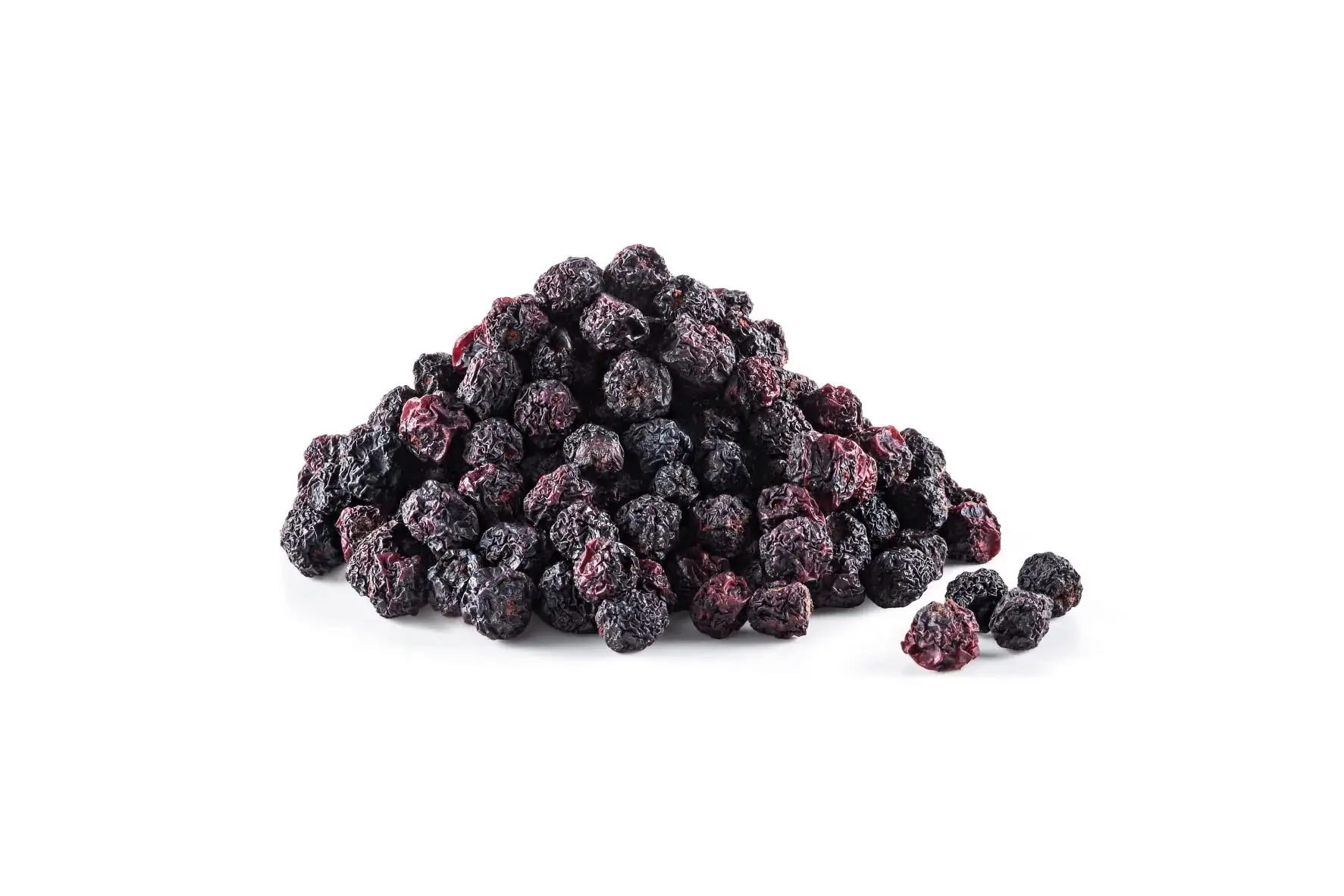
Swiss organic dried aronia berries The largest and most beautiful aronia berries (also known as chokeberries) are used for drying. Smaller berries are used for juice production. Only fully ripened, healthy and cleanly washed organic aronia berries are processed. Our chokeberries are 100% natural, carefully processed and dried at temperatures below 42°C. They contain no preservatives, colourings, sweeteners or other additives. The producer is very experienced and checks the aronia berries regularly. The aronia berries have a dark purple, almost black colour. They are fruity-sour, aromatic and delicious. Grown, dried and packaged in Switzerland100% natural quality - organic, raw, unoiled, unsweetened and unsulphurised Rich and complex natural flavour Low in calories, rich in fibre, vitamin C and manganese Unique mouth-drying effect A great addition to a health-conscious diet Aronia berries (also known as black chokeberries) are small dark fruits that grow on shrubs of the multi-stemmed Rosaceae family. They are originally native to North America, but are now also cultivated in Europe. In recent years, chokeberries have become popular as a superfood, thanks to a number of positive effects on health. Its second name "chokeberries" is derived from its strong mouth-drying effect, which can be surprising if you are not familiar with it. We source our berries from a Swiss chokeberry pioneer who guarantees the best quality. Our raw, gently dried and unsulphurised aronia berries are also great in terms of nutritional value: they are a fantastic source of fibre, vitamin C and manganese. As a retailer, we are not allowed to make any claims or health promises, but there are many exciting articles on the Internet about aronia berries and their effects. Uses Aronia berries can be used as a snack between meals or as an ingredient in muesli. Warnings May contain traces of perennials. May have a laxative effect if consumed in excess due to the tannins and bitter substances it contains. Nutritional values of dried aronia berries per 100g Energy value 1374 kJ / 324 kcal Fat 1.3g - of which saturated fatty acids 0.85g Carbohydrates 73g - of which sugar 27gDietary fibre 20g Protein 5g Salt 0.02gVitamin E 6.2mg (52%)*Potassium 784mg (39%)* *according to nutrient reference values
Content: 250 Gramm (CHF 6.80 / 100 Gramm)
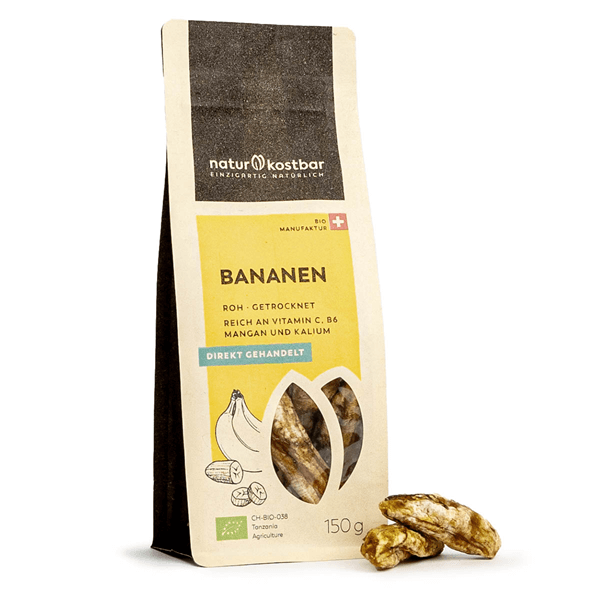
Baby bananas dried organic Update: As PlantLife has gone bankrupt, we now have 150g bags from Naturkostbar in our range for CHF 13.50. Bananas are popular worldwide for their sweet flavour, nutritional content and friendly appearance. Seriously: Google a banana and tell us it's not funny. It's the only fruit shaped like a smile! Of course, one downside to bananas is that they can easily get squished and eventually turn brown or mushy. That's why we dry our baby bananas in the sun, so that we can preserve the wonderful flavour and nutrients in a natural way. Our fruity, flavoursome and sweet baby bananas are grown and dried using natural methods for the best natural quality: we source them from Sri Lanka. By growing them organically, local farmers make an important daily contribution to an environmentally friendly approach to nature. The baby bananas are carefully picked by hand and gently dried. They are processed entirely by hand and under high hygienic conditions. This ensures that the dried organic bananas are of outstanding quality. In their dried form, they taste different to fresh bananas - aromatic, intense - but pleasantly soft. Bananas are an excellent source of potassium, which helps against muscle cramps and can alleviate nervous stress. They are also full of natural energy and are very easy to digest, making them a perfect snack for an active lifestyle. They are also rich in vitamin B6, which is important for the functioning of the nervous system. Warnings May contain traces of nuts. Nutritional values of dried baby bananas per 100g Energy value 1319 kJ / 314 kcal Fat 1.0g - of which saturated fatty acids 0.2g Carbohydrates 69g - of which sugar 37gDietary fibre 8.5g Protein 3.3g Salt 0.01gVitamin B6 0.95mg (86%)*Potassium 1430mg (72%)*Magnesium 137mg (37%)* *according to nutrient reference values
Content: 150 Gramm (CHF 8.55 / 100 Gramm)
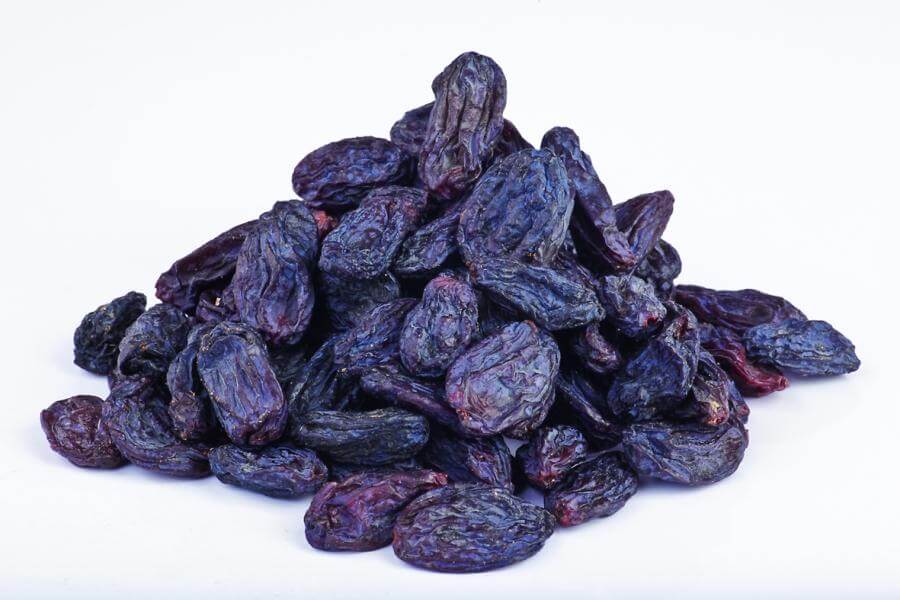
Update: Due to the uncertain supply situation regarding Bukhara raisins, sales are currently limited to 3 bags per customer. Organic Black Bukhara Raisins Organic Fairtrade dried black Bukhara raisins are particularly attractive, large, black raisins with a matt sheen. The flesh is soft and intensely sweet and fruity, contains no seeds, and the skin is firm. Origin These raisins take their name from the city of Bukhara, one of Uzbekistan’s most significant cities, which, with its numerous buildings, is a UNESCO World Heritage Site. The city was a major centre of the Persian Empire and an important transport hub on the southern Silk Road. Uses As a snack between meals. Add to salads, muesli and yoghurt, or combine with other dried fruits, nuts or cocoa nibs.Warning: May contain traces of nuts. Nutritional values for Organic Black Bukhara Raisins per 100g Energy 1262 kJ/298 kcalFat 0.6gof which saturated fat 0.2gCarbohydrates 68gof which sugars 63gFibre 3.7gProtein 2.5gSalt 0.05g
Content: 250 Gramm (CHF 6.27 / 100 Gramm)
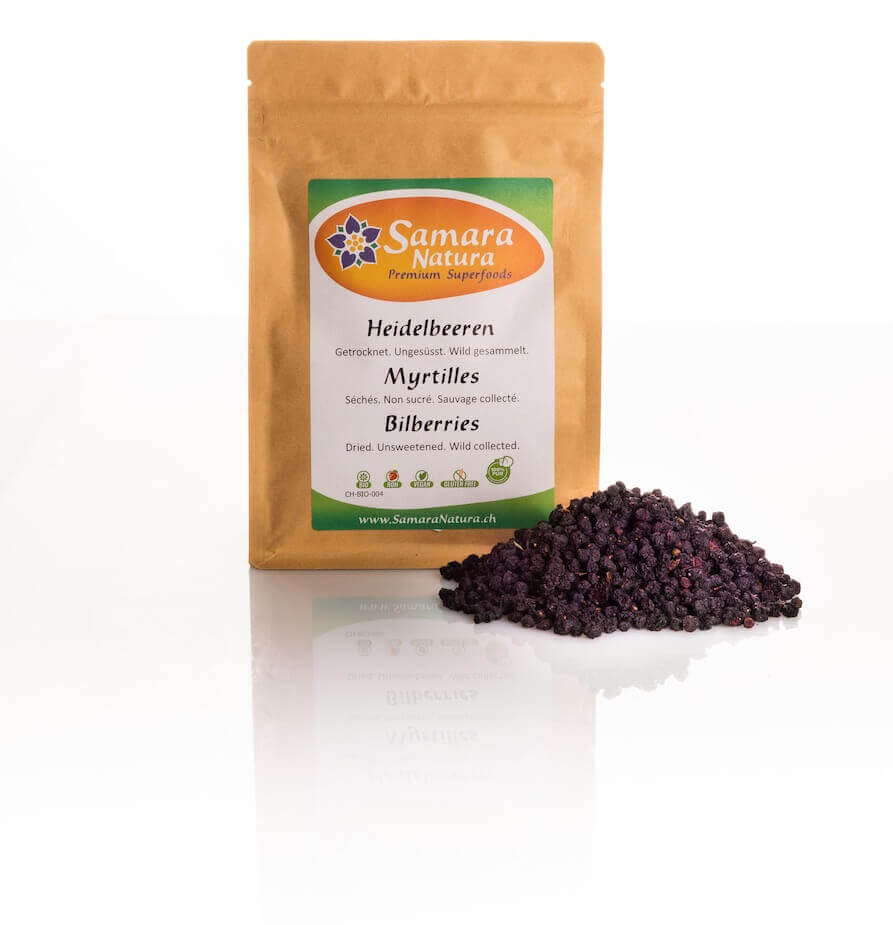
Wild organic blueberries - antioxidants and flavour combined To complement our range, we also offer organic blueberry powder from Bosnia. Packed with healthy nutrients like no other fruit - a real superfruit. Why eat dried organic blueberries from wild harvesting? Great snack: delicious and nutritious Wide range of important nutrients and particularly rich in vitamins C, E and B6 as well as iron, fibre and other vital substances such as resveratrol, zeaxanthin, lutein, anthocyanins and other polyphenolic compounds Because they contain such a high amount of phenols, especially gallic acid, blueberries are known as "nerve protectors". According to researchers from Iran, this means that they can literally protect our brains from degeneration, neurotoxicity and oxidative stress. Particularly for a fruit is its high iron content, which boosts energy levels by producing oxygen-rich blood cells throughout the body. In addition, dried wild blueberries contain a very high antioxidant capacity of around 50,000 µmol TE/100g (ORAC value = Oxygen Radical Absorption Capacity). For healthy skin Skin care products containing bilberry extract are becoming increasingly popular around the world. It has been reported that the broad spectrum of vitamins and minerals helps to restore hormonal balance, which counteracts acne. This makes blueberries an excellent home remedy for acne. Blueberries also contain resveratrol, a natural sunscreen that can tan your skin. What makes our wild organic blueberries special? 100% natural, gently processed and dried (raw food quality) No preservatives, colourings, sweeteners or other unnatural additives Natural flavour: sweet and sour, fruity and very aromatic Dark purple colour (high quality and purity) and quite dry and crispy Different sizes and origins Dried organic blueberries from wild collection are very difficult to obtain. In northern countries they are also often frozen or freeze-dried. The latest batch of air-dried blueberries comes from Bosnia again and we have packed them in 125g, 250g and 1kg bags. The difference between wild and cultivated blueberries They look almost the same. Both are blue, round and taste great. But what are the differences between these two berries? Wild blueberries compared to cultivated blueberries have a higher vitamin content and a much higher anthocyanin content. Blueberry has become a universal name for blue-coloured berries of the Vaccinium genus, but it is good to know the difference between cultivated blueberries (often called American blueberries or blueberries) and wild blueberries (European blueberries). While cultivated blueberries are grown in various places around the world, wild blueberries grow on small bushes mainly in the northern parts of the Northern Hemisphere. The anthocyanins in the wild blueberry are visible to the eye as blue and red pigments in the flesh, which is juicy and bluish-purple in colour. The cultivated blueberry, on the other hand, has an almost transparent white and somewhat floury flesh. The wild blueberry has certainly been used since the 16th century, both the dried berries and the leaves. Modern interest stems in part from the use of the fruit by British pilots during the Second World War, when pilots noticed that their night vision was better on bombing missions after eating bilberry jam. Nowadays, only garden blueberries (American blueberries) from cultivation are available, which are simply not as good and significantly less rich in vital substances than wild blueberries. How to integrate them into your daily diet? Thanks to their intense, typical blueberry flavour, they are perfect as an addition to muesli, smoothies and as a dessert topping. When making smoothies, we recommend soaking the wild blueberries overnight to make them easier to blend. They also go well in yoghurt (including vegan coconut yoghurt) and honey. A real treat! Nutritional values of wild blueberries per 100g Energy value 1310 kJ / 310 kcalProtein 5 gCarbohydrates 58 gof which sugar 37 gFat 6.3 gof which saturated fatty acids 0 gof which monounsaturated fatty acids 3.33 gof which polyunsaturated fatty acids 2.97 gDietary fibre 36.4 gVitamin C 223 mg (278%*)Vitamin E 14.1 mg (117%*)Vitamin B6 0.74 mg (53%*)Iron 5.2 mg (37%*)All information is subject to the usual fluctuations in natural products.*Per cent of the recommended daily intake for an adult according to the LGV. Storage: Store in a cool, dry and dark place.
Content: 125 Gramm (CHF 15.20 / 100 Gramm)

Update: The new batch of Medjool dates is now available. They are large, aromatic and wonderfully juicy (but not too sticky). Organic Medjool dates with stones These Medjool dates are large and have a particularly soft, creamy texture. They taste honey-sweet and are very delicious. Origin: Palestine We source these aromatic and tender organic Medjool dates from a leading producer in Palestine. In the fertile regions, the fruits ripen and dry on date palms up to 30 metres tall. Date palms have been growing there naturally for over 6,000 years. These sweet powerhouses are harvested in autumn. Raw-grade dates To our knowledge, dates are often heated to ensure they are free from pests. However, the producer in Palestine takes special care to ensure that the dates are not exposed to temperatures above 42 degrees. That is why these dates are labelled as raw. Uses Thanks to their sweet, caramel-like flavour, they enhance desserts, muesli and salads. With their fruity sweetness, they are ideal for making confectionery. You can find the recipe for healthy date Christmas confectionery on the recipes page. Dates are also a perfect snack for in between meals and a quick source of energy during exercise. Nutritional values for Medjool dates per 100g Energy 1237 kJ / 296 kcalFat 0g- of which saturated fatty acids 0gCarbohydrates 68g- of which sugars 67gDietary fibre 7gProtein 2gSalt 0g Additional information on Medjool dates Ingredients: 100% organic Medjool dates, completely free from additives.Contents: 500g.Warning: Medjool dates contain a stone, so please take particular care when chewing. It is better to cut the dates in half and remove the stone. Keep out of reach of children (choking hazard). Organic certification: CH-BIO-004.Storage: Store in a cool, dark and dry place.
Content: 500 Gramm (CHF 3.80 / 100 Gramm)
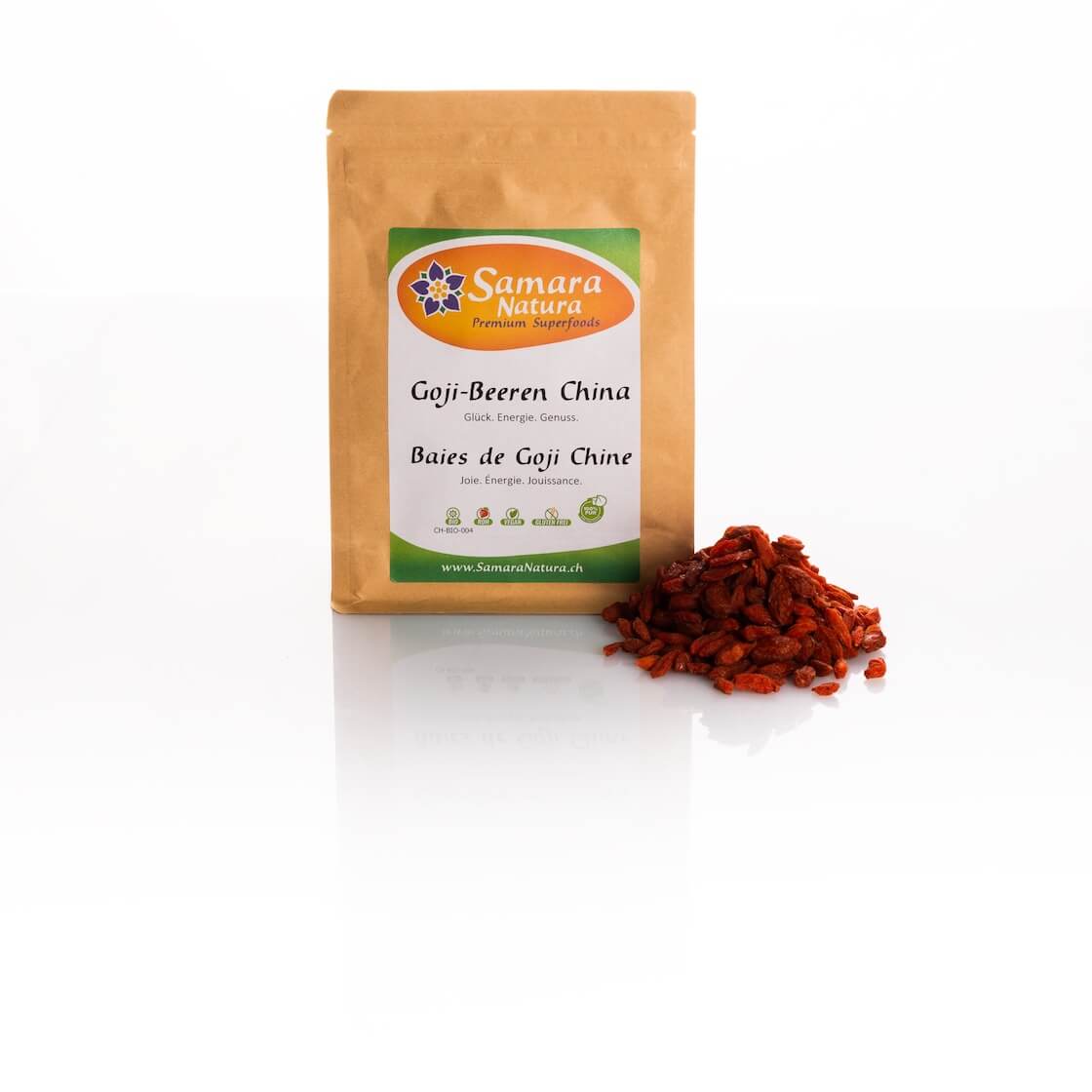
Goji berries - the super berries (100% natural) For thousands of years, goji berries have enriched the diet of the inhabitants of the Himalayan regions and energised them. Goji berries support a happy and active life, which is why goji berries are also called lucky berries in China. Why eat goji berries?The delicious bright red goji berries (Lycium) are one of the most nutritious fruits on the planet. The goji berry is not only a true superfruit, but it also tastes delicious and can be consumed very easily and in many ways. They are a source of complete protein with 18 amino acids, contain up to 21 trace elements, B vitamins, polysaccharides and much more. Gojis have more vitamin C than oranges, more beta-carotene than carrots and more iron than a steak! What makes our goji berries special? Our goji berries are grown in the fertile valleys of Ningxia Province in China without the use of pesticides and agrochemicals. There, on their native soil, the berries ripen on the bush, are harvested in the summer months and dried at low temperatures to preserve as many nutrients as possible. The berries are dried to a water content of 10-14% for a soft texture and can be rehydrated by simply soaking if required. Our pure goji berries are raw food quality, vegan and organically grown. How to use goji berries? Goji berries have a mildly spicy flavour that is slightly sweet and sour. They are similar in shape and texture to sultanas and like sultanas, goji berries can be eaten on their own or used as an ingredient in muesli, mixtures of nuts and other dried fruits, whole fruits and desserts. You can also add the berries to tea, juice, smoothie or soup, or make your own goji juice by soaking the berries in water. You can be creative with this delicious superfood and let your imagination run wild. Recommended amount: about 10-30 grams per day. The locals who grow the berries eat a handful every day. Dried goji berries can be kept for well over a year if stored correctly. Note: A common misconception about superfoods and herbs is that there is a standard dosage. We believe that the right amount for an individual depends on their size, sensitivity, age, gender and other factors that make them unique. Nutritional values of organic goji berries per 100g Energy value 1378kJ/326kcal, fat 2.3g- of which saturated fatty acids 0.4gCarbohydrates 60.3g- of which sugar 50gDietary fibre 12.6gProtein 9.8gSalt 1g.
Content: 250 Gramm (CHF 6.84 / 100 Gramm)
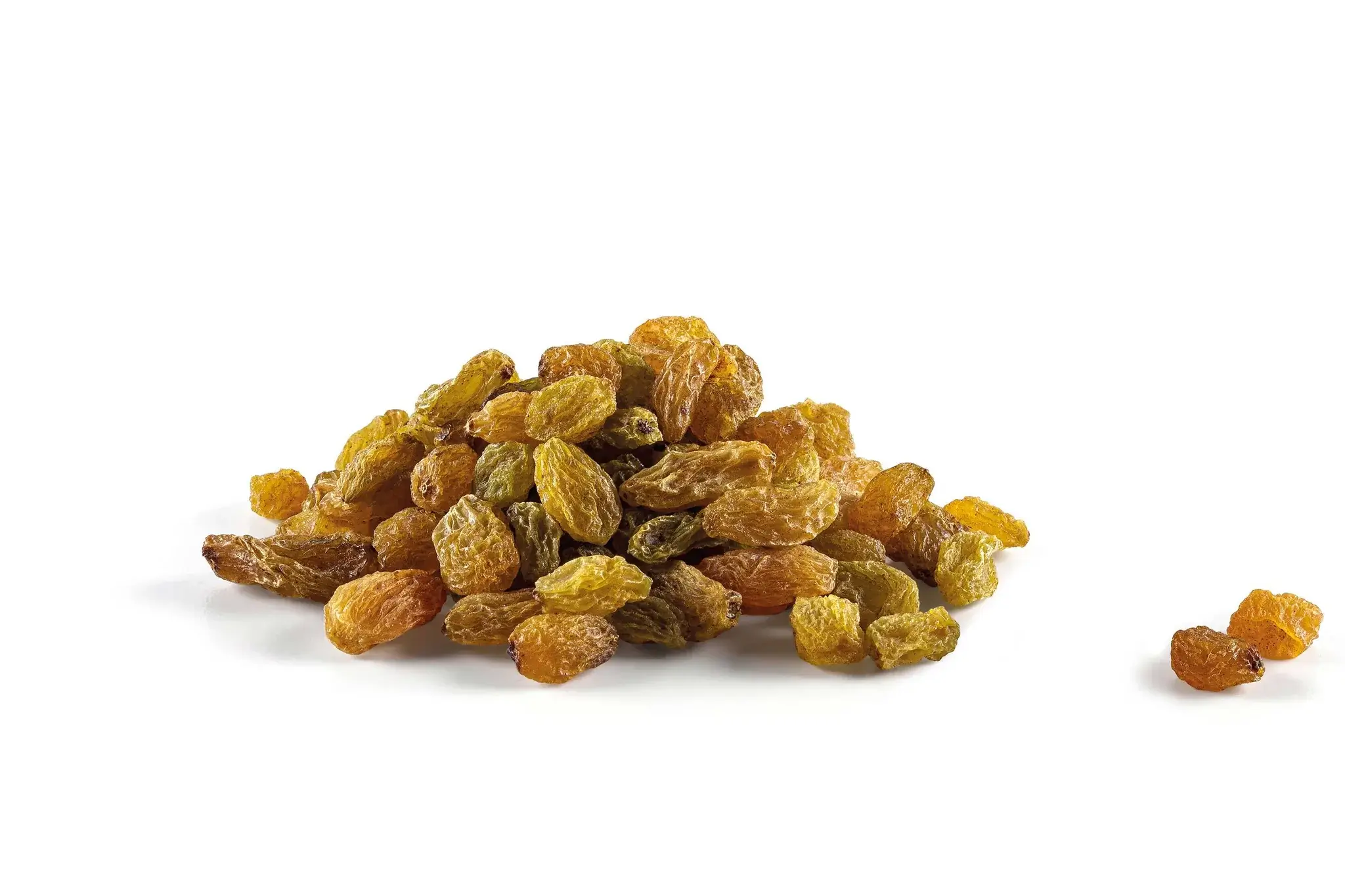
Update: Due to the uncertain supply situation regarding Khorog raisins, sales are currently limited to 5 bags per customer. Organic Green Khorog Raisins High-quality, raw, uncoated, unsulphured organic raisins from Uzbekistan. They are named after the ancient city of Khorog, which lies in the mountains along the old Silk Road. Green Khorog raisins are no ordinary raisins. The differences between the various types of raisins are greater than you might think. They differ significantly from one another in both appearance and flavour. As well as these Khorog raisins, our range also includes black Bukhara raisins and Manucca raisins. Khorog raisins have a sweet flavour, but are not too sweet. If the packet is left open for a while, they change colour from green to brown. Our Green Khorog raisins are picked at the peak of ripeness and gently dried in the shade to preserve their natural quality. Uses Due to their unique flavour, we recommend enjoying the green Khorog raisins on their own. However, they can also be added to muesli, trail mix or snack bars, and can be used in baking. Khorog raisins are also particularly well suited for stirring into a curry. Raisins are a good source of antioxidants, fibre, iron and calcium. And, incidentally, they are quite high in calories, so do keep an eye on your portion sizes! Warnings May contain traces of nuts. Nutritional values for green Khorog raisins per 100g Energy 1262 kJ / 298 kcal Fat 0.6 g - of which saturated fatty acids 0.2g Carbohydrates 66g - of which sugars 60gDietary fibre 5.2g Protein 2.5g Salt 0.05g
Content: 250 Gramm (CHF 5.13 / 100 Gramm)
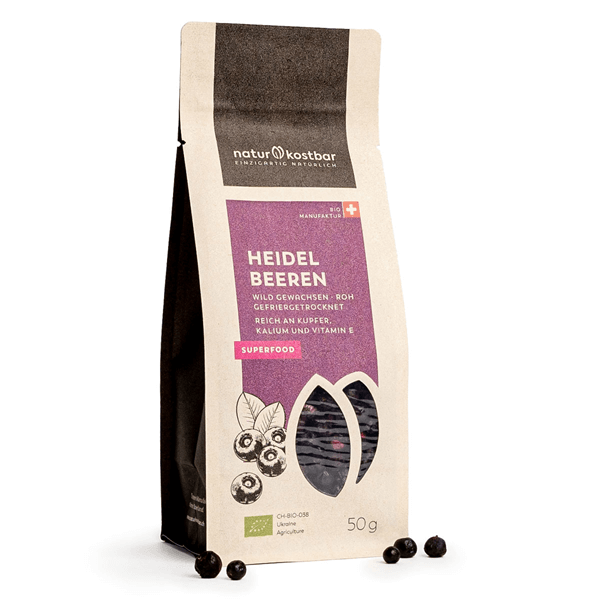
Wild blueberries, freeze-dried, Naturkostbar, 50g A small berry with a big impact. Discover the intense flavour of wild blueberries. Why and how to use them? Wild blueberries are true superheroes for your health. They provide important antioxidants and nutrients, helping to ensure a balanced diet. Numerous scientific studies confirm their positive effects on the body. Enjoy the freeze-dried blueberries on their own as a snack or combine them with other fruits and nuts. They’re perfect in your morning muesli, in refreshing smoothies or in delicious berry desserts. Whether at the office, at school or on the go – these little energy boosters are always a good choice. What makes these wild blueberries so special? Compared to their cultivated relatives, they’re packed with valuable phytochemicals. These little powerhouses are harvested by hand in certified organic wild berry areas and then gently freeze-dried. This ensures that their unique flavours and valuable nutrients are optimally preserved. Tip: Let the blueberries steep in (plant-based) milk for a while and give your muesli or drink a beautiful blue colour. A real treat, even for children. Please note: The pack contains a desiccant sachet.This is standard for freeze-dried products. It prevents the freeze-dried blueberries from quickly absorbing moisture and clumping together. Nevertheless, we recommend always sealing the bag and enjoying the product quickly once opened. Ingredients 100% wild blueberries, certified organic. Product information Contents: 50g, Origin: Kosovo, Organic Certificate No. CH-BIO-038. Nutritional information Nutritional values (average)per 100g/100ml%1 Energy: 1419 kJ/339 kcal 16.95% Fat: 5.40 g 7.71% Carbohydrates: 66.60g 25.62% of which sugars: 48.80g 54.22% Fibre: 16.30g 32.60% Protein: 5.90g 11.80% Vitamin A: 4.90 µg 0.61% Vitamin E: 3.60 mg 30.00% Folic acid/folacin: 50.50 µg 25.25% Calcium: 138.20 mg 17.28% Phosphorus: 111.20 mg 15.89% Magnesium: 32.10 mg 8.56% Copper: 0.80 mg 80.00% Potassium: 615.90 mg 30.80% 1Reference intake for an average adult (8,400 kJ/2,000 kcal)
Content: 50 Gramm (CHF 30.22 / 100 Gramm)
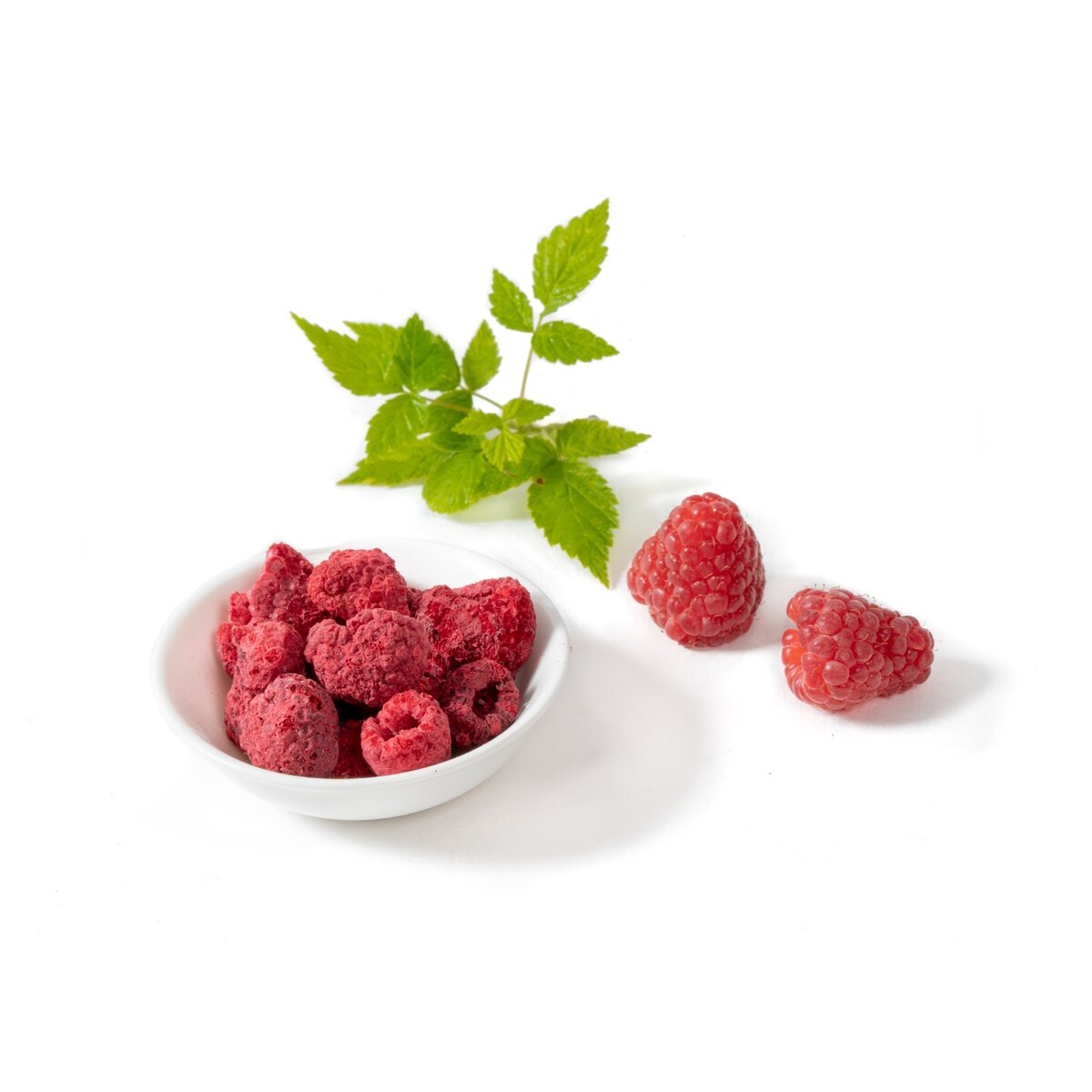
Organic freeze-dried raspberries Naturkostbar’s freeze-dried raspberries are crisp, aromatic and delicious, bringing a summery, fruity flavour all year round. Production The sun-ripened organic raspberries from Serbia are processed locally immediately after harvesting. They are freeze-dried using state-of-the-art technology, whereby the water bound as ice is removed in a vacuum. In the process, the raspberries lose 90% of their weight but retain their natural appearance, their intense flavour and most of their nutrients. Furthermore, the raspberries remain of raw food quality. Contents: 50g sachet. Uses With their delicious fruity flavour, these freeze-dried whole raspberries are perfect in muesli and as a topping for desserts. They’re also delicious with nuts and other dried fruit as a snack between meals. The freeze-dried raspberries can also be soaked briefly in water to restore their juiciness. Nutritional information for freeze-dried raspberries per 100g Energy / Nutrients per 100gg/mg/μg%*1*1Reference intake/daily intake for an average adult (8400 kJ/2000 kcal) Energy 1655 kJ (394 kcal) 19% Fat 1.9 g 1% of which saturated fatty acids 0.1g 0% Carbohydrates 86.7g 34% of which sugars 34.6g 71% Fibre 28g 29% Protein 7.1g 9% Salt 0.01g 0% Vitamin C 156 mg 195% Calcium 250 mg 31%
Content: 50 Gramm (CHF 20.72 / 100 Gramm)
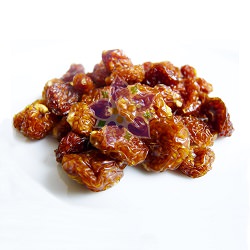
Inca berry – a sweet-and-sour superfruit Inca berries (Physalis peruviana), also known as Andean or Cape gooseberries, grow wild on the mineral-rich soils of the Peruvian Andes and have been enjoyed in South American cultures for thousands of years. An ancient foodstuff and one of the last crops cultivated by the Incas, it has been enjoying a global resurgence in popularity for several years now. These delicious, sweet-and-sour berries grow inside protective, paper-like husks that look like little Chinese lanterns. Why we love Inca berries Inca berries have an exquisite, exotic, sweet-and-sour flavour that is second to none. A delicious snack. Connoisseurs enjoy them with chocolate products and alongside wine. The Inca berry is also known as the ‘Goji berry of South America’. The small, chewable seeds of these Andean berries have a mild laxative effect. SamaraNatura Organic Inca Berries SamaraNatura Inca berries are of raw food quality and are grown without pesticides or agrochemicals. Our Inca berries are soft and relatively sweet, not as tart as those usually found. Harvesting and drying these precious little berries is a very time-consuming task, which explains their relatively high price. In fact, it takes one person a whole day just to clean around 10 kg of fresh fruit. The berries are placed in sun-drying racks and removed once they have reached the perfect level of moisture and are still slightly soft. It takes around 3 kg of fresh fruit to produce 500 g of dried berries. Uses Excellent on their own as a snack. Their exquisite, exotic flavour pairs wonderfully with chocolate and wine. Inca berries enhance many desserts, smoothies, muesli, baked goods, trail mix and jams. Their distinctive balance of sweet and sour flavours also goes well with chia pudding and lucuma. Nutritional values for Inca berries (Physalis) per 100g Energy 1276 kJ/304 kcalFat 5.6gof which saturated fatty acids 0.5gCarbohydrates 49.0gof which sugars 34.4gProtein 6.6gSalt <0.1g
Content: 250 Gramm (CHF 6.04 / 100 Gramm)
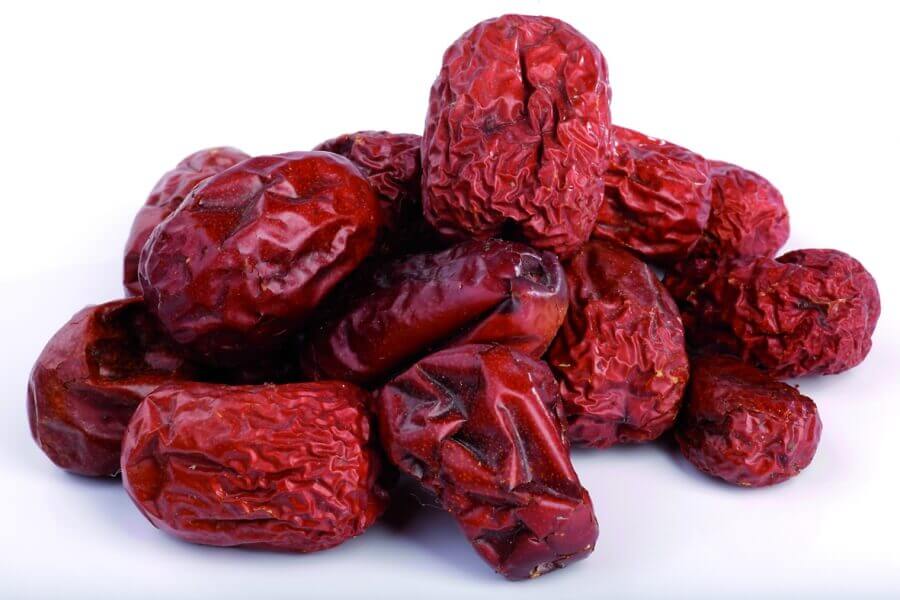
Organic jujube with stone from wild collection in premium quality Update: The new batch of jujube will be packed on 29 May at the latest and will be available again from then. Attention: These are whole jujubes with stone. Be careful when eating! Jujubes belong to the botanical family of buckthorn plants and have been cultivated in China for over 4000 years. There are at least 400 varieties of jujube. Although they are sometimes referred to as red dates, Chinese dates or Indian dates, they are not related to dates and grow on relatively small trees, Ziziphus jujube, which thrive in extreme temperatures. Jujubes are brown-red on the outside and beige on the inside, with a crispy, edible skin and a sweet flavour like a mixture of dried apples, pears and dates with a marshmallow texture. Why consume Jujubes? Jujubes contain a wide range of different nutrients, including 18 of the most important amino acids and magnesium, potassium, copper, niacin, calcium, manganese, phosphorus and iron. They contain high amounts of vitamin C, which strengthens the immune system and fights infections. This is possibly the reason why they have been used for thousands of years in many cultures as a tea for sore throats, for example. Test the effect of a jujube tea if you have a cough or sore throat. You can find the recipe in the Recipes tab. The flavonoid apigenin (also found in camomile, thyme and red wine) contains antioxidants and can have a positive effect on the liver, digestion and allergies. It is also said to be anti-inflammatory. What makes our wild organic jujubes special? Our red dates come from certified organic cultivation in north-west China. This is where the flavour and special ingredients develop well in the warm and long summers. The jujubes are carefully harvested and dried at below 42°C by gentle solar drying and then sorted by hand. Jujube is a super delicious fruit with a unique texture that is extremely rare to find. It is not too sweet and is an ideal, healthy snack. How to use jujubes? We recommend these interesting jujube berries, which are a little less sweet than other dried fruits, as a snack between meals. Dried jujubes can be used instead of dates or apples in recipes. Jujubes can also be used as a tea (see tab Recipes). Recommendation: Soak the jujube in water for 2 hours. This makes them softer and slightly sweeter. Nutritional values of organic jujube per 100g Energy value 1157kJ/276kcalFat 0.8gof which saturated fatty acids 0.2gCarbohydrates 61.8 gof which sugar 61.8 gProtein 3.6 gDietary fibre 10.8gSalt 0.02gVitamin C 119mg (200%*) All information is subject to the usual fluctuations for natural products.*Per cent of the recommended daily intake for an adult according to the LGV. Storage: Store in a cool, dry and dark place.
Content: 250 Gramm (CHF 7.22 / 100 Gramm)
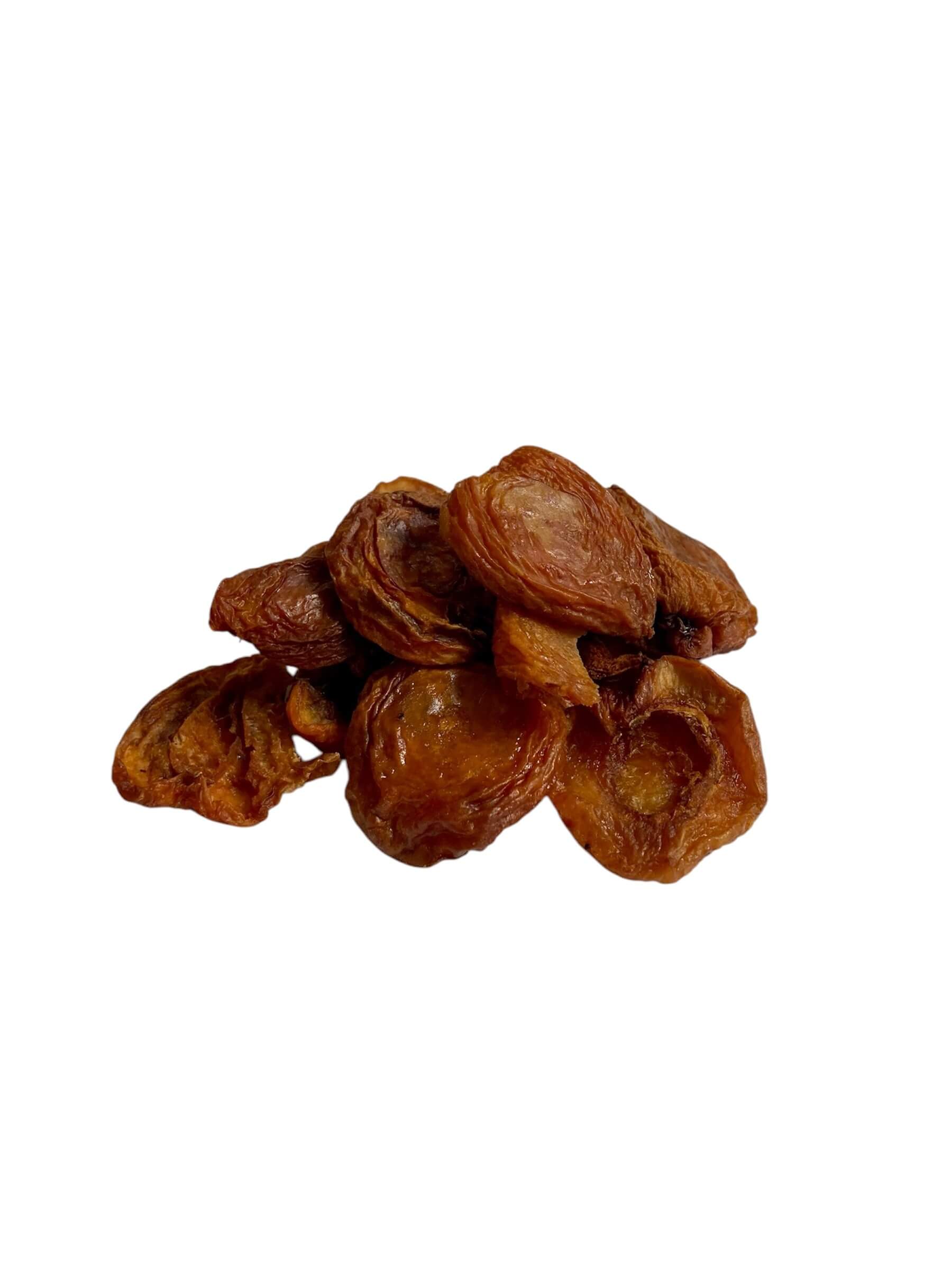
Wild organic Kuraga apricots dried from Uzbekistan The flavoursome Kuraga apricot halves without stones are hand-picked from wild trees. They come from mountainous regions along the old Silk Road in Uzbekistan, where the wild trees contribute to natural biodiversity. The apricots are gently dried in the sun at below 42°C to preserve their natural flavour and nutrients. Kuraga apricots have a stronger sweet and sour flavour than most other apricots. Related to the peach, the apricot is a fragrant fruit with a soft, velvety skin. Uses This versatile fruit is perfect for trail mixes, as a snack, for salads or savoury dishes. Cut into small pieces, Kuraga apricots are also great in muesli or yoghurt. Warnings May contain pits and parts of pits despite careful processing. May contain traces of nuts. Nutritional values Wild Kuraga apricots dried per 100g Energy value 1004 kJ / 238 kcalFat 0.6g - of which saturated fatty acids 0.0gCarbohydrates 48 - of which sugar 45gFibre 11gProtein 5gSalt 0.03g
Content: 250 Gramm (CHF 6.40 / 100 Gramm)

Dried organic mango slices Update: We were able to buy Mexican mango slices again and have packed them in 250g bags. The dried organic mango slices in raw food quality come from the Mexican Pacific coast - the best mango region in the world. They are naturally incredibly sweet and fruity. They are also beautifully soft and fibre-free. The only downside is their high addictive potential. The perfectly ripe mangoes are peeled, cut and gently dried at below 42° C to preserve their natural quality. No preservatives or other artificial additives are used. Like fresh mangoes, these mango slices are an incredible source of energy, fibre and vitamins. Mangoes also contain a unique antioxidant called mangiferin. Uses Their excellent nutritional profile and delicious flavour make our mango halves the perfect snack. Warnings May contain traces of nuts. Nutritional values of dried mango slices per 100g Energy value 1261 kJ / 298 kcal Fat 2.2g - of which saturated fatty acids 0.5g Carbohydrates 62g - of which sugar 60gDietary fibre 8.2g Protein 2.9g Salt 0.06gVitamin B6 0.51mg (36%)*Potassium 835mg (42%)* *according to nutrient reference values
Content: 250 Gramm (CHF 6.08 / 100 Gramm)
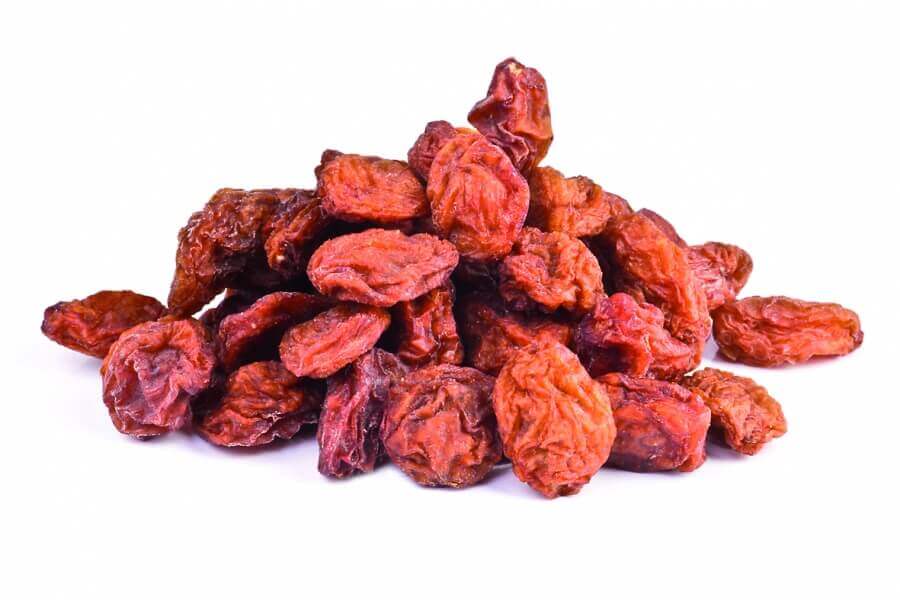
Organic manucca sultanas - the super sultanas Product description Our organic brown manucca sultanas with stone are: 100% pure nature, i.e. unoiled, without artificial additives, without preservatives, without sweeteners, without colourings 100% organic nice sized sultanas with seeds contain antioxidants and omega-3 fatty acids gently sun/solar dried -> raw food quality Dried sultanas contain the same nutrients as fresh grapes, but in a concentrated, concentrated form. Sultanas contain a very high antioxidant capacity of up to 10450 µmol TE (ORAC value = Oxygen Radical Absorption Capacit). Antioxidants prevent unwanted oxidation in our body. They are therefore also known as radical scavengers. Their contribution slows down the ageing process of cells. Equally interesting are the amino acids they contain, especially valine, threonine, lysine, leucine and histidine. The seeds are also very interesting as they contain vitamins A and E as well as polyunsaturated fatty acids such as linoleic acid (omega 6). Properties of manucca sultanas The brown manucca sultana owes its name to the South Sea myrtle, also known as manucca. The legendary manucca honey is made from its flowers with the help of bees. What do manucca sultanas and manucca honey have in common? The honey-golden, brown colour and a fantastic and unique taste. Our organic manucca sultanas are particularly large brown sultanas that contain 1-2 seeds per sultana. The flesh is soft and slightly crunchy due to the centre. The flavour is intensely sweet and fruity, while the stone gives the sultanas a slightly tart note. Origin and production The organic manucca sultanas come exclusively from Uzbekistan. The area is extensively certified organic and FAIRTRADE and is farmed by the FAIRTRADE farmers who live there. The farmers belong to a large Fairtrade community, which is made up of 3 groups, Dustkul Bogi, Turkiston Gulba and Turob Bobo. They include around 1000 individual farmers and their families. Thanks to the co-operation with Fairtrade, the farmers can offer their families a secure income and their children a new perspective. The grapes are harvested by hand when fully ripe, piece by piece, and sorted by hand on the same day. The grapes are then gently dried with the help of the sun. The drying process used is a very environmentally friendly solar drying method that is extremely gentle on the product. Around 700g of fresh organic grapes are needed to produce 100g of organic manucca sultanas, i.e. a ratio of 1:7. Nutritional values of dried manucca sultanas per 100g Energy value 1279 kJ / 302 kcal Fat 0.6g - of which saturated fatty acids 0.2g Carbohydrates 69g - of which sugar 63gDietary fibre 5.2g Protein 2.5g Salt 0.05gPhosphorus 110mg (16%)*Iron 2.3mg (16%)* *according to nutrient reference values
Content: 250 Gramm (CHF 4.00 / 100 Gramm)
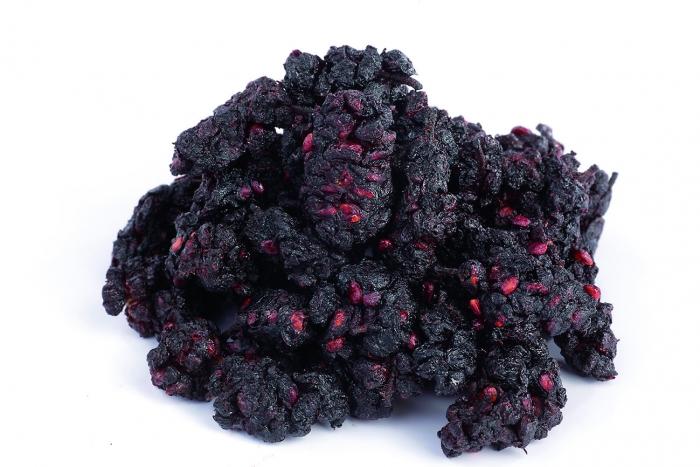
Update: Black mulberries are only comparable to white mulberries to a limited extent. They are less sweet, but more flavoursome, fruity and juicier/stickier. Organic black mulberries black - fruity and delicious Black mulberries have a beautiful and unusually intense purple-black colour. They have been known throughout southern Europe since earliest times and are thought to have been introduced from Persia. It is mentioned by most of the early Greek and Roman writers. In the past, dried black mulberries - known as the king of mulberries - were served at court as a highly exquisite speciality reserved only for the king, queen and esteemed guests. Why consume black mulberries?Delicious and nutritious, natural dried black mulberries are a great snack. They have a wide range of important nutrients, including vitamin C, iron, calcium, fibre, protein and organic compounds, including phytonutrients, zea-xanthin, resveratrol, anthocyanins, lutein and various other polyphenolic compounds. Its high protein and iron content is special for a fruit. The protein content in these super berries makes them particularly nourishing and satisfying, while iron boosts energy levels by producing oxygen-rich blood cells throughout the body. Mulberries are said to be particularly high in antioxidants, which is why they have a reputation as a perfect anti-ageing fruit. Antioxidants neutralise free radicals that can damage the genetic information of our cells.What makes our black mulberries special?Our organic mulberries are 100% natural, carefully processed and dried and contain no preservatives, colourings, sweeteners or other unnatural additives. They come exclusively from Uzbekistan and are grown by the farmers living there, who belong to a large community of 1000 farmers and their families. Our mulberries are harvested by hand when the berries are fully ripe. This ensures the highest nutritional value and freshness. After harvesting, they are carefully washed and gently dried using solar energy. The drying process is very environmentally friendly, with a solar drying method that has a minimal impact on the product. Most berries on the market have added sugar and preservatives. We prefer ours 100% pure, with their wonderful natural flavour. Our black mulberries have a beautiful dark colour, which indicates the quality and purity of the product. Blue and purple foods are very rarely found in modern diets and are so important - black mulberries make eating blue foods a real pleasure. Our organic black mulberries are dark and sticky, but pleasantly soft and large (depending on the harvest). Their flavour is sweet and sour, fruity and very aromatic. How to use black mulberries? Thanks to their intense sweet and sour flavour, they are a delicacy in their own right. They are also perfect as an addition to muesli, smoothies and as a dessert topping. They are a good alternative to dates or sultanas or other dried fruit suitable for sweetening. They go really well in yoghurt (including vegan coconut yoghurt) and honey. A real treat! Nutritional values of black mulberries per 100g Energy value 1310kJ/310kcalFat 3.4 gof which saturated fatty acids 1.1 gCarbohydrates 59 gof which sugar 52 gDietary fibre 7.2gProtein 6.6 gAll information is subject to the usual fluctuations of natural products. Storage: Store in a cool, dry and dark place.
Content: 250 Gramm (CHF 7.41 / 100 Gramm)
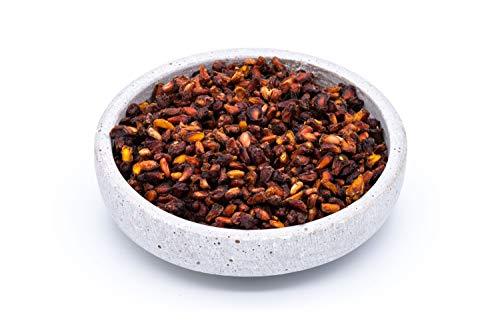
Why consume pomegranate seeds? Not so long ago, Japanese researchers discovered that pomegranates are rich in phyto-oestrogens, especially oestrone. Oestrone is a mildly effective oestrogen that is similar to the female sex hormones. The pomegranate also contains a lot of vitamin C, potassium, antioxidants and fibre. The pomegranate also has a stimulating effect, which is particularly beneficial for chronic fatigue, lack of energy, infections and inflammation. Pomegranates contain large quantities of antioxidant secondary plant substances such as polyphenols (flavonoids, tannins). What makes our pomegranate seeds special? These premium organic pomegranate seeds are particularly dark purple, almost purple in colour and very rich in antioxidants. The pomegranate seeds are characterised by a red to dark purple colour. When they are dried, the moisture in the segments is lost and the kernel with the fruity skin remains. The stone is crispy and edible. The surrounding flesh and skin give the kernels an aromatic, characteristic fruity flavour. Origin and exceptional production The pomegranates are harvested by hand when fully ripe, piece by piece, and are peeled by hand and sun-dried on the same day by the Silk Road Organik Foods processing company. The drying process used is a very environmentally friendly solar drying method, which is also extremely gentle on the product. Around 1 kg of fresh organic fruit is needed to produce 100 g of pomegranate seeds, i.e. a ratio of 1:10! These organic Fairtrade pomegranate seeds come from a remote mountain village in the Varganza Valley in the south of Uzbekistan. They ripen there on trees in the mountainous regions around Samarkand. The area is extensively certified organic and Fairtrade and is farmed by the FAIRTRADE farmers living there. The farmers belong to a large Fairtrade community, which is made up of 3 groups, Dustkul Bogi, Turkiston Gulba and Turob Bobo. They include around 1000 individual farmers and their families. Thanks to the co-operation with Fairtrade, the farmers can offer their families a secure income and their children a new perspective. In Austria, the pomegranate seeds are de-pressurised. The combination of pressure and time ensures that the pomegranates are absolutely pest-free. The history of the pomegranate The pomegranate has been cultivated for over 5000 years, making it one of the oldest plants known to mankind. The name pomegranate goes back to the Romans (lat. granae = seeds, grains; lat. granatus = granular, rich in seeds). The pomegranate has always been a symbol of life and fertility. The pomegranate has a history steeped in legend: it probably helped to trigger the Trojan War, in Christian culture the pomegranate is the symbol of Mary's fertility, it is also regarded as a symbol of life and the Egyptians added it to mummies. To this day, it is considered an aphrodisiac and is an ingredient in countless love drinks. Tips for use Refine your muesli, salads or use the pomegranate seeds for baking. Pomegranate seeds are also suitable as a snack and create an incredible explosion of flavour, especially when combined with nuts and cocoa beans. Nutritional values of organic pomegranate seeds per 100g Energy 308 kcal / 1289 kJFat 2.4gof which saturated fatty acids 0.6gCarbohydrates 64.4gof which sugar 64.4gProtein 2.8gDietary fibre 8.8gSalt <0.01g
Content: 150 Gramm (CHF 10.00 / 100 Gramm)
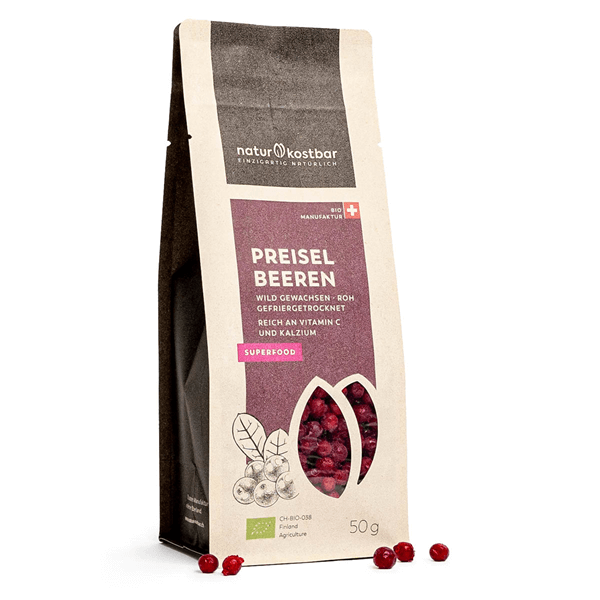
Packung à 50g.
Content: 50 Gramm (CHF 30.22 / 100 Gramm)
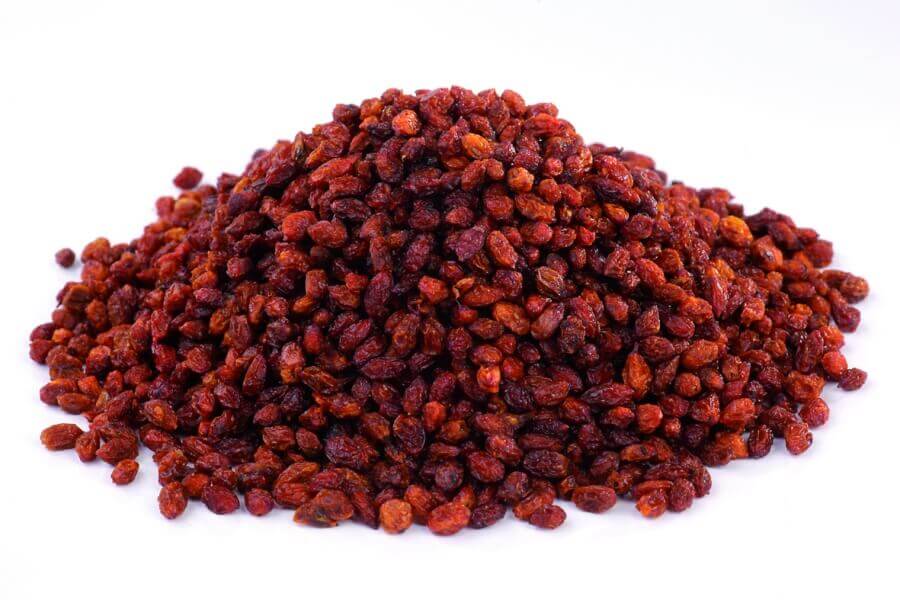
Dried organic sea buckthorn berries - unsweetened & wild harvested Why buy sea buckthorn berries? An analysis carried out by the retailer provided proof of the sensational amounts of vital substances in sea buckthorn. The berries have a very high omega 7 fatty acid and B12 content. This high content is probably only found in Uzbek wild-collected organic sea buckthorn. Cultivated sea buckthorn generally has much lower levels and vitamin B12 in plant foods is very rare! Dried sea buckthorn contains most of the same vital substances and nutrients as fresh sea buckthorn, only in a more concentrated form because the water has been removed. These wild sea buckthorn berries have an intense, spicy and very tart flavour. They have a strong, intense light to dark orange colour. The flesh surrounds a stone, which is also dried. This results in a crispy consistency. What makes our wild organic sea buckthorn berries special? When fully ripe, the wild sea buckthorn berries are picked by hand, washed and gently dried in the sun. The drying process used is a very environmentally friendly solar drying method that is extremely gentle on the product. The organic sea buckthorn berries are - unsulphurised (in accordance with the EU Organic Regulation)- without artificial additives- without preservatives- without colourings Where do our organic sea buckthorn berries come from? Organic sea buckthorn berries from wild collection are very difficult to obtain. We were able to buy a batch from Ukraine. These wild sea buckthorn berries come from the Lviv region in western Ukraine, close to the Polish border. They are packed in 125g bags. How to integrate them into your daily diet? The dried organic sea buckthorn berries are suitable as a small, refreshing snack or as a varied ingredient in your power muesli. To round off the tart flavour, you can combine the sea buckthorn with nuts and sweet dried fruits such as sultanas. Or you can use a healthy sweetener such as agave, yacon or apple syrup. Origin Collected wild and processed in Ukraine. Nutritional values of sea buckthorn berries per 100g Energy value 1116kJ/270kcalFat 21.5gof which saturated fatty acids 1.2gCarbohydrates 8.9gof which sugar 8.8gProtein 5.5gSalt 0.037g All information is subject to the usual fluctuations of natural products. Storage: Store in a cool, dry and dark place.
Content: 125 Gramm (CHF 13.68 / 100 Gramm)
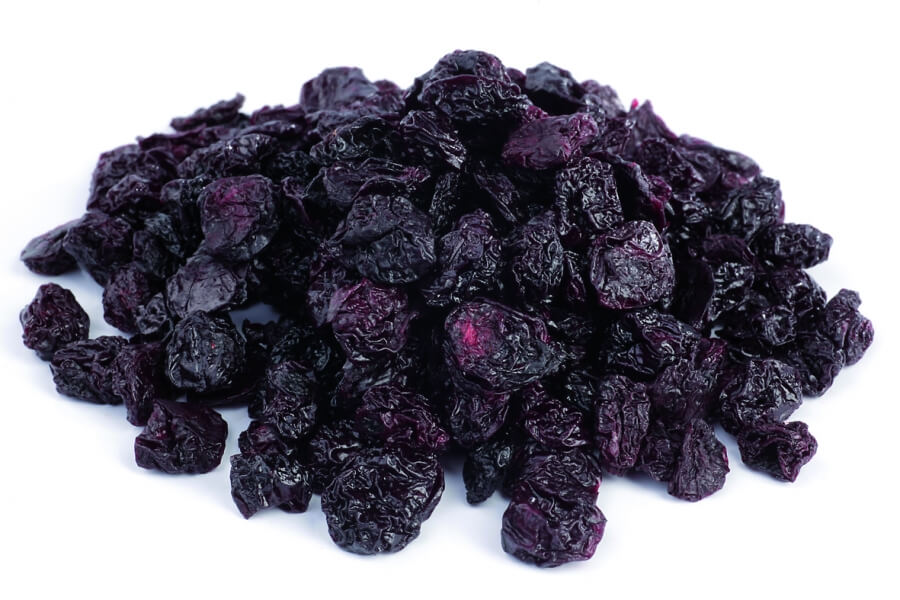
Sour cherries: Organic, raw food & Fairtrade Our wild-collected organic sour cherries from Uzbekistan are very fruity and very tart in flavour. The bright dark colour is created during the gentle drying process. Why SamaraNatura sour cherries From wild collection and therefore particularly rich in nutrients compared to plantation products 100% pure nature, i.e. unoiled, without sweeteners, without preservatives, without colourings in organic & raw food quality Fairtrade certified Gently sun/solar dried De-pressurised and laser-cleaned Origin and production The organic Fairtrade sour cherries come exclusively from Uzbekistan. The area is extensively certified organic and FAIRTRADE and is farmed by the FAIRTRADE farmers living there. The farmers belong to a large Fairtrade community, which is made up of 3 groups, Dustkul Bogi, Turkiston Gulba and Turob Bobo. They include around 1000 individual farmers and their families. Thanks to the co-operation with Fairtrade, the farmers can offer their families a secure income and their children a new perspective. After harvesting, the sour cherries are washed, pitted and gently dried with the help of the sun. The solar drying method is very environmentally friendly and gentle on the produce. Sour cherries (Prunus cerasus) belong to the rose family (Rosaceae). They have less flesh than sweet cherries. Sour cherries originally come from south-west Asia and, unlike sweet cherries, only became known in Europe in the Middle Ages. Average nutritional values per 100g Energy value 1042kJ / 246 kcalFat 0.6gof which saturated fatty acids 0.2gCarbohydrates 50.8gof which sugar 35gFibre 8.3gProtein 5.3gSalt 0.01g Salt 0.05g
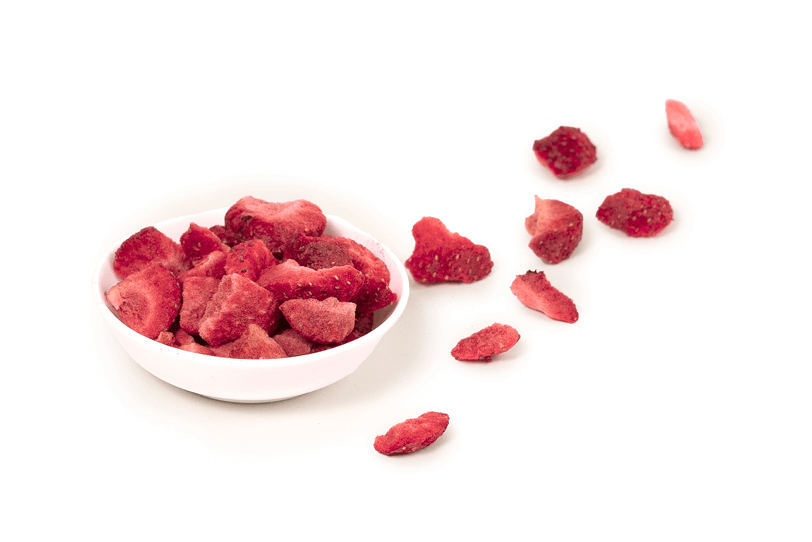
Organic freeze-dried strawberries Crispy, flavoursome, delicious freeze-dried strawberries that give you that summery fruit feeling all year round. What makes our freeze-dried organic strawberries special? The sun-ripened organic strawberries from Serbia are processed on site immediately after harvesting. They are freeze-dried using high-quality technology, whereby the water bound as ice is removed in a vacuum. The strawberries lose 90% of their weight in the process, but retain their natural appearance, intense flavour and most of their nutrients. In addition, the strawberries remain in raw food quality. Contents: Bag with 50g. Recommendations for use With their delicious fruity flavour, these freeze-dried, whole strawberries are perfect in muesli and as a topping for desserts. Also delicious with nuts and other dried fruit as a snack between meals. The freeze-dried strawberries can also be soaked briefly in water to make them juicy again. Nutritional information sprouted freeze-dried strawberries Energy / nutrient per 100gg/mg/μg%*1*1 Reference quantity/daily dose for an average adult (8400kJ/2000kcal) Energy 1608kJ (383kcal) 19% fat 0.4g 1% of which saturated fatty acids 0.04g 0% Carbohydrates 89.3g 34% thereof sugar 63.8g 71% Dietary fibre 14.7g 29% Protein 4.4g 9% salt 0.01g 0% Vitamin C 485mg 606%
Content: 50 Gramm (CHF 22.62 / 100 Gramm)
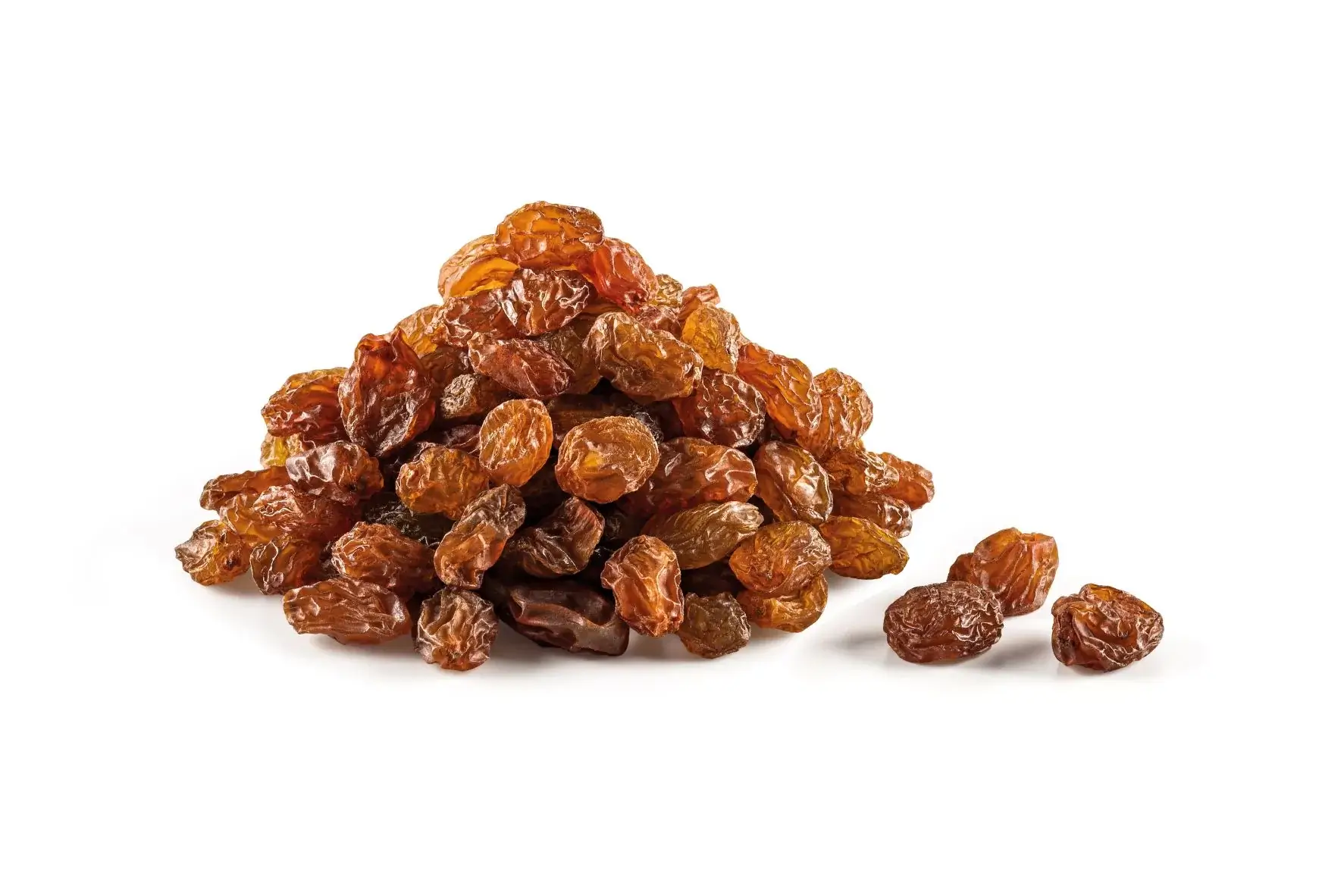
Sultana Organic Raisins The unoiled, unsulphurised organic Sultana sultanas have a sweet taste and are gently dried at below 42°C. They are naturally rich in fibre, phosphorus and iron. They are naturally rich in fibre, phosphorus and iron. Sultanas are seedless, flavourful and have a soft skin. Warnings May contain traces of nuts. Nutritional values of Sultana sultanas per 100g Energy value 1262 kJ / 298 kcal Fat 0.6g - of which saturated fatty acids 0.2g Carbohydrates 68g - of which sugar 67gDietary fibre 5.2g Protein 2.5g Salt 0.05gPhosphorus 110mg (16%)*Iron 2.27mg (16%)* *according to nutrient reference values
Content: 425 Gramm (CHF 2.01 / 100 Gramm)
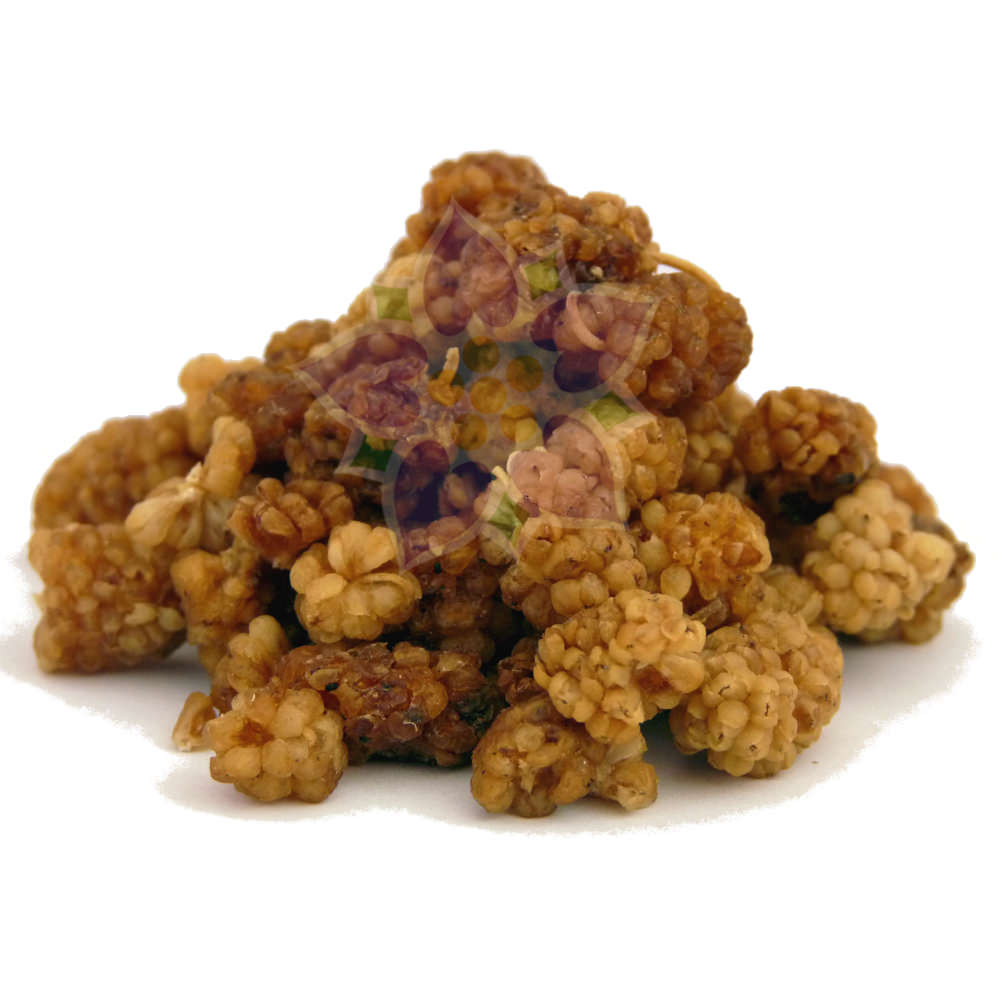
White mulberries - traditional oriental delicacy Our organic white mulberries from Turkey are honey-like sweet, juicy and crunchy at the same time. Just a handful of the natural sweetness provides an amazing package of vitamins, minerals and proteins. Mulberries are rich in resveratrol, a plant defence substance that has strong antioxidant properties in humans. A delicious alternative to sultanas, mulberries can be eaten straight from the bag. Why eat white mulberries? White mulberries(Morus alba) are rich in vitamins B and C, iron, calcium, magnesium, protein and fibre. Together with goji berries and Inca berries, they are one of the few fruits in the world that are considered a good source of protein. The most important antioxidant in mulberries is resveratrol, which is a polyphenol and is also found in grapes. Soft in consistency with a fig-like crunchiness, white mulberries are an excellent natural sweet. An ideal and healthy snack for on the go. What makes our white mulberries special? The white mulberries are shaken from the tree and gently dried at low temperatures to optimise their natural sweetness. Our mulberries are 100% pesticide- and agrochemical-free, raw food quality, preservative-free and sustainably harvested. How to use white mulberries? Simply as a snack or in muesli, yoghurt and smoothies. Mulberries are a delicious snack when mixed with nuts and other dried fruit. They go well with homemade chocolates, pastries and jams. For a nutritious raw muesli, for example, you can mix dried buckwheat sprouts with the mulberries and some fresh fruit and serve with nut milk. Nutritional values of white mulberries per 100g Energy value 1435 kJ/339 kcal, Fat 2.6g, of which saturated fatty acids 1.2g,Carbohydrates/glucides 93g, of which sugar 42.3g,Dietary fibre 11g, protein 10.6g.All information is subject to the usual fluctuations of natural products.
Content: 250 Gramm (CHF 5.13 / 100 Gramm)
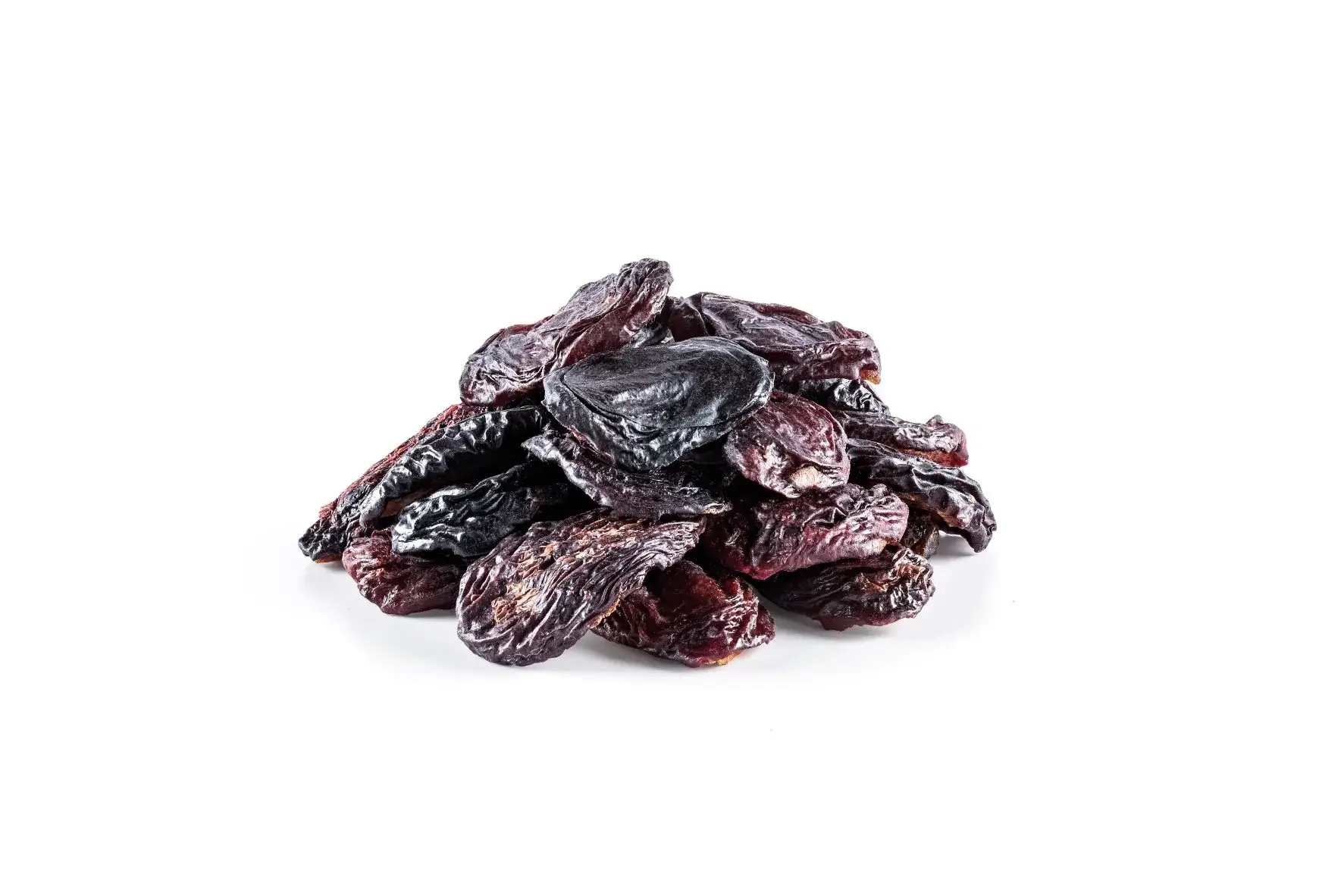
Wild dried plum halves organic bag The raw, unoiled and unsulphured organic prune halves without stones have a delicious, sweet and sour flavour. They grow wild on the mountain slopes along the old Silk Road from Samarkand (Uzbekistan). The wild plums are gently dried in the sun at below 42°C to preserve their natural flavour and nutrients. They are slightly less soft than most plums, but in terms of flavour and nutritional value, they are the best in the world - if you ask us. To make them softer again, you can simply soak the prunes overnight. Why prunes are healthy? We've never understood why "prune" is a dirty word. Because prunes are a valuable food. Prunes are rich in fibre, which can also help with constipation. They also contain sorbitol, which gives them a mild laxative effect. We therefore recommend not snacking on more than a handful. They also contain potassium, niacin, manganese, iron and the mineral boron, which strengthens bones and muscles. Uses The dried fruit can be used in a variety of ways - as a snack between meals, as an exciting addition to muesli, for making your own nut and fruit bars or as an ingredient with a tangy flavour for savoury dishes. Warnings May contain traces of nuts. Nutritional values of dried wild prune halves per 100g Energy value 1000 kJ / 237 kcal Fat 0.6g - of which saturated fatty acids 0.2g Carbohydrates 51g - of which sugar 42gDietary fibre 9g Protein 2.3g Salt 0.02g
Content: 250 Gramm (CHF 5.60 / 100 Gramm)