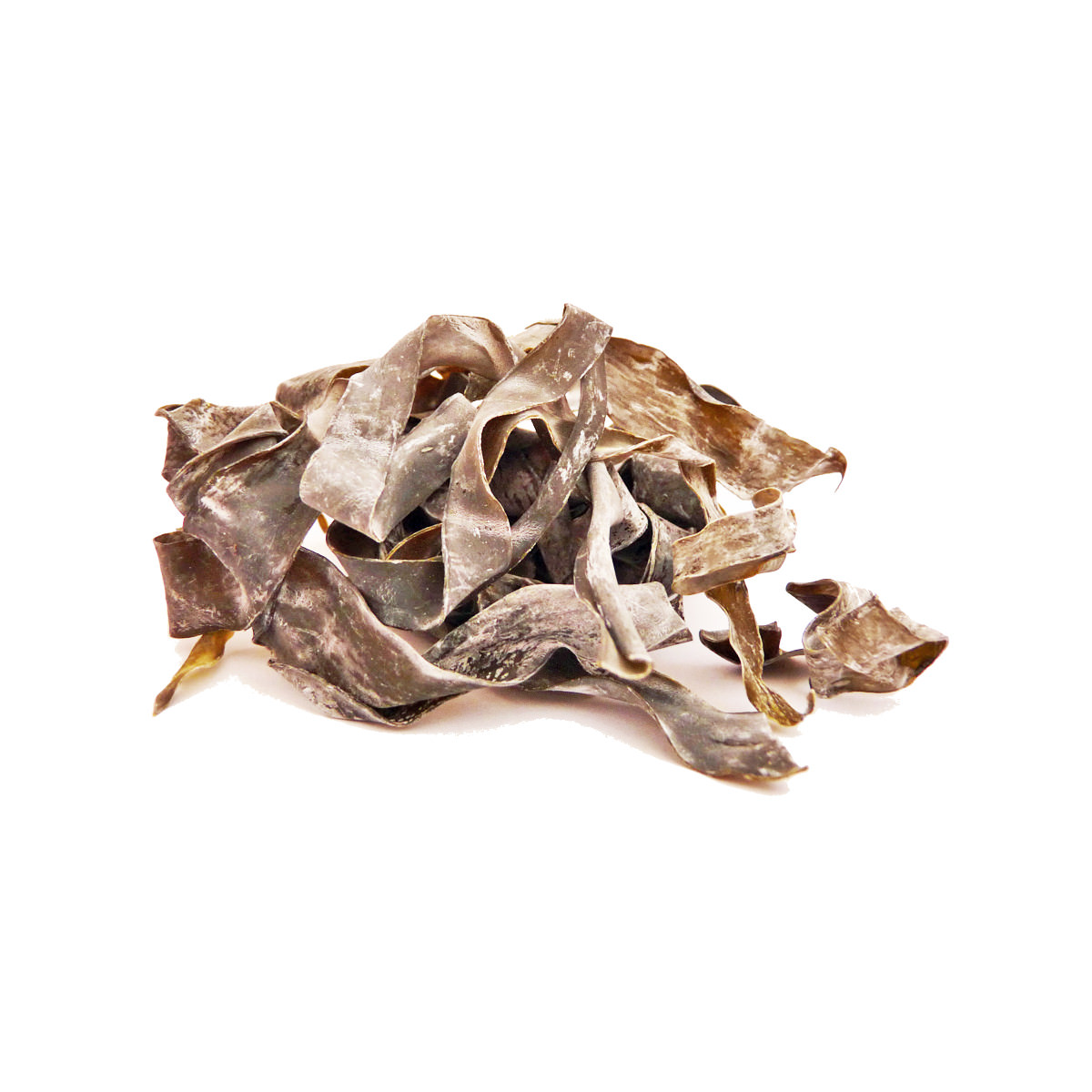
Atlantic kombu (finger kelp) Caution: Due to its high natural iodine content, Atlantic kumbo is not suitable for consumption. Consmetic applications such as face masks are possible. Kombu or finger kelp (Laminaria digitata) belongs to the genus of large brown algae (kelp) and grows in dense stands in shallow waters in calm, sheltered bays. Atlantic kombu is a thinner and more delicate version of Japanese kombu and can be used in exactly the same way - boiled in soups, fried until crispy or steamed and marinated. Kombu is ideal for all bouillons/stocks, where it improves the flavour and nutrient content. In particular, it is used for cooking beans, as it makes the beans more digestible and softer and reduces the cooking time. Kombu is particularly rich in calcium, potassium and magnesium and is also rich in B vitamins. It also contains mannitol, a sugar alcohol, which gives it a slightly sweet flavour and plenty of glutamic acid, an essential amino acid. Why we love kombu Kombu is a wonderful addition to all cooked preparations, especially beans or pulses and soups, by adding a few strips. Bean dishes in particular cook more quickly and are easier to digest. SamaraNatura Kombu Our sea vegetables are collected wild in the north-west of Ireland (Donegal) and harvested by hand. With the help of a cold air drying system, the seaweed is dried very gently and in raw food quality. Usage To enjoy kombu straight from the bag, tear it into strips. A salty, chewy snack that becomes sweeter in flavour over time. For cooking in general, it is best to soak kombu in water for 10 minutes and then simmer it with the dish for 40 minutes. As an alternative to conventional bouillons: one 8 cm long piece per litre of liquid is simmered for at least 10 minutes. Optionally, remove and cut up and add again later or simmer for longer for more flavour. Salads: Soak kombu in water for an hour (or longer), then marinate (for 1-24 hours) or fry in oil. Chop into bite-sized pieces and mix into the salad. The soaking water is nutritious and should also be used, e.g. as a dressing. Beans: Natural glutamates in kombu enhance the flavour and soften the beans. Boil a 5 cm piece of kombu with the beans for at least 10 minutes, for a thick and rich bean broth until the beans are soft. No need to add salt. Serve as a snack or garnish: Tear or chop the kelp/kombu into bite-sized pieces. Roast at 150°C for 3-5 minutes or fry in a frying pan until crispy. Sprinkle these kelp chips over salads, cereals and pasta or enjoy them straight away as a crispy snack. Sea vegetables in general Sea vegetables are wild plants of the ocean that grow on coral reefs and rocky coasts, usually in salt water. Sea vegetables are enjoyed in many coastal regions around the world and enrich most dishes with flavour and nutrients. Sea vegetables contain almost all the minerals and trace elements that the sea has to offer! In general, sea vegetables are an excellent source of calcium, iodine and sodium, a very good source of folic acid and magnesium and a good source of iron, potassium, vitamin B2 and B5. They also contain vitamin K and trace elements such as selenium and chromium, which are often lacking in land vegetables due to depleted soils. When consumed regularly and over a long period of time, sea vegetables are said to help regulate metabolism and energy levels, stimulate the immune system, promote regular digestion, purify the blood and support the endocrine glands - especially the thyroid gland. Sea vegetables are an ideal substitute for salt in the diet.
Content: 40 Gramm (CHF 20.75 / 100 Gramm)
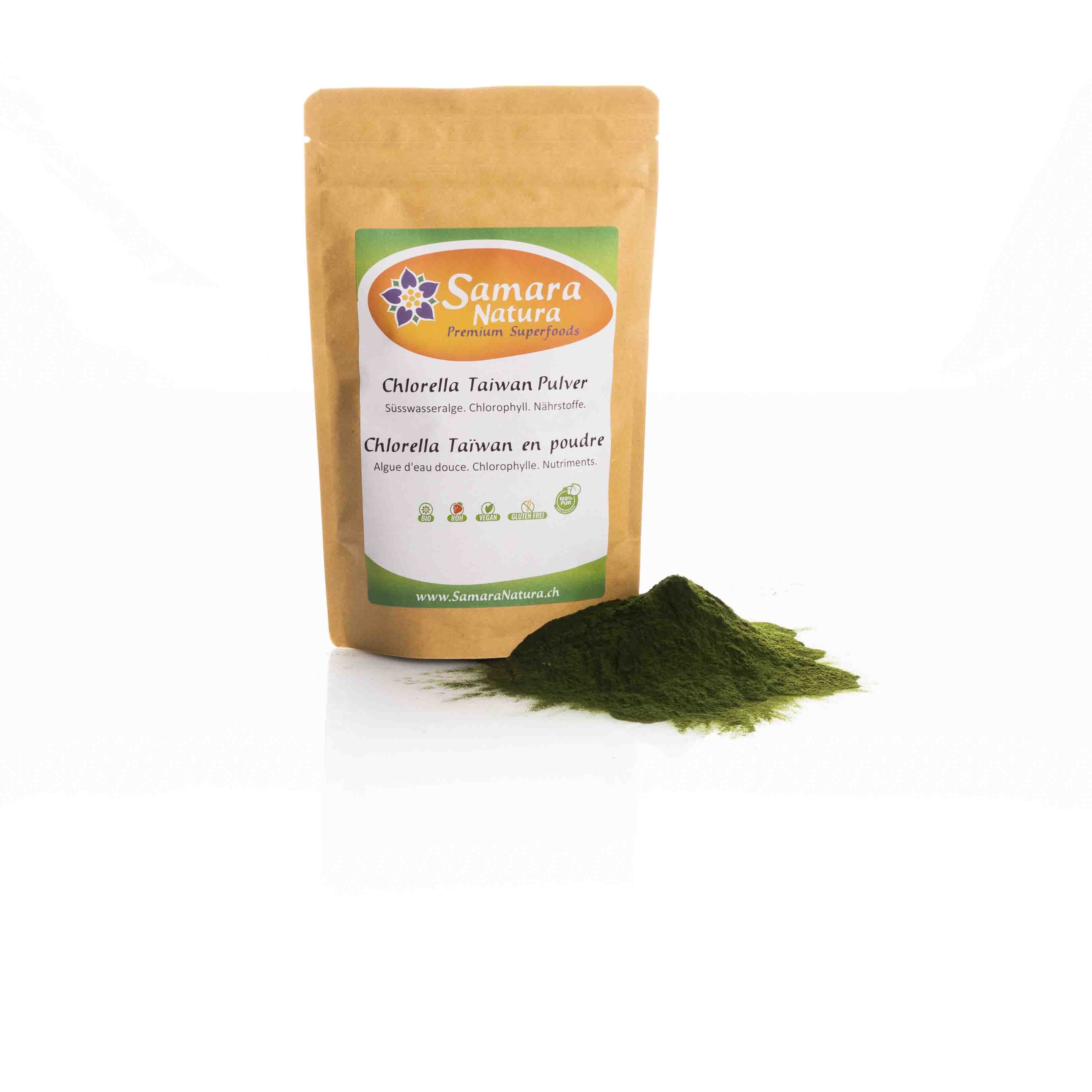
Organic Chlorella Vulgaris Powder (100% natural) - The green miracle What is chlorella? Chlorella is a microscopically small, single-celled algae that occurs naturally in fresh water. It is the oldest form of plant life known to us that has a real cell nucleus. Chlorella has been used and revered as a powerful superfood in many traditional cultures. Why consume chlorella? Chlorella provides a veritable flood of nutrients for the body. Minerals, rare trace elements, vitamins (including vitamin D) and a broad spectrum of enzymes (including pepsin). Chlorella consists of 60% complete and easily digestible proteins. The plant also contains essential fatty acids, nucleic acids (DNA and RNA), which are important for cell regeneration, and secondary plant substances with disease-defence properties such as carotenoids, lutein, astaxanthin and others. Chlorella has the highest chlorophyll content of all known plants, four times as much as normal plants! Chlorophyll is also known as green plant blood, as its molecular composition hardly differs from human haemoglobin. Chlorophyll has antioxidant properties, purifies the blood and supplies it with oxygen. Chlorella is known as a valuable aid in protecting the body from environmental toxins and radiation. Its fibrous outer cell walls are able to bind and eliminate heavy metals (amalgam, cadmium, lead), pesticides, medicines and other toxins that accumulate in the body. It is therefore very important to drink plenty of water when taking chlorella. Because of its nutritional richness, chlorella is nature's ideal food. When taken together with spirulina, you have almost perfect ratios of the most important nutrients the body needs. Chlorella has been and continues to be the subject of intense research and this tiny, fantastic creature may yet be of great help with global and worrying problems such as cancer, nuclear disasters and environmental pollution, as well as nutritional issues and mental disorders. What makes our organic chlorella powder from Taiwan special? Our chlorella powder is 100% natural and additive-free. Our chlorella comes from an algae farm in southern Taiwan, which was the first to be recognised by the German organic farming association Naturland. The algae grow outdoors under intense sunlight in pure fresh water of drinking water quality. The cultivation of only strong, healthy strains of microalgae guarantees first-class quality. The microalgae are gently harvested at the time of highest nutrient density, then pre-centrifuged and spray-dried in seconds using a special process. The hard cell wall of chlorella is gently broken up using a vacuum process to make it easier to digest. What makes chlorella unique? Chlorella can quadruple in quantity every 20 hours, and no other plant on earth can do that! This is due to the so-called Chlorella Growth Factor (CGF), a complex of many substances in very small quantities, including RNA, DNA, amino acids, vitamins and minerals, the exact properties of which have not yet been identified. However, laboratory tests have shown that the addition of CGF stimulates growth processes by increasing the growth of beneficial bacteria such as Lactobacillus by up to 400%. Because chlorella has a perfect single reproductive cell, it is more advanced than the other more common green microalgae. This is why its DNA / RNA is said to be of better quality. Nucleic acids are important for cell regeneration and support the production of new tissue. How to use chlorella powder? Chlorella can be taken in tablet form or as a powder. The tablets are easier to take, but their quality can be affected by the possible use of binding agents and heating during manufacture (not applicable to our tablets). Powdered chlorella can be mixed into vegetable and fruit juices or smoothies. It adds a rich, thick texture to any liquid. Chlorella powder can also be added to foods such as cream cheese, mayonnaise, ice cream, pasta and rice to enhance flavour and nutritional value. As it contains growth-promoting substances, it can also be a valuable ingredient for bread and fermented drinks. Recommended dosages: Start with 400 mg per day and slowly take more as your body acclimatises to chlorella. Children and beginners: 400 mg - 3 g per day Adults: 5 - 6 g per day For detoxification: 20 - 25 g per day (drink plenty of water!) For severe health problems, a higher dose of up to 30 g per day may be necessary until health improves. Chlorella can generally be taken safely in high doses. Under normal conditions, we recommend the regular intake of chlorella together with spirulina in a ratio of 1:2 (5g chlorella + 10g spirulina). This provides the body with all the necessary nutrients in a balanced way. Some effects of chlorella are immediately noticeable, e.g. the improvement in bad breath, but it can take 3-6 months for chlorella's nourishing powers to fully unfold. Composition 100% organic chlorella microalgae powder. Nutritional values Chlorella powder per daily serving (4.8g) Energy value 76kJ / 18kcal,Fat 0.4g,of which saturated fatty acids 0.2gCarbohydrates 0.5g,Dietary fibre 0.4g,protein 3g,Vitamin A (β-carotene) 491µg (61%*),Folic acid (Vit. B9) 108 µg (54 %*),Iron 9.5 mg (68 %*),chlorophyll 102 mg.*the recommended daily dose All information is subject to the usual fluctuations of natural products. The product is not intended as a substitute for a balanced and varied diet and a healthy lifestyle. Keep out of reach of children. The recommended daily dose must not be exceeded. Vitamin A and iron contribute to the normal function of the immune system and normal cell division.
Content: 125 Gramm (CHF 20.90 / 100 Gramm)
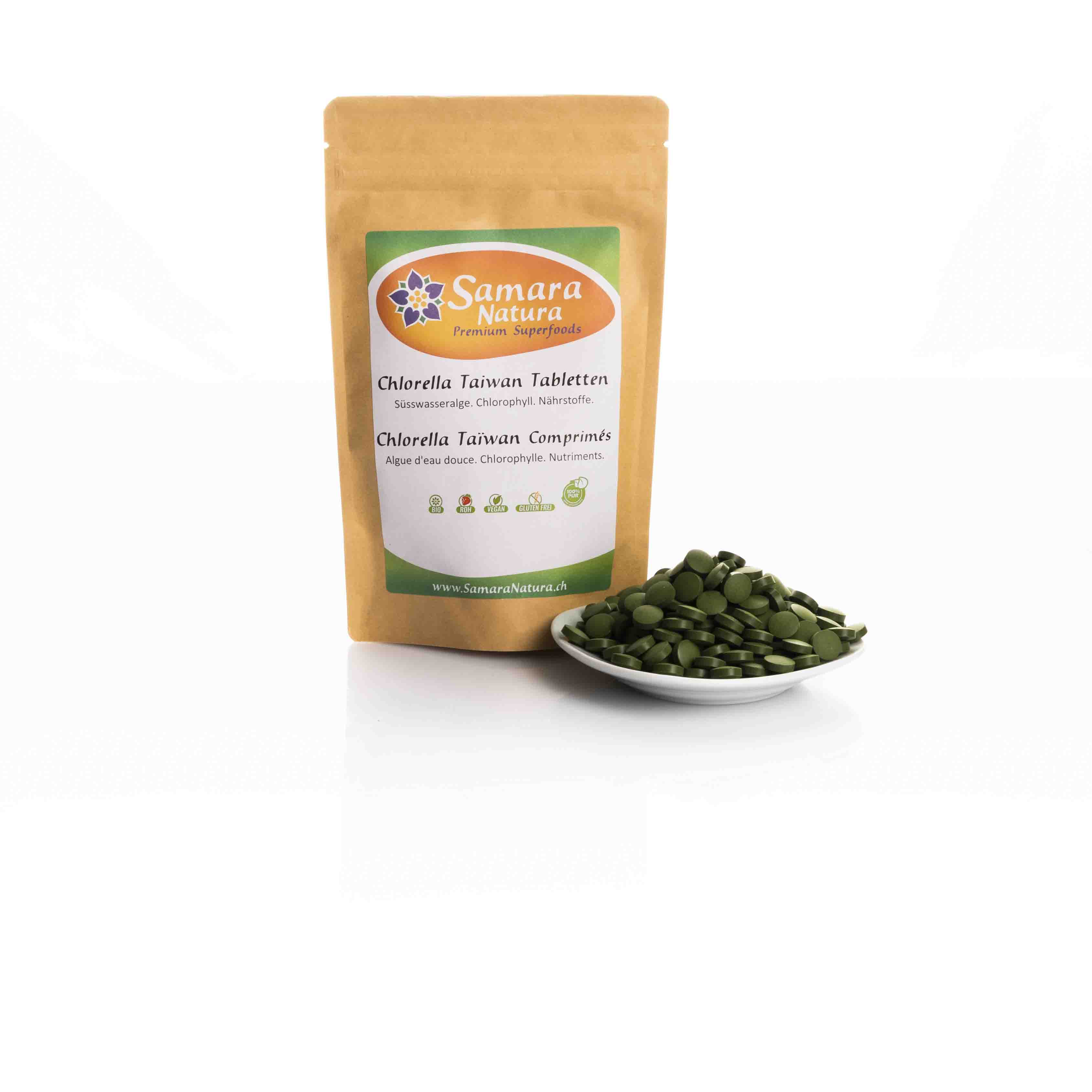
Chlorella Vulgaris Tablets (100% natural) Chlorella is a microscopically small single-celled algae that occurs naturally in fresh water. It is the oldest known form of plant life that has a true cell nucleus. Chlorella has been used and revered as a powerful food in many traditional cultures. Why consume chlorella? Chlorella provides many valuable nutrients for the body. Minerals, rare trace elements, vitamins (including vitamin D) and a broad spectrum of enzymes (including pepsin). Chlorella consists of 60% complete and easily digestible proteins. It also contains essential fatty acids and secondary plant substances such as carotenoids, lutein, astaxanthin and others. Chlorella has the highest chlorophyll content of all known plants, four times as much as normal plants! Chlorophyll (plant green) is said to have a detoxifying and antioxidant effect on our body. What makes our chlorella tablets special? Our chlorella tablets are made from 100% natural organic chlorella microalgae powder. The tablets are pressed on site from fresh powder without any pressing aids or additives. To ensure the high quality requirements, each batch of organic chlorella tablets is checked for toxins, heavy metals and other contaminants by an independent laboratory in Germany. Where does our chlorella come from and how is it processed? Our chlorella comes from an algae farm in southern Taiwan, which was the first to be recognised by the German organic farming association Naturland. Laboratory tests have shown that this chlorella (along with only one other) is one of the cleanest chlorella strains in the world! The algae grow outdoors under intense sunlight in pure fresh water of drinking water quality. The cultivation of only strong, healthy microalgae strains guarantees first-class quality. The microalgae are gently harvested at the time of highest nutrient density, then pre-centrifuged and spray-dried within 3 seconds using a special process. The hard cell wall of chlorella is gently broken up using a vacuum process to make it easier to digest. During this process, the temperature of the mass does not rise above 40°C -> raw food quality. What makes chlorella unique? Chlorella can quadruple in quantity every 20 hours, and no other plant on earth can do that! This is due to the so-called Chlorella Growth Factor (CGF), a complex of many substances in very small quantities, including RNA, DNA, amino acids, vitamins and minerals, the exact properties of which have not yet been identified. However, laboratory tests have shown that the addition of CGF stimulates growth processes by increasing the growth of beneficial bacteria such as Lactobacillus by up to 400%. Because of its nutritional richness, chlorella is nature's ideal food. When you use chlorella together with spirulina, you have almost perfect ratios of all the important nutrients the body needs. Chlorella has been the subject of intensive research. Use: Chlorella tablets Chlorella can be taken in tablet form or as a powder. The tablets are easier to take, but their quality can be affected by the possible use of binding agents and heating during production (does not apply to our tablets). Powdered chlorella can be mixed into vegetable and fruit juices or smoothies. It adds a rich, thick texture to any liquid. Chlorella can also be added to foods such as cream cheese, mayonnaise, ice cream, pasta and rice. Recommended amounts of chlorella tablets: Start with 400 mg (1 tablet) per day and increase slowly as your body becomes accustomed to chlorella. Children and beginners: 1 - 8 tablets per day Adults: 12 - 15 tablets per day Composition Chlorella tablets 100% chlorella, no tableting aids. Tablets of 400mg Chlorella Contents of pack Chlorella tablets The 125g pack contains approx. 313 tablets of 400mg each. The 250g pack contains approx. 625 400mg tablets. Nutritional values per daily portion (4.8g / 12 tablets) Energy value 76kJ / 18kcal,Fat 0.4g,of which saturated fatty acids 0.2gCarbohydrates 0.5g,Dietary fibre 0.4g,protein 3g,Vitamin A (β-carotene) 491µg (61%*),Folic acid (Vit. B9) 108 µg (54 %*),Iron 9.5 mg (68 %*),chlorophyll 102 mg.*the recommended daily dose All information is subject to the usual fluctuations of natural products. The product is not intended as a substitute for a balanced and varied diet and a healthy lifestyle. Keep out of reach of children. The recommended daily dose must not be exceeded. Vitamin A and iron contribute to the normal function of the immune system and normal cell division.
Content: 125 Gramm (CHF 21.89 / 100 Gramm)
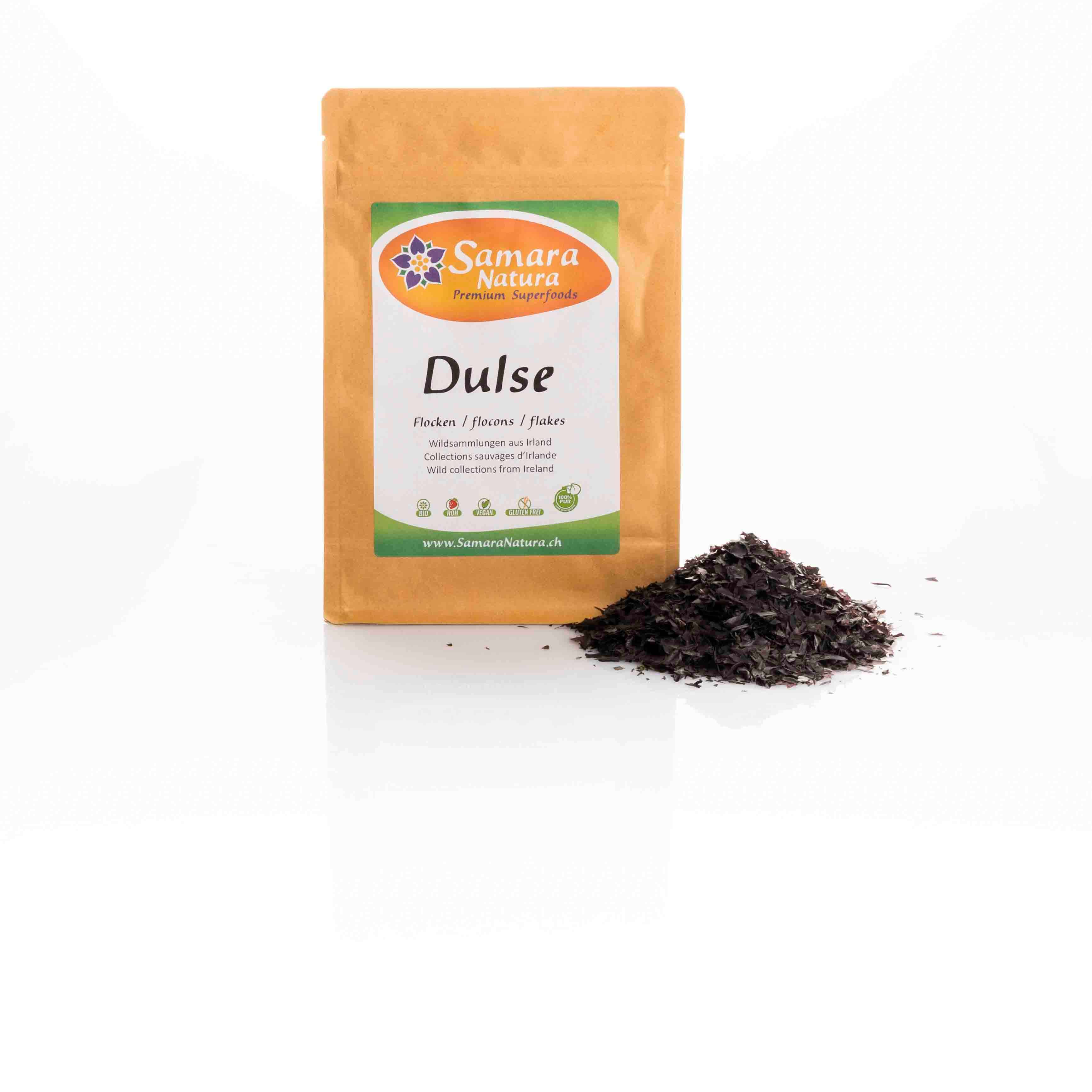
Update: The new batch is ground finer than before. The dulse flakes are only approx. 1 mm in size. Atlantic dulse flakes from Ireland, organic & raw food quality What is dulse? Atlantic dulse or lobster seaweed (Palmaria palmata) is a red algae, crunchy with a bite and a strong purple-red colour. It does not need to be cooked or soaked and can therefore be used in many different ways in the kitchen. Dulse is extremely low in calories, fat- and cholesterol-free, rich in minerals as well as vitamin B6, fibre and protein. It has the highest iron content of all sea vegetables. 10g of dried dulse is equivalent to around 100g of fresh dulse. Why consume dulse? Dulse is one of the easiest sea vegetables to use. It tastes mild and spicy and adds flavour and colour to any dish. It is also one of the few purple-coloured foods and purple is the colour of spiritual consciousness, the third eye. What makes our dulse flakes from Ireland special? The dulse seaweed comes from quality producers in Ireland. After harvesting, the wild-growing organic dulse is dried very gently and in raw food quality using a cold air drying system. They are then ground into flakes. Please note: Due to the wild harvest, small mussels may adhere to the dulse leaves. The producer himself and we check the purity as well as possible when packing into the bags. For safety reasons, we ask you to briefly check the dulse flakes before eating them. Varying consistency (bite resistance) The consistency (firmness) of the dulse flakes can vary depending on the batch and season. This may be due to the time of harvest or the development of the individual plants at the time of harvest. Dulse algae are wild-growing plants. They are generally harvested shortly before flowering so that the plants are still young enough to be sufficiently tender. Prolonged soaking or heating (boiling) reduces the bite strength. How to use dulse flakes? Dulse has been traditionally harvested for generations and can be eaten straight from the bag (rinsed beforehand if necessary) or used as an ingredient in smoothies (e.g. for detox smoothies). They are also suitable as a topping for salads, sandwiches as well as lentil dishes or rice dishes.Dulse is also suitable steamed over potatoes or crispy roasted as a snack and other dishes. In soups and stews, ideal with pulses and cereal dishes. Add towards the end of the cooking time. Ingredients 100% Dulse/ Lappentang (Palmaria Palmata)** from certified organic origin Important notes Due to the high mineral content, we recommend a daily ration of 5g. Particular caution is advised for people with thyroid disorders due to the iodine content. These seaweeds may contain parts of crustaceans and grains of sand due to processing. Therefore, please check the leaves/flakes briefly before consumption. Nutritional values per 100g / per 5g (portion) Energy 320Kcal/1340KJ / 16Kcal/67KJProteins 14.8g / 0.7gCarbohydrates 47.7g / 2.4gof which sugar 12.8g / 0.6gFat 2.56g / 0.1gof which saturated fatty acids 1g / 0.05gDietary fibre 7.9g / 0.4gSalt 5.4g / 0.3gVitamin B12 4.8µg / 0.24µgIron 23mg / 1.2mgSelenium 0.3mg / 0.01mgIodine 32mg / 1.5mg
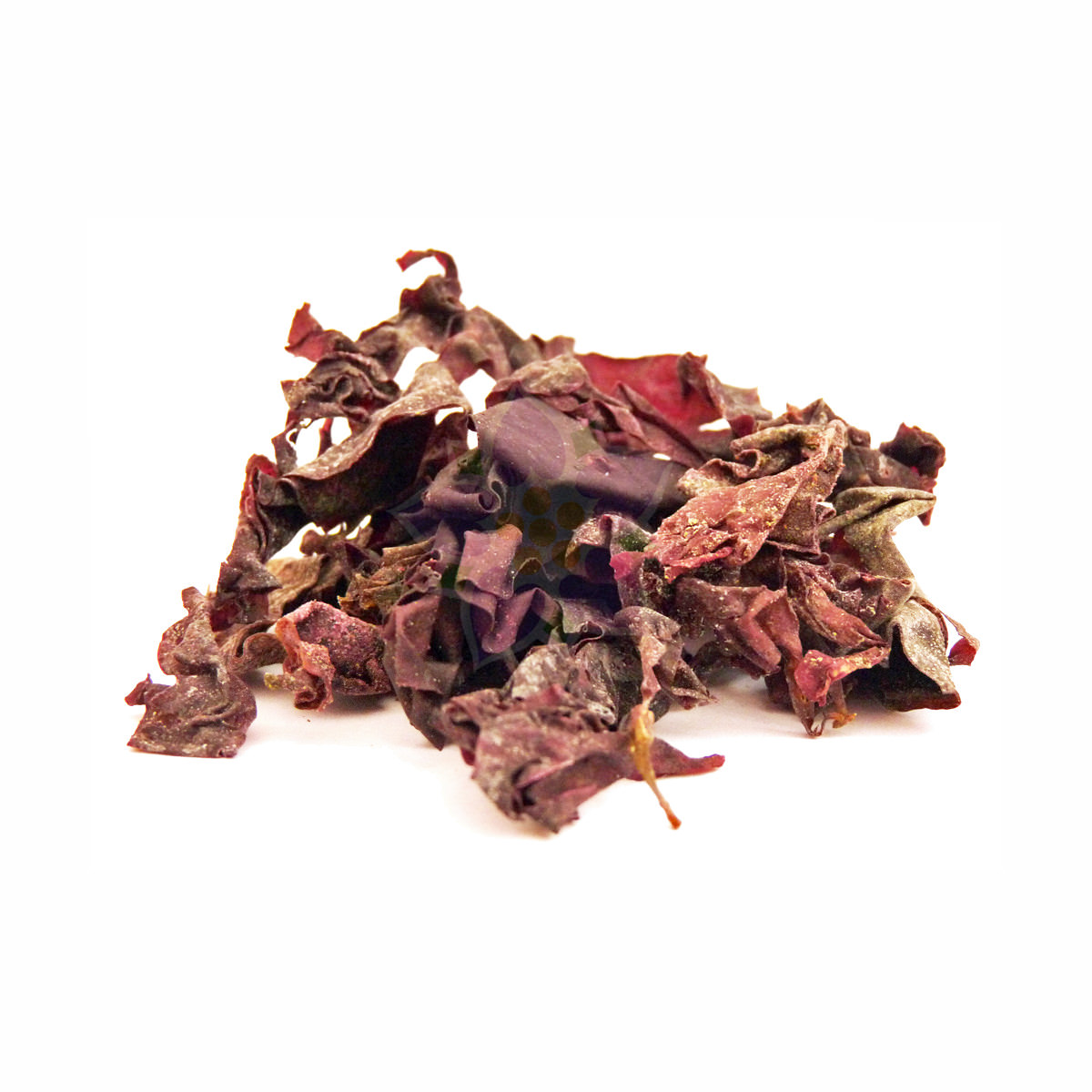
Organic Atlantic dulse leavesUpdate: The 40g bags are large, uncut leaves from Ireland. We only have a few bags left and are discontinuing this variant because it has caused confusion in the past. As an alternative, we have dulse flakes and dulse powder in our range. What is dulse? Atlantic dulse or lobster seaweed (Palmaria palmata) is a red algae, crunchy with a bite and a strong purple-red colour. It does not need to be cooked or soaked and can therefore be used in many different ways in the kitchen. 10g of dried dulse is equivalent to around 100g of fresh dulse.Dulse is one of the easiest sea vegetables to use. It tastes mild and spicy and adds flavour and colour to any dish. It is also one of the few purple-coloured foods and purple is the colour of spiritual consciousness, the third eye. Why consume dulse? Dulseis extremely low in calories, fat and cholesterol free, rich in minerals as well as vitamin B6, fibre and protein. It has the highest iron content of all sea vegetables. Dulseis extremely low in calories, fat and cholesterol free, rich in minerals as well as vitamin B6, fibre and protein. It has the highest iron content of all sea vegetables. What makes our Irish dulse leaves special? The dulse is collected wild in the west of Ireland (Donegal) at low tide, harvested by hand and gently dried (below 42° C). Please note: Due to the wild harvesting from the rocks, small shells or stones may adhere to the dulse leaves. The producer himself and we check the purity as well as possible when packing into the bags. For safety reasons, we ask you to briefly check the dulse leaves before eating them. Varying consistency (bite resistance)The consistency (bite resistance) of the dulse leaves can vary depending on the batch and season. This may be due to the time of harvest, the development of the individual plants at the time of harvest and the drying time. Dulse algae are wild-growing plants. They are generally harvested shortly before flowering so that the plants are still young enough to be sufficiently tender. Prolonged soaking or heating (boiling) reduces the bite strength. How to use dulse leaves? Thesedulse leaves are large dried leaves. They are best used as a savoury raw snack (eaten straight from the bag) and lightly chopped for various recipes. Due to their spicy aroma, dulse leaves are also suitable for steaming over potatoes, pulses and cereal dishes, for example. We recommend adding it towards the end of the cooking time. Prolonged heating (cooking) or soaking reduces the firmness to the bite. Dulse also goes well crispy roasted or lightly sliced in salads. It can be rinsed beforehand if required. We recommend the powder for detox smoothies. Important notes Due to the high mineral content, we recommend a daily ration of 5g. Particular caution is advised for people with thyroid disorders due to the iodine content. These seaweeds may contain parts of crustaceans and grains of sand due to processing. Therefore, please check the leaves briefly before consumption. Nutritional values per 100g / per 5g (portion) Energy 320Kcal/1340KJ / 16Kcal/67KJProteins 14.8g / 0.7gCarbohydrates 47.7g / 2.4gof which sugar 12.8g / 0.6gFat 2.56g / 0.1gof which saturated fatty acids 1g / 0.05gDietary fibre 7.9g / 0.4gSalt 5.4g / 0.3gVitamin B12 4.8µg / 0.24µgIron 23mg / 1.2mgSelenium 0.3mg / 0.01mgIodine 32mg / 1.5mg
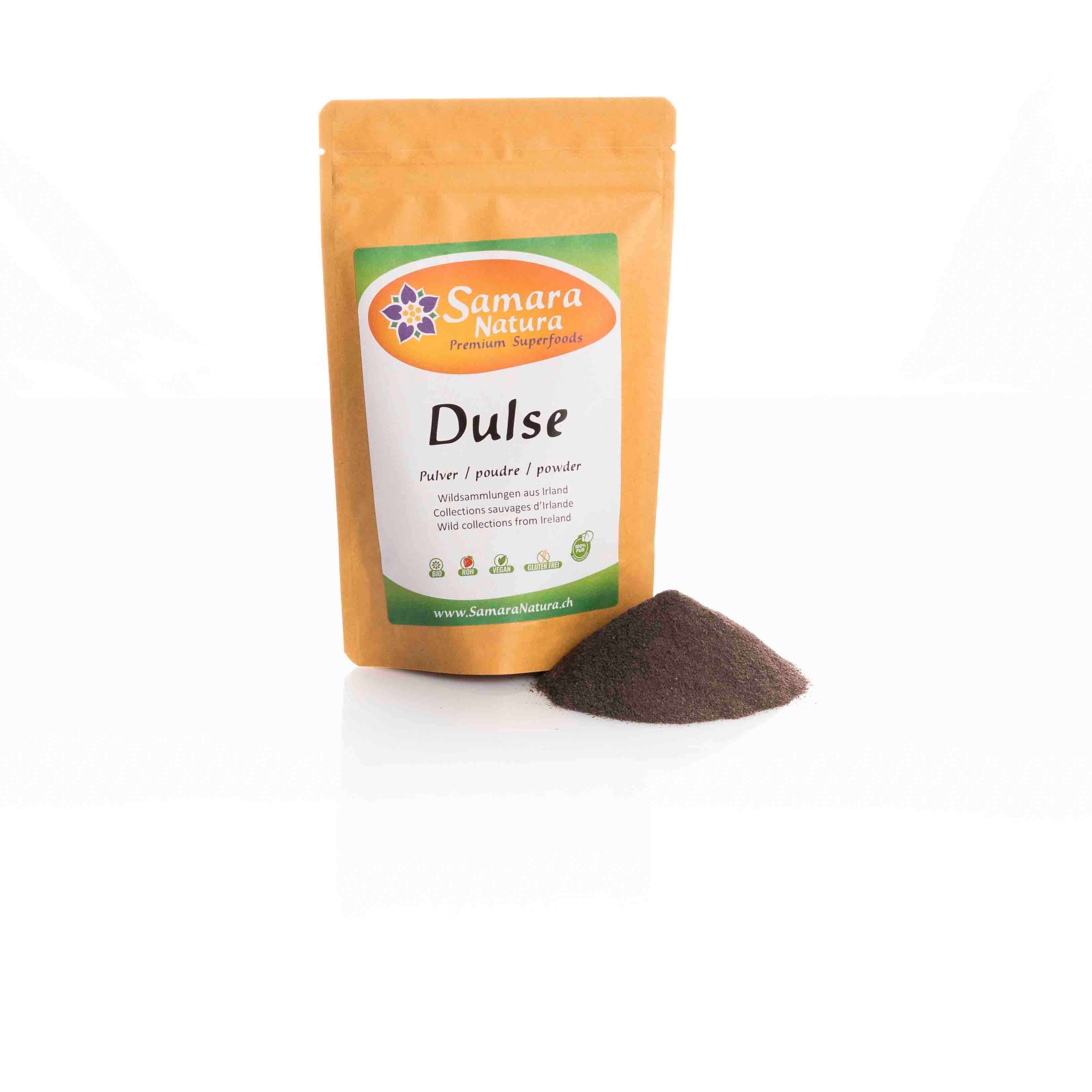
Update: The new batch of Dulse powder will be packaged on 16 October. In the meantime, we recommend the finely groundDulse flakes(approx. 1 mm in size). Atlantic Dulse powder (red seaweed) in organic and raw food quality We have been stocking a wide and high-quality range of organic Atlantic Dulse for many years. This Dulse powder from Ireland is the simplest form to use in detox smoothies. It is also ideal for seasoning dishes. We also offerDulse flakes from Irelandandchopped Dulse leaves from Galicia (Spain). Several pack sizes are available, and you can benefit from volume discounts (5% discount on orders of 3 or more). Atlantic dulse (Palmaria palmata) is a red seaweed that is soft yet has a pleasant bite, with a rich purplish-red colour. It requires neither cooking nor soaking. This makes dulse a great snack or an aromatic topping for potato and lentil dishes, as well as for salads. In recent years, dulse has also become popular as an ingredient in detox smoothies. Dulse is extremely low in calories, fat-free and cholesterol-free, and, in addition to minerals, is rich in vitamin B6, fibre and protein. It has the highest iron content of all sea vegetables. 10g of dried dulse is equivalent to around 100g of fresh dulse. Why use dulse powder? Dulse is one of the easiest sea vegetables to use. It has a mild, savoury flavour and adds taste and colour to any dish. It is also one of the few purple-coloured foods, and purple is the colour of spiritual awareness, of the third eye. Irish Dulse from wild harvests Our dulse is wild-harvested at low tide in the west of Ireland and gathered by hand. Using a cold-air drying system, the organic seaweed is dried very gently to raw food quality. The leaves are then ground into powder. Variants: To cater for different consumption levels and needs, we offer Dulse powder in 100g and 250g packets. The larger packet is approximately 16.5% cheaper. Uses for Dulse Dulse has traditionally been harvested for generations and can be eaten straight from the packet or used as an ingredient in smoothies. Dulse is also delicious steamed over potatoes or crisply roasted as a snack, or added to salads and other dishes. As a raw food, straight from the packet or in salads (can be rinsed beforehand if required). In soups and stews, ideal with pulses and grain dishes. Add towards the end of the cooking time. Ingredients 100% organic dulse / palmaria (Palmaria palmata). Important information Due to the high mineral content, we recommend a daily intake of 5g. Particular caution is advised for people with thyroid conditions due to the iodine content. Due to the processing method, these seaweeds may contain traces of shellfish and grains of sand. Please therefore check the leaves/flakes briefly before consumption. Nutritional values per 100g / per 5g (serving) Energy 320 kcal/1340 kJ / 16 kcal/67 kJProtein 14.8g / 0.7gCarbohydrates 47.7g / 2.4gof which sugars 12.8g / 0.6gFat 2.56g / 0.1gof which saturated fatty acids 1 g / 0.05 gFibre 7.9g / 0.4gSalt 5.4g / 0.3gVitamin B12 4.8 µg / 0.24 µgIron 23 mg / 1.2 mgSelenium 0.3 mg / 0.01 mgIodine 32 mg / 1.5 mg Sea vegetables in general Sea vegetables are wild plants found in the ocean, which grow on coral reefs and rocky coasts, mostly in salt water. Sea vegetables are enjoyed in many coastal regions around the world and enrich most dishes with flavour and nutrients. Sea vegetables contain almost all the minerals and trace elements the sea has to offer! In general, sea vegetables are an excellent source of calcium, iodine and sodium, a very good source of folic acid and magnesium, and a good source of iron, potassium, and vitamins B2 and B5. They also contain vitamin K and trace elements such as selenium and chromium, which are often lacking in land-grown vegetables due to depleted soils. Sea vegetables are an ideal substitute for salt in a wide variety of dishes.
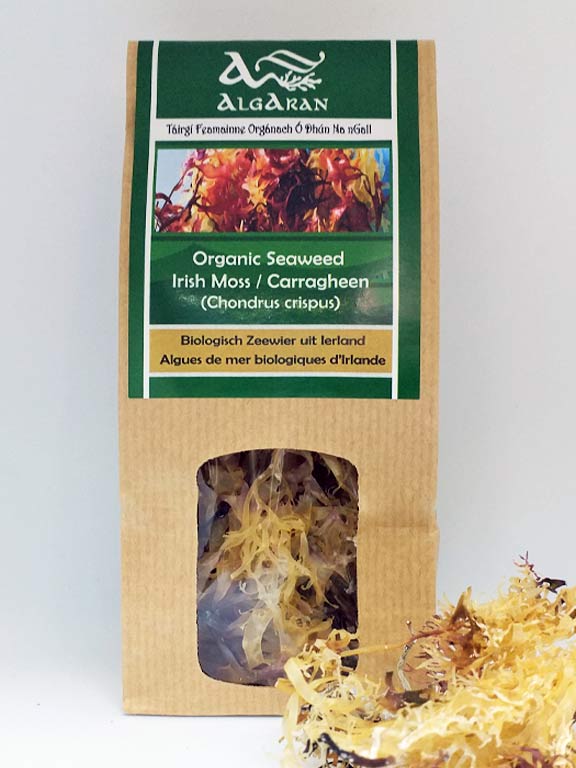
Irish Carragheen Moss Irish carragheen moss is an algae that grows mainly on rocks along the Atlantic coast of Europe. It was first discovered near Ireland, hence the name. Why consume Irish moss? Irish moss is thought to contain at least 15 essential elements that are key components of the human body. Some of the elements found in the algae, which are present in impressive quantities: Calcium, potassium, iodine and vitamins such as A, D and E. The main health benefits of Irish moss are due to its high carrageenan content (up to 71%). This substance has been used for centuries as a traditional medicine to make medicinal teas and cough syrups to combat colds, bronchitis and even hangovers after excessive alcohol consumption. We appreciate that Irish Moss soothes the digestive and respiratory tracts and is excellent for sensitive guts and stomachs. Ideal food for sensitive people. Irish moss is the main source of carrageenan, which is used as a vegan thickening agent in many products and recipes and has recently been patented as an antiviral agent. It is the vegan version of gelatine and is widely used as a thickening agent in stews, sauces, jams and many desserts. We have used Irish moss in several dessert recipes and it works wonderfully to make them airy and light, and it reduces the large amount of nuts needed, which is often used in vegan recipes. It also contributes a large amount of minerals to recipes and is virtually flavourless. A perfect addition to smoothies. Last but not least, it is a very affordable and easy way to include many minerals in our diets that might otherwise go to waste. Irish moss for the skin Our personal experience is that it is very good for dry skin, including eczema and other skin conditions. We always keep a jar of Irish Moss nearby to use on our skin. What makes our Irish Moss special? The harvesting area is in Kilcar/Donegal in the north-west of Ireland. Harvesting is done by hand, with great respect and care for the marine environment. The harvested seaweed is rinsed on the shore and then dried at low temperatures to preserve its rich nutritional content. Our organic certification requires that all seaweed is harvested only from clean shores, free from contamination, that the seaweed is processed within just a few hours and that the harvesters work with the utmost respect for the marine environment. In addition, regular analyses ensure that all algae products are safe and healthy to eat. Algaran also guarantees with full documentation that their seaweed is only of local Irish origin, that it contains no heavy metals (contamination index), that processing temperatures never exceed 30°C and that it is freshly harvested (date of harvest is on the label). Interesting facts about Irish moss The Irish people used the seaweed during the Irish famine in the 19th century and since then its popularity has grown exponentially. Irish moss also grows on rocks on Jamaica's shores and its popularity on the island grew when the Irish brought their traditional use of the seaweed to the island. It is one of the most commonly used seaweeds. In Ireland, for example, it is traditionally used for colds and as a tonic in the cold winters, while in other countries it is also known as an aphrodisiac. Use of Irish moss | Recipe recommendation The basic jelly made from Irish moss contains all the minerals and nutrients of the plant and can be used in delicious desserts. The basic jelly is made as follows: Soak 20g of Irish moss in a bowl of cold water for 30-60 minutes and then rinse. Pour 9dl of water and the soaked Irish moss into a pan. Bring to the boil and simmer for 30 to 60 minutes. Stir from time to time to ensure the mixture does not stick to the bottom of the pan. The Irish moss will break into pieces and the mixture will become gelatinous. While the mixture is still warm, remove any fragments that have not yet dissolved and pour the gel into sterilised bottles and keep in the fridge. Use a spoonful in desserts, soups, stews, sauces, smoothies or dissolve in water for a soothing tea (add your favourite spices). It will keep in the fridge for several weeks. When it starts to smell slightly spicy, the mixture is spoilt and can no longer be used. Irish moss is also excellent to apply to the skin: for burns, chapped skin, eczema and cold sores. It is very often used in the natural cosmetics industry for its soothing and antiviral properties. Ingredients Irish Moss 100% dried algae Irish moss (Chondrus crispus), from certified organic wild harvesting. Nutritional values of Irish moss per 100g Energy value 552kJ/132kcal Proteins 11.2 g Carbohydrates 1.7g Of which sugar 0.04g Fats 1.4g of which saturated fatty acids 0g fibres 47.7g salt 0.4g All values are subject to the usual fluctuations in natural products. Storage: Store in a cool, dry and dark place.
Content: 40 Gramm (CHF 21.38 / 100 Gramm)
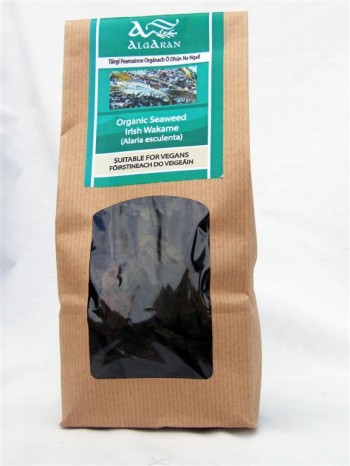
Irish wakame - wild collections from the Irish Atlantic coast Irish wakame is an algae that grows mainly on rocks along the Atlantic coast of Europe. It was first discovered near Ireland, hence the name. The Irish people used the seaweed during the Irish famine in the 19th century and since then its popularity has grown exponentially. Why we love Irish wakame With its high calcium content, this seaweed is a great addition to the diet. The taste of wakame is quite acceptable by seaweed standards as it does not have a fishy flavour. Algaran Irish Wakame The harvesting area is in Kilcar/Donegal in the north-west of Ireland. All AlgAran seaweed is harvested by hand with great respect and care for the marine environment. The harvested seaweed is rinsed on the shore and then dried at low temperatures to preserve its rich nutritional content. Our organic certification requires that all seaweed is harvested only from clean shores, free from contamination, that the seaweed is processed within just a few hours and that the harvesters work with the utmost respect for the marine environment. In addition, regular analyses ensure that all algae products are safe and healthy to eat. Algaran also guarantees with full documentation that their seaweed is of local Irish origin only, that it contains no heavy metals (contamination index), that processing temperatures never exceed 30°C and that it is freshly harvested (date of harvest is on the label). Use of Irish wakame Lightly cooked as a sea vegetable or in sauces and soups. Ingredients Irish Wakame 100% dried seaweed Irish wakame (Alaria esculenta), from certified organic wild harvesting, IE-ORG-03 Nutritional values of Irish wakame per 100g Fat 1-2gCarbohydrates 46-51gProtein 9-20gVitamin C 10-50mgCalcium 1.167-1.29gIodine 16.5-27.5µgIron 5-12.6mgMagnesium 0.896mg. For detailed information see Wakame Nutritional Info
Content: 40 Gramm (CHF 19.72 / 100 Gramm)
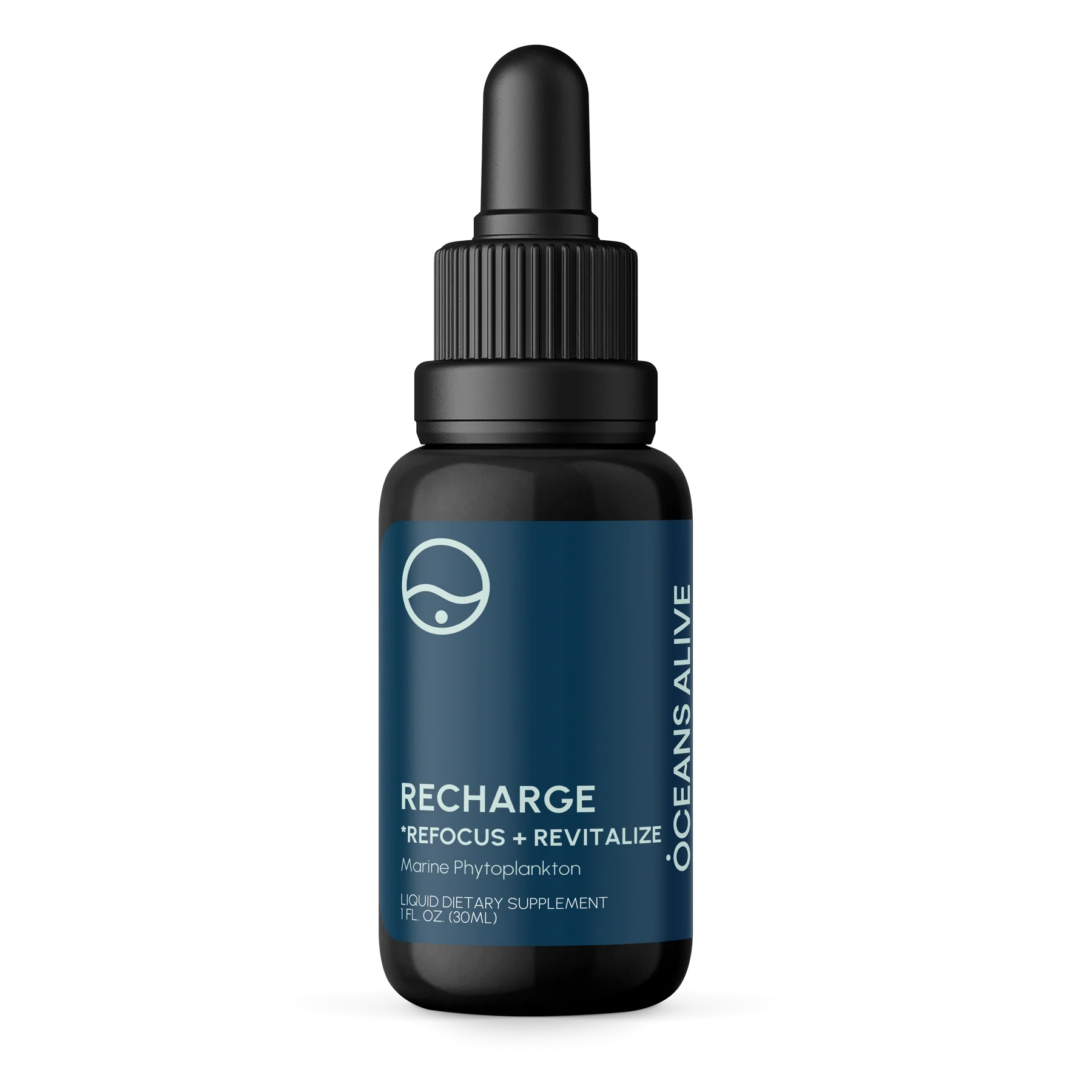
Update: The Marine Phytoplankton from Oceans Alive® is now called Recharge and has been given a new design. Marine phytoplankton - superfood from the sea Phytoplankton are microscopic marine algae that form the basis of the food chain. This unique superfood from the ocean can noticeably boost the body's energy levels, especially when consumed daily. Due to its abundance of minerals and vitamins and the original life force absorbed from the sun, one can experience a new, whole-body inner strength by taking the concentrate. People who consume marine phytoplankton report many positive experiences for the body. Marine phytoplankton is a living, holistic and concentrated raw food that can be preserved without refrigeration. Because it is very concentrated, you only need a small amount. Why we love marine phytoplankton The microscopic plants that form the immeasurably large base of the oceanic food chain produce an incredible amount of energy - five times the annual energy consumption of the human world, according to a study by Florida State University! Phytoplankton stores as much energy as humans produce in a year. This makes phytoplankton not only an incredible source of nutrition, but also a significant source of bio-energy. Marine phytoplankton produces more oxygen than all the forests on earth combined. Phytoplankton is a precious, complete food, "Mother Earth's milk from the sea", giving the body virtually all the raw materials it needs in a single food source. Phytoplankton is the smallest of all microalgae. Oceans Alive® Recharge Marine Phytoplankton The marine phytoplankton is cultivated in Spain, is of raw food quality and is produced without the use of pesticides or agrochemicals. After extensive research on phytoplankton, only four species out of 400 were found to be particularly beneficial to humans, from which a particularly nutritious species was selected for production as human food. This particular species grows in sophisticated bio-reactors with natural seawater in a simulated "spring bloom environment" where natural photosynthesis is enabled with the help of sunlight. To produce the liquid solution, the living biomass is mixed with a concentrated ionic trace element solution as soon as it is removed from the centrifuge. The concentrated solution, which is produced in a natural evaporation process using sun and wind, contains more than 90 ionic minerals and trace elements. The purified seawater concentrate can preserve the original life energy of the marine phytoplankton in "suspended animation" so that it can be bottled and stored at room temperature without loss of quality. The living solution is then charged with biophotons and potentised with its own frequency to maximise its life force. The result is a living, holistic, concentrated raw food quality food that does not require refrigeration. Uses Marine phytoplankton is very concentrated, even a small amount is sufficient. Recommended intake: 5-15 drops daily, starting with a smaller amount and increasing over a longer period of time. It is easiest to drip the concentrate under the tongue, whereby the essential nutrients are absorbed directly into the body without passing through the digestive system. You can also put the drops in a jug of water and drink it throughout the day. Another option is to take the liquid essence with your favourite drink (juice, smoothie, milk drink). There is said to be a special synergy between water kefir and marine phytoplankton. Try it out. Marine phytoplankton is best when taken with liquids and on an empty stomach so that the body fully absorbs the nutrients. Children: Children (from 18 months) can also take marine phytoplankton. However, it is advisable to reduce the amount to 5-10 drops per day. From the age of 15, the adult dose of 5-15 drops can be taken. The challenge with children is unfortunately the taste. Marine phytoplankton has an intense algae flavour. If the child does not accept the flavour, we recommend mixing it with fruit juices. Note: Like almost all microalgae, marine phytoplankton is rich in vitamin K. Contents A 30ml bottle contains approximately 750 drops. 25 drops make approx. one millilitre.If you take 12 drops per day, the bottle will last for about 62 days. Nutritional information 12 drops contain 34mg magnesium, 336mg marine minerals, 130mg Nannochloropsis Gaditana algae and 14mg Tetraselmis phytoplankton. Ingredients Nannochloropsis Gaditana phytoplankton, Tetraselmis phytoplankton and concentrated, purified marine minerals. Storage Cool, dark and dry. Marine Phytoplankton is not heat-sensitive and does not need to be stored refrigerated even after opening. However, it is important that the product is not directly exposed to the sun. If you do not consume it for a longer period of time, it does not hurt to keep the open bottle in the refrigerator.
Content: 30 ml (CHF 186.83 / 100 ml)
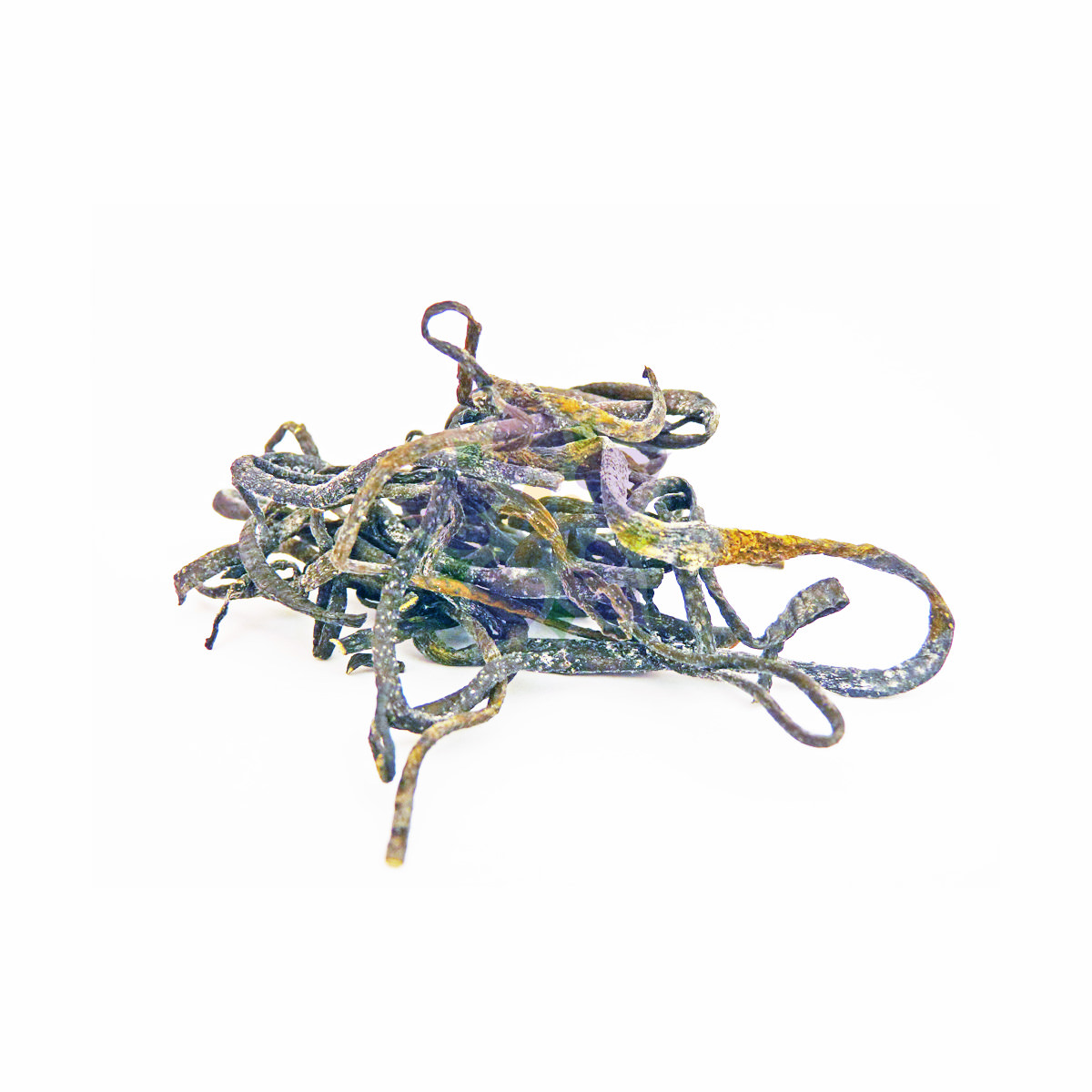
Organic Sea Spaghetti (Sargassum) – Wild-harvested from the Irish Atlantic Sea spaghetti is a gluten-free and very low-calorie alternative to ordinary spaghetti and, like it, is simple and versatile to use. A healthy substitute for salt and essential for vegetarians, as it is rich in iodine! Belt seaweed, or sea vegetables in general, contain the widest range of minerals and trace elements of any food. Sea vegetables in general Sea vegetables are wild plants of the ocean that grow on coral reefs and rocky coasts, mostly in salt water. Sea vegetables are enjoyed in many coastal regions worldwide and enrich most dishes with flavour and nutrients. Sea vegetables contain almost all the minerals and trace elements the sea has to offer! In general, sea vegetables are an excellent source of calcium, iodine and sodium, a very good source of folic acid and magnesium, and a good source of iron, potassium, and vitamins B2 and B5. They also contain vitamin K and trace elements such as selenium and chromium, which are often lacking in land-grown vegetables due to depleted soils. If consumed regularly over a prolonged period, sea vegetables are said to help regulate metabolism and energy balance, stimulate the immune system, promote regular digestion, purify the blood and support the endocrine glands – particularly the thyroid. Sea vegetables are an ideal substitute for salt in the diet. Organic sea spaghetti (Himanthalia elongata) Sea spaghetti or ribbon kelp (Himanthalia elongata) is a special type of sea vegetable. It resembles spaghetti but tastes of seaweed. Much of the seaweed flavour disappears during soaking, making it as soft as pasta cooked al dente. Tossed with a delicious, warm sauce or pesto, you can quickly and easily create a highly nutritious meal. Why we love sea spaghetti We like it because it looks and feels like pasta, but has a completely different flavour – which is no bad thing! Sea spaghetti is extremely low in calories and gluten-free. It’s versatile, exceptionally nutritious and fun to prepare. Organic Sea Spaghetti from Algaran Our sea vegetables are foraged in the north-west of Ireland (Donegal) and harvested by hand. Using a cold-air drying system, the seaweed is dried very gently to raw food quality. It’s best to soak the spaghetti for at least 2 hours or overnight. As they soak, the spaghetti increase in volume and become soft, similar to pasta cooked al dente. Sea spaghetti is delicious, for example, with a tomato and chilli sauce with cashew cream or a tomato sauce with garlic and parsley. It also tastes delicious with pesto. 40g of dried sea spaghetti yields approximately 400g of soaked sea spaghetti.
Content: 40 Gramm (CHF 19.72 / 100 Gramm)
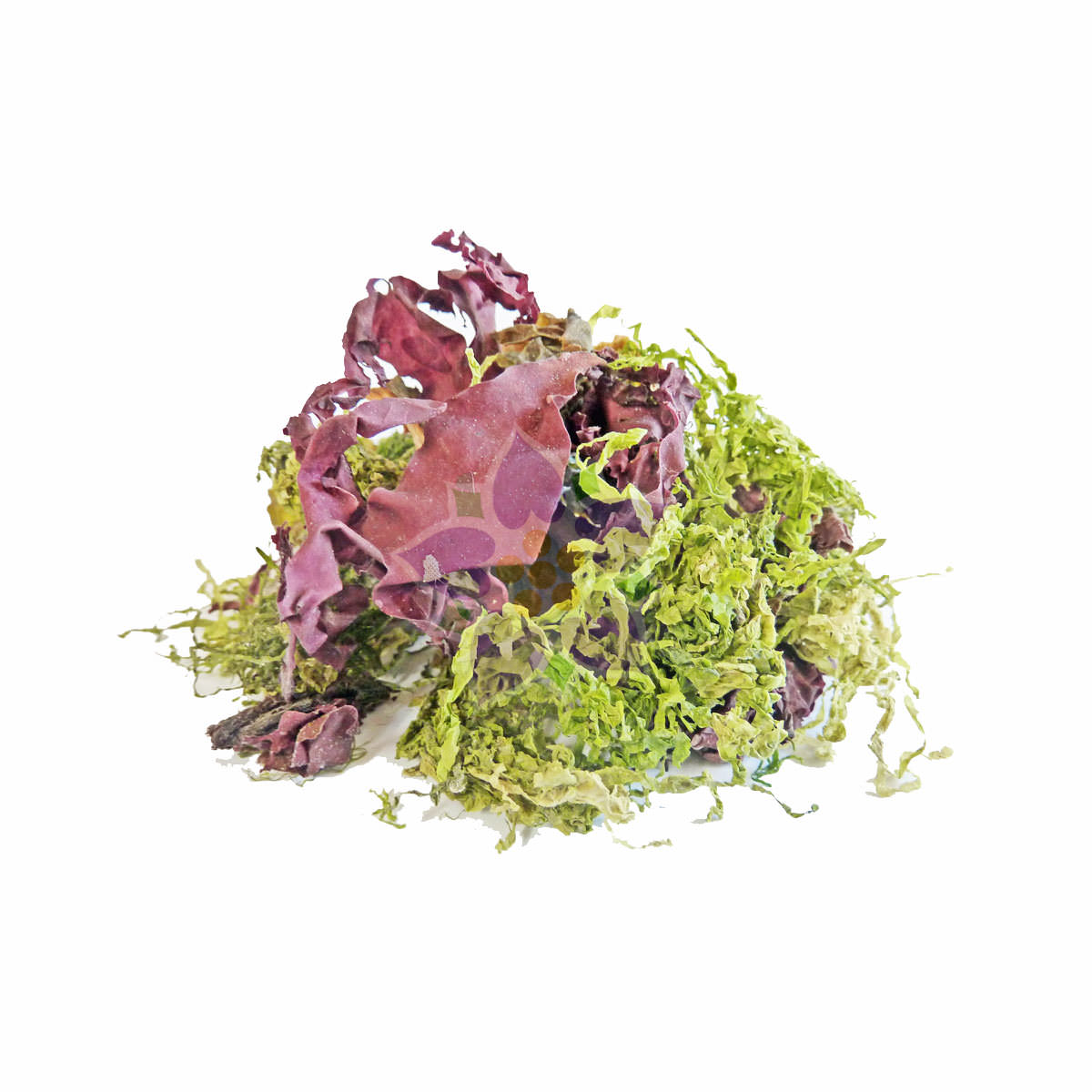
Seaweed for salad Sea vegetables in general Sea vegetables are wild plants of the ocean that grow on coral reefs and rocky coasts, usually in salt water. Sea vegetables are enjoyed in many coastal regions around the world and enrich most dishes with flavour and nutrients. Sea vegetables contain almost all the minerals and trace elements that the sea has to offer! In general, sea vegetables are an excellent source of calcium, iodine and sodium, a very good source of folic acid and magnesium and a good source of iron, potassium, vitamin B2 and B5. They also contain vitamin K and trace elements such as selenium and chromium, which are often lacking in land vegetables due to depleted soils. When consumed regularly and over a long period of time, sea vegetables are said to help regulate metabolism and energy levels, stimulate the immune system, promote regular digestion, purify the blood and support the endocrine glands - especially the thyroid gland. Sea vegetables are an ideal substitute for salt in the diet. Seaweed for salad This highly nutritious seaweed salad makes it easy to incorporate healthy sea vegetables into your daily diet. The seaweed salad contains Atlantic wakame, Atlantic nori, Atlantic kombu, Atlantic dulse and Atlantic spirulina. Why we love seaweed for salad We like them because you can simply add them to salads or vegetable dishes at the end of cooking without the flavour of seaweed being too noticeable, which is no bad thing! Seaweed is extremely low in calories and gluten-free. They are versatile and exceptionally nutritious. SamaraNatura seaweed Our sea vegetables are collected wild in the north-west of Ireland (Donegal) and harvested by hand. With the help of a cold air drying system, the seaweed is dried very gently and in raw food quality. Use It is best to soak the seaweed for one to two hours or overnight. Add to salads or vegetable dishes at the end of the cooking time.
Content: 40 Gramm (CHF 20.75 / 100 Gramm)
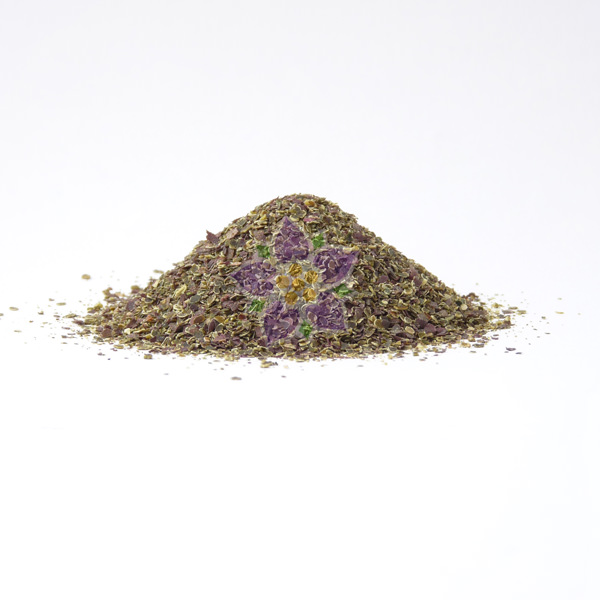
Organic seaweed spice mix - 5-algae mix powder Update: The 40g tin is unfortunately no longer offered by the producer. As an alternative we can offer 100g refill bags. This highly nutritious sea spice mix makes it very easy to incorporate healthy sea vegetables into your daily diet. The sea spice mix contains Atlantic wakame, Atlantic nori, Atlantic kombu, Atlantic dulse and Atlantic spirulina. Sea vegetables are enjoyed daily as a staple and healing food on many coasts of the world. Small amounts add rich flavour and enhance the nutritional value of most dishes. They are a perfect substitute for salt in the diet. Our sea vegetables grow wild in the clean waters off north-west Donegal in Ireland and are harvested by hand. They are carefully monitored and gently dried using a cold air process. We work closely with our supplier Algaran for our organic seaweed seasoning mix and are the general importer of the Algaran brand for Switzerland. Use of organic seaweed spice mix As a raw food, add approx. ½ teaspoon of seaweed seasoning to salads and other dishes. In soups and stews, ideal with pulses and cereal dishes. Add towards the end of the cooking time as desired. Ingredients Irish wakame (Alaria esculenta)*, dulse/lap kelp (Palmaria palmata)*, Irish moss (Chondrus crispus)*, finger kelp (Irish kombu, Laminaria digitata)*, Irish spirulina (Ulva spiralis)*.* from certified organic originNote: These seaweeds may contain parts of crustaceans and grains of sand. Nutritional values Organic seaweed spice mix - 5-algae mix per 100g per 5g (portion) Energy Kcal (KJ) 148 (618) 7.4 (30.9) Proteins 11.3g 0.6g Carbohydrates 9.9g 0.5g thereof sugar 0g 0g fat 1.4g 0.1g of which saturated 0g 0g Dietary fibre 39g 1.9g salt 0.65g 0.03g Vitamin B12 4.4µg 0.2µg (9%*) Iodine 16.9mg 0.8mg (563%*)
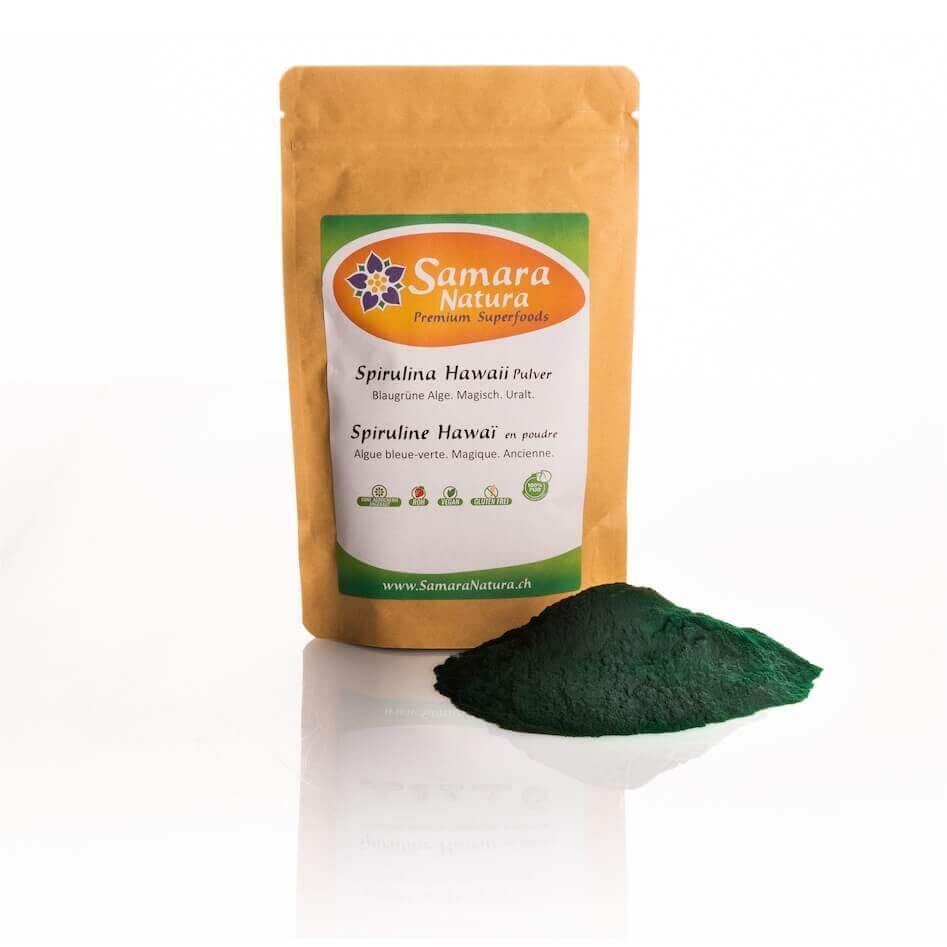
Update: The current batch is sold out. The new batch is on its way and is expected to be bottled/available on 30 October. Spirulina powder – the high-quality original from Hawaii (100% natural) What is spirulina? Spirulina is a single-celled, filamentous blue-green algae and one of the earliest forms of life on this planet. Richer in high-quality protein (containing 18 amino acids) than any other food, this microalgae also contains a wealth of vitamins, minerals, important antioxidants such as SOD and phycocyanin, polysaccharides and the rare gamma-linolenic acid. Spirulina is at the forefront of the nutritional revolution. With its rich composition and ability to grow even under unfavourable conditions, this microalgae has great potential to become a food source that will help feed the world’s population. By incorporating spirulina into our diet, we are helping to tackle the food crisis. The benefits of spirulina? Spirulina is a valuable foodstuff. The algae is incredibly nutrient-dense, a ‘whole food’. It is believed to contain all the essential nutrients the human body requires. Its high nutrient density promotes vitality and well-being. The antioxidants can neutralise free radicals and highly reactive oxygen species, and are therefore important for maintaining cell health and function. The detailed nutritional values are listed below. What makes our spirulina powder special? Our Spirulina Pacifica has been cultivated in Hawaii for over 25 years (video showing a flyover of the plantation) and is regarded as one of the highest-quality spirulina varieties in the world. The spirulina is dried very gently using a special, oxygen-free drying system, ensuring that more nutrients and enzymes are retained – for example, over 40% more beta-carotene and over 75% more zeaxanthin – than is possible with conventional drying systems. Spirulina Pacifica is grown in open ponds 20 cm deep, just a few hundred metres from the Pacific Ocean. To fill the ponds, fresh water is mixed with seawater drawn from a depth of 600 m, which is rich in minerals and trace elements. The other most important substances in terms of quantity for cultivation are food-grade baking powder (sodium bicarbonate) and carbon dioxide. Food-grade fertilisers are also used. Paddle wheels circulate the water to provide the algae with uniform exposure to sunlight, ensuring optimal growing conditions and nutrient uptake. The spirulina from Hawaii is grown without pesticides or herbicides and contains no genetically modified organisms whatsoever. Our spirulina is called Spirulina Pacifica and is a selected strain of Spirulina platensis that has developed over many years of cultivation in Hawaii. Spirulina Pacifica has been extensively analysed by molecular biologists at the University of Hawaii. They identified new enzymes that have not been detected in other Spirulina platensis strains. Tips for incorporating it into your daily diet The powder is most commonly mixed with fruit and vegetable juices. Spring water is also excellent and promotes maximum absorption. Spirulina can also be added to food like a spice; to prevent any loss of nutrients, it should only be heated slightly. Spirulina has a unique flavour that blends well with almost anything. If you’re not used to the taste of green foods, it may take a bit of getting used to at first. If you find your energy levels flagging during the day, take some spirulina with water and see how your body feels 1–2 hours later. You’ll be amazed. Recommended intake Beginners and children: 1–2 g per day Adults: up to 3 g per day It is advisable to start with 1 teaspoon (5 g) or slightly less and gradually increase the intake to up to 10 g (1 heaped tablespoon) to avoid digestive problems. Taking 1 teaspoon an hour before meals can help curb your appetite. The dry powder absorbs moisture from the air, so the packaging should be kept tightly sealed and stored in a cool, dry and dark place Complementary product recommendations We recommend taking spirulina together with chlorella in a 2:1 ratio. Similar products Hawaiian Spirulina Tablets|Spirulina Algae Powder from Taiwan|Spirulina Algae Tablets from Taiwan Recipes with Spirulina E.g.: Heavy Metal Detox Smoothie 2 bananas 250g wild blueberries (frozen) or 2 tbsp wild blueberry powder 1 large bunch of fresh coriander Juice of 2 oranges 1 tsp Hawaiian spirulina powder 1 tsp barley grass juice powder 1 small handful of dulse flakes Water as required More recipes here. Spirulina platensis: Nutritional values per daily serving (3g) Energy 42 kJ/10 kcal Protein 2g Carbohydrates <1g Provitamin A (β-carotene) 2,715 mg (57%*) Iron 5 mg (36%*) Magnesium 15 mg (5%*) Vitamin K (K1, K2) 40 µg (40%*) Manganese 0.2 mg (10%*) Sodium 50 mg (3%*) Chlorophyll 19 mg Phycocyanin 270 mg Gamma-linolenic acid 32 mg Carotenoids 13 mg Zeaxanthin 3 mg *of the recommended daily intake/Apport journ. recommandé Vitamin A and iron contribute to the normal function of the immune system and to normal cell division; vitamin K maintains normal blood clotting. All figures are subject to the variations typical of natural products. This product is not intended as a substitute for a balanced and varied diet or a healthy lifestyle. Keep out of reach of children. Do not exceed the recommended daily intake.
Content: 125 Gramm (CHF 19.99 / 100 Gramm)
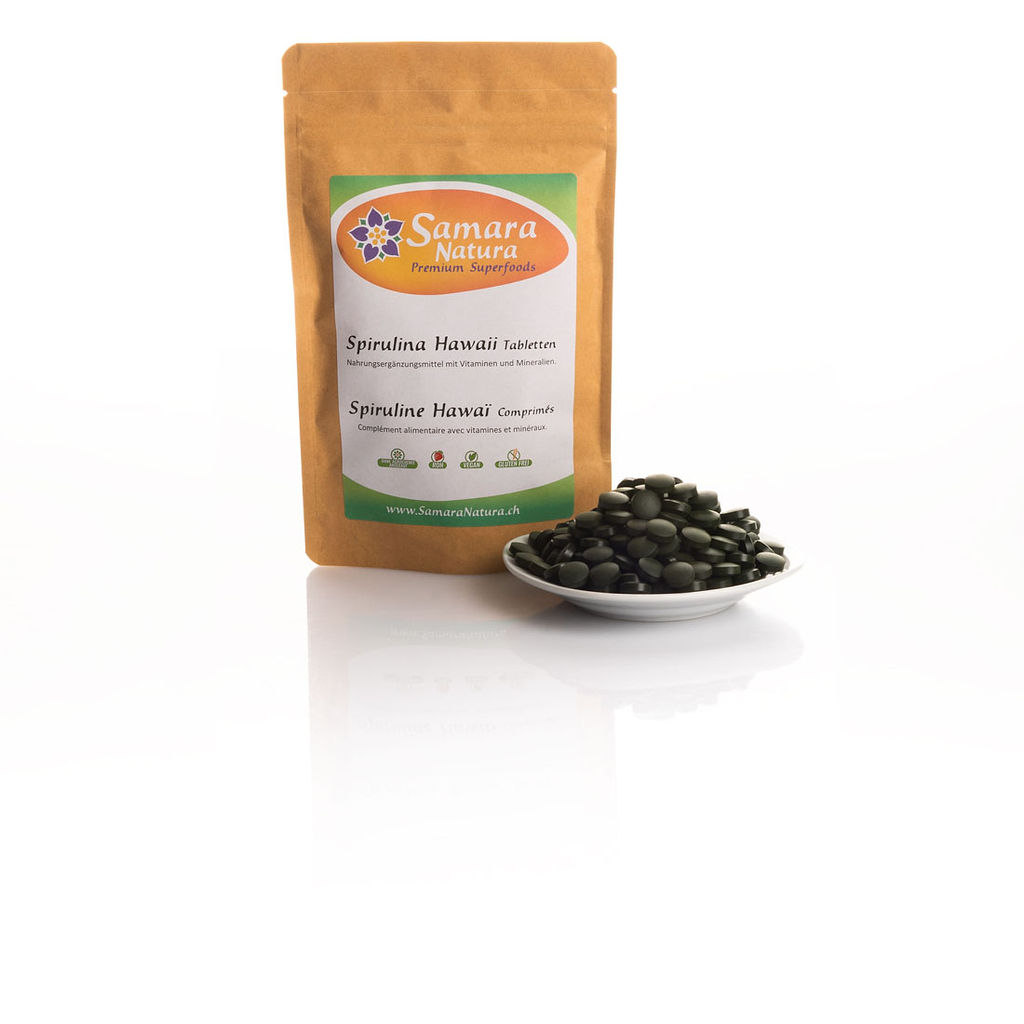
Why consume spirulina tablets (100% natural)? Spirulina is a single-celled, filamentous blue-green algae and one of the first life forms on this planet. Richer in high-quality protein (contains 18 amino acids) than any other food, the microalgae also contains a wealth of vitamins, minerals, important antioxidants such as SOD and phycocyanin, polysaccharides and the rare gamma-linolenic acid. The high density of vital substances brings vitality and well-being. The antioxidants can scavenge free radicals and highly reactive oxygen compounds and are therefore important for cell maintenance and function. The algae is incredibly rich, a "wholefood". It is believed to contain all the vital substances the human body needs and, in combination with chlorella, can provide almost perfect ratios of the most important nutrients! What makes our spirulina tablets special? Spirulina from Hawaii is grown without pesticides or herbicides and does not contain any genetically modified organisms. Our Spirulina Pacifica has been cultivated in Hawaii for over 25 years(video of a flight over the cultivation ponds in Kona, Hawaii) and is regarded as one of the highest quality spirulina in the world. Thanks to a special, oxygen-free drying system, nutrients and enzymes are largely preserved, unlike in other processes. Our spirulina is called Spirulina Pacifica and is a selected strain of Spirulina platensis that has developed over many years of cultivation in Hawaii. Spirulina Pacifica was intensively analysed by molecular biologists at the University of Hawaii. They identified new enzymes that were not found in other Spirulina platensis strains. Spirulina Pacifica is grown in open ponds 20 cm deep, a few hundred metres from the Pacific Ocean. To fill the ponds, fresh water is mixed with seawater from a depth of 600 metres, which is rich in minerals and trace elements. The other most important substances for cultivation in terms of quantity are food-grade baking powder (sodium bicarbonate) and carbon dioxide. Food-grade fertilisers are also used. Paddle wheels move the water to provide the algae with uniform sunlight for optimum growth conditions and nutrient uptake. In a special oxygen-free drying system, the spirulina is dried very gently so that more nutrients and enzymes are retained - e.g. over 40% more ß-carotene and over 75% more zeaxanthin - than is possible with conventional drying systems. Fluctuating green colour According to information from the producer in Hawaii, the colour can vary from batch to batch. Depending on the time of harvest (season) and other factors. The current batch is dark green in colour. Earlier batches were often blue-green in colour. Tips for use Take 1-2 tablets 3 times a day, ideally half an hour before eating. If you find that your energy is running low during the day, take some spirulina with water and observe how your body feels 1-2 hours later. You will be amazed. Recommended amounts: Beginners and children: 1-2g per day Adults: 3g per day If taken in combination with chlorella, we recommend a ratio of 2:1 (spirulina:chlorella). Composition Spirulina Hawaii tablets Spirulina platensis (98.5%), silica (1%), chicory inulin (0.4%), magnesium stearate (0.1%). Important: Silica, chicory inulin and magnesium stearate are used by the producer as a pressing aid. If you are looking for 100% pure powder, we recommend Spirulina Hawaii Powder or Spirulina Taiwan Tablets, which do not contain any pressing aids. Nährwerte Spirulina platensis pro Tagesportion / Valeurs nutritives de Spiruline par portion journalière (3g/6tablets) Energy value 42kJ/10kcalFat 0.2gCarbohydrates 0.3gof which sugar 0.02gProtein 2gProvitamin A (β-carotene) 2.7mg (57%*)Iron 5 mg (36%*)Magnesium 15mg (5%*)Vitamin K (K1, K2) 40 µg (40%*)Chlorophyll 19 mgPhycocyanin 270mg *the recommended daily dose/Apport journ. recommandé Contents Packet 125 g contains approx. 250 tablets of 500mg. Pack 250 g contains approx. 500 tablets of 500mg. Nutritional supplement info The product is not intended as a substitute for a balanced and varied diet and a healthy lifestyle. The recommended daily dose must not be exceeded. Vitamin A and iron contribute to the normal function of the immune system and normal cell division. Vitamin K contributes to normal blood clotting. Note: In case of medical treatment, pregnancy or uncertainty, consult a specialist about the use of this product. Keep out of the reach of children.
Content: 125 Gramm (CHF 26.60 / 100 Gramm)
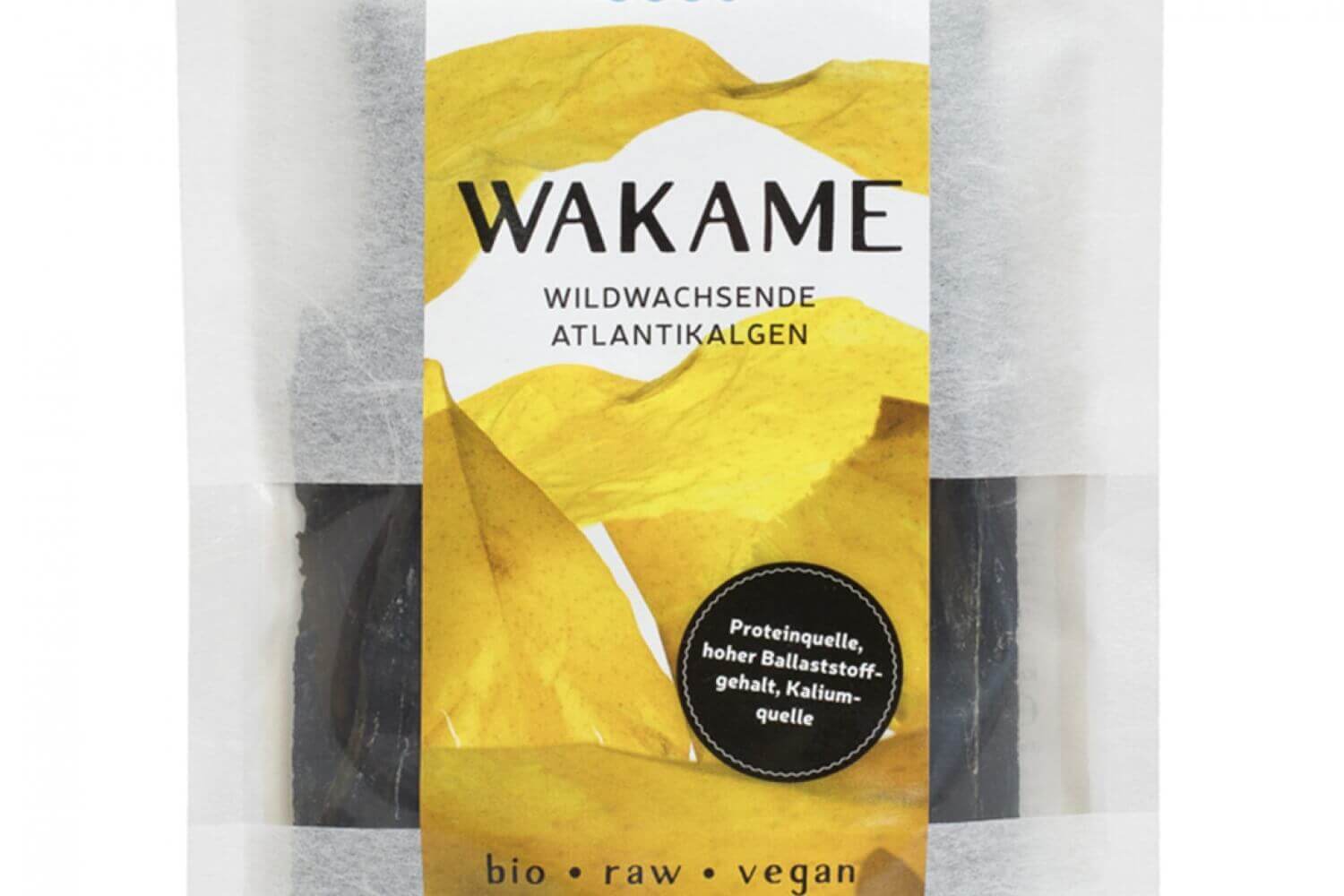
Wakame – Wild-harvested from Galicia Resembling large oak leaves, these brown seaweeds grow along the Galician coast and can reach up to 1.5 metres in length. They are very rich in calcium, iodine, protein and fibre.They are ideal for those new to cooking with seaweed, as they are incredibly versatile: they can be eaten raw or in salads, added to soups and rice dishes, combined with other vegetables, used as a filling for pies, baked in the oven or simply boiled. How to use Irish wakame Raw: in salads (chop into pieces and soak for 15 minutes) Cooked: for approx. 20 minutes with soups, vegetables, potatoes, rice, oats, millet, polenta, semolina, etc. Fried: Together with onions: for pasta, pies, pizzas, quiches, etc. Steamed: with vegetables Wakame ingredients 100% dried wakame seaweed (Undaria pinnatifida), from certified organic wild harvest. Packet size Each packet contains 25g of wakame. Nutritional values for wakame per 100g Fat 1–2gCarbohydrates 46–51gProtein 9–20gVitamin C 10–50mgCalcium 1.167–1.29gIodine 16.5–27.5 µgIron 5–12.6 mgMagnesium 0.896 mg.
Content: 25 Gramm (CHF 25.80 / 100 Gramm)
Während Meeresgemüse wie Dulse oder Meeresspaghetti ganz natürlich an Felsen in vielen Küstenregionen dieser Welt wachsen, stammten die Mikroalgen wie Spirulina oder Chlorella aus Fussballfeld grossen Plantagen in sehr sonnigen Regionen. Sie unterscheiden sich auch in Ihrer Form. Chlorella und Spirulina sind als Pulver oder als Presslinge/Kapseln verfügbar. Das Meeresgemüse, auch Makroalgen genannt, ist als ganze Blattstücke erhältlich.
Sowohl Meeresgemüse wie auch Algen sind sehr reich an Mineralstoffe und Eiweiss. Spirulina und Chlorella sind zudem reich an Chlorophyl (Pflanzengrün).