
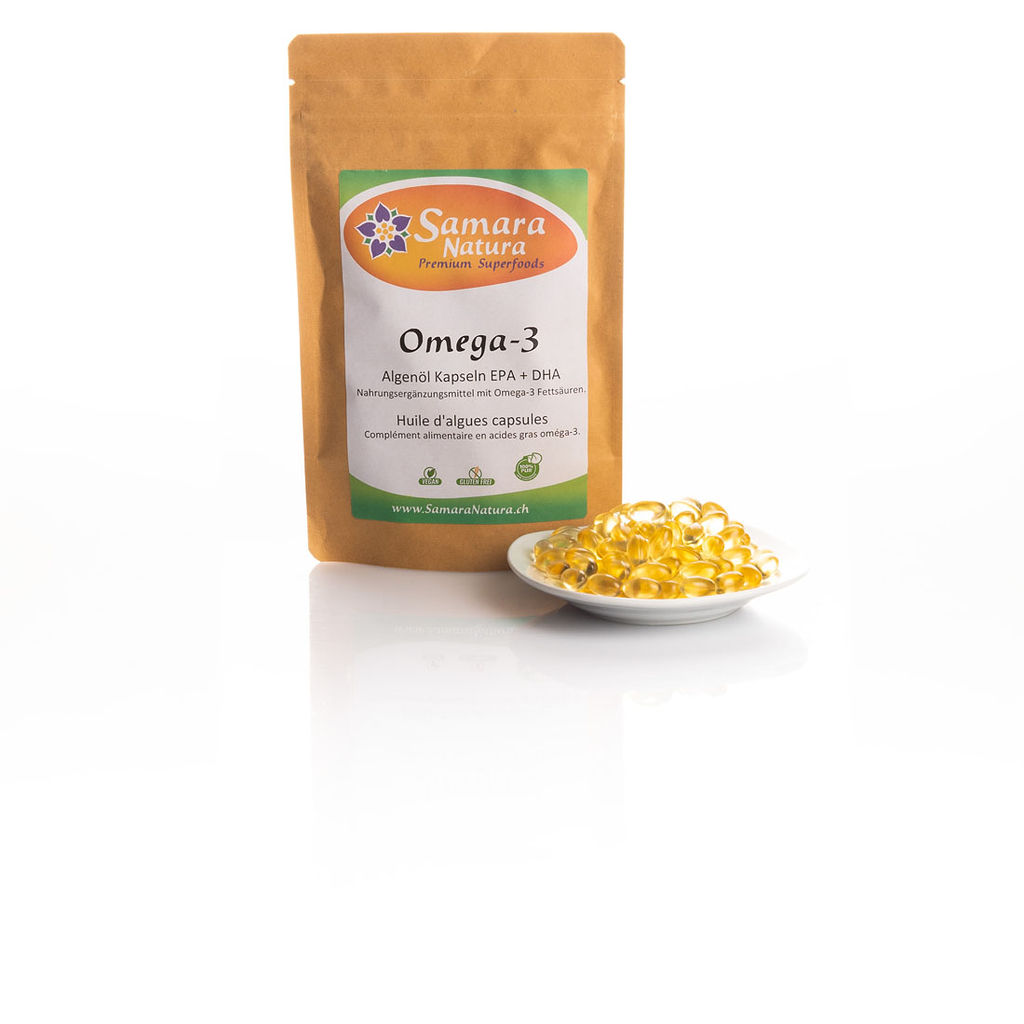
Omega-3 capsules EPA + DHA

| Quantity | Unit price | Base price |
|---|---|---|
| To 2 |
CHF 43.20
|
CHF 36.00 / 100 Stück |
| From 3 |
CHF 41.04
|
CHF 34.20 / 100 Stück |
Available, delivery time: 1-4 days
Product information "Omega-3 capsules EPA + DHA"
Purely plant-based, made from algae oil (rather than fish oil)
Until a few years ago, DHA was only available as a dietary supplement in the form of fish oil. Thanks to a new process, it is now possible to extract DHA from microalgae. This means that DHA from algae oil now offers an equivalent, plant-based alternative.
Why take omega-3 fatty acid supplements?
Omega-3 fatty acids are essential, polyunsaturated fatty acids (FAs). ‘Essential’ means that we must obtain them through our diet, as our bodies cannot produce them themselves.
If your diet is not balanced, this can lead to a deficiency in omega-3 fatty acids.
There are many reasons why someone might not consume enough omega-3 fatty acids naturally through their diet. Examples:
- Foods rich in omega-3 fatty acids are often not part of our daily diet
- The required amount is not adequately met through diet due to excessive physical and work-related stress
This deficiency can be remedied with dietary supplements. In the form of omega-3 capsules, they are very easy to take and can be integrated into your daily routine without any problems.
How do omega-3 fatty acids work?
Omega-3 fatty acids have a very broad range of effects.
- Better protection of cells against premature ageing
- Powerful antioxidants
- Positive effects on the entire cardiovascular system
- Reduction in triglyceride levels, which in the long term leads to an increase in HDL cholesterol levels
- Improved blood circulation
- Reduces the formation of substances responsible for numerous inflammatory conditions. Thus helpful for rheumatism, arthritis, psoriasis and atopic dermatitis
Special composition of SamaraNatura Omega-3 capsules
- Algal oil 75% (algal oil from the microalga Schizochytrium sp. 67%)
- Sunflower oil 2%
- Rosemary extract
- Antioxidant: tocopherol
- Capsule shell (humectant: glycerine; thickening agents: modified maize starch, carrageenan; water; acidity regulator: sodium carbonate).
Recommended intake of Omega-3 capsules
2 capsules (0.6g each) daily with a main meal.
Content per recommended serving (2 capsules): 250mg DHA (docosahexaenoic acid) + 125mg EPA (eicosapentaenoic acid) = 375mg omega-3 fatty acids.
Package contents
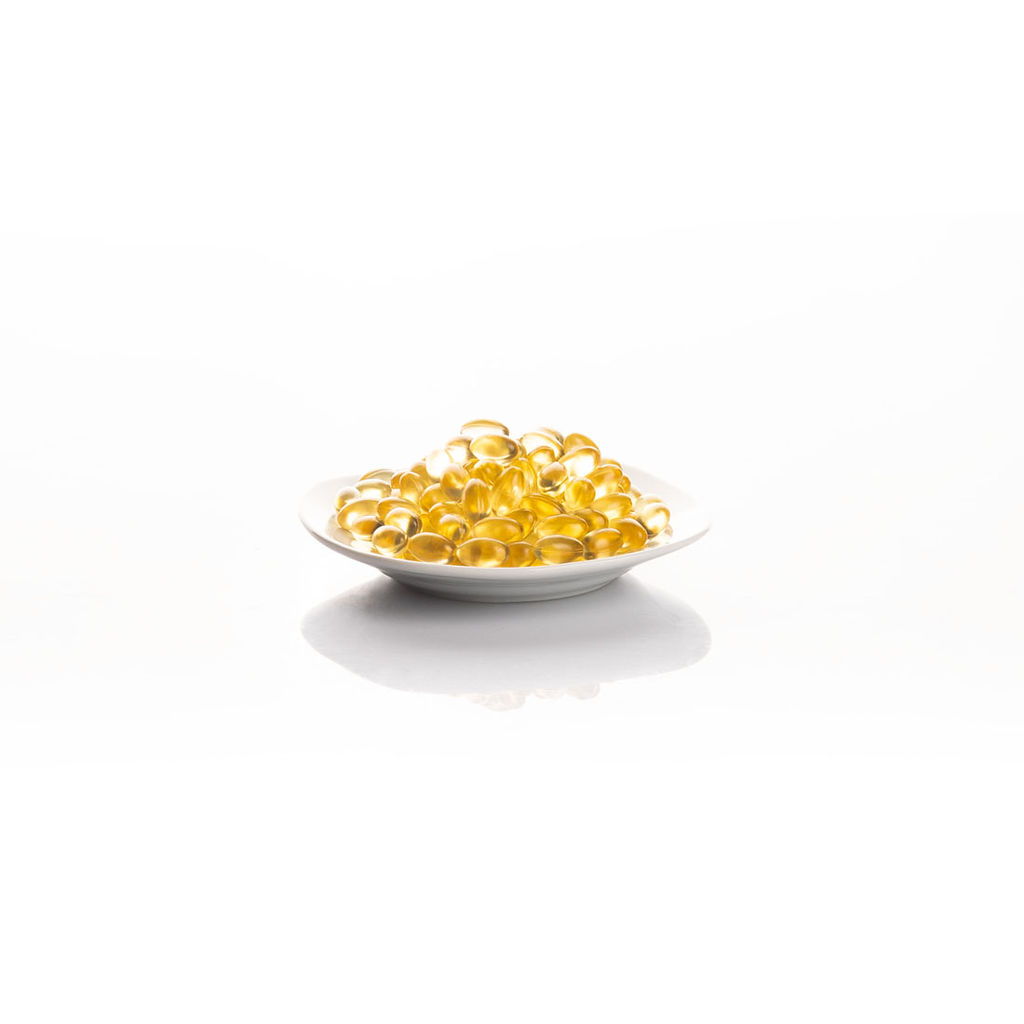
The sachet contains 120 Omega-3 capsules, each weighing 0.6g = 72g in total. When taking 2 capsules per day, one sachet lasts for 60 days.
Notes
- People taking blood-thinning medication should consult their doctor before taking this product.
- Food supplement containing omega-3 fatty acids: This product is not intended as a substitute for a balanced and varied diet and a healthy lifestyle. Do not exceed the recommended daily dose.
- DHA contributes to the maintenance of normal brain function and vision. EPA and DHA contribute to normal heart function. The beneficial effect is obtained with a daily intake of 250 mg of DHA or a combination of DHA and EPA.
- If you are receiving medical treatment, are pregnant or are unsure, consult a healthcare professional regarding the use of this product.
- Keep out of the reach of children. Store in a cool, dark and dry place.
Login
Diese Produkte könnten dich auch interessieren

Top-quality linseed oil made from Swiss organic linseeds | Fresh, cold-pressed and unfiltered The next pressing will take place on Monday 19 October. Please place your pre-order by 11.00 am on Monday 19 October at the latest. The freshly pressed linseed oil will be dispatched on Wednesday 21 October via Post Pack Priority, so parcels should be delivered on Thursday. Now also available as a monthly subscription For regular customers who don’t want to have to keep remembering the pressing dates, we offer a monthly subscription. We’ll then automatically process your order in the week leading up to the pressing. If you’d like to pause, adjust or add other products to your order, simply let us know your requirements a week before the pressing. What makes our linseed oil special? Delicious: Freshly pressed linseed oil doesn’t taste bitter at all (in the first few weeks), but has a mild, nutty flavour. Organic: The brown organic linseeds from producer Jakob Bachofner come from his own fields in Fehraltorf in the Zurich Oberland. Cold-pressed: Thanks to the mill’s water-cooling system, the oil temperature remains between 28–32°C throughout the pressing process – ensuring raw food quality! Regional: Fehraltorf is just 10 km from our warehouse in Wetzikon. Delivery to your home is CO₂-neutral via Swiss Post.Monthly pressing from September to June: Jakob Bachofner from the Oelerei presses the linseed oil from organic linseeds grown in his own fields in Fehraltorf – fresh and using a water-cooled press to produce raw food quality oil at 28–32°C – taste the difference. It is not filtered, but left to stand in a cool place for one day to allow the sediment to settle. The linseed oil is then bottled, taken to the warehouse and dispatched the very same day. A very small amount of sediment (which is slightly darker) may settle at the bottom of the bottles. This can be consumed without any concerns. Why is linseed oil so healthy? With approximately 50 per cent alpha-linolenic acid (omega-3), linseed oil is one of the richest sources of this important fatty acid. Just one tablespoon of linseed oil meets an adult’s daily requirement of 2g of alpha-linolenic acid. Omega-3 fatty acids are of great importance to our metabolism. They are key building blocks of our cell membranes, have anti-inflammatory effects, protect cells against premature ageing and strengthen the immune system. You can find more interesting information about omega-3 fatty acids in ourhealth guide. Food & skincare: How to use linseed oil? Fresh linseed oil is a real delicacy! Linseed oil is perfect for cold and lukewarm dishes such as salads, potatoes and muesli. It can also simply be enjoyed on its own (1 tablespoon daily). Linseed oil is also suitable for external use on very dry skin. Recipes with linseed oil for inspiration We’ve been keen consumers of linseed oil ourselves for many years, which is why we’re happy to share our favourite recipes here for your inspiration: Raw almond milk with a fresh apple and linseed oil Budwig cream muesli (made with low-fat quark and linseed oil) Golden milk with linseed oil Chia pudding with linseed oil Apple and cinnamon porridge with linseed oil Wholemeal bread with cottage cheese, linseed oil and sprouts Vegan mayonnaise with almond butter and linseed oil Gschwellti (jacket potatoes) with linseed oil Potato salad with linseed oil Tomato and onion salad with basil and linseed oil Experiment:Drizzle the linseed oil, along with a little salt, over half an avocado. What’s your favourite linseed oil recipe? Let us know and we’ll be happy to add it to the list. Freshly pressed linseed oil available by pre-order only Due to its sensitivity to heat and short shelf life, we do not keep linseed oil in stock; instead, we only accept pre-orders from September to June, which are then fulfilled once a month. During the warmer months, orders are dispatched with cooling packs. Ordering process for freshly pressed linseed oil made from Swiss linseeds To place a pre-order, simply buy the linseed oil online as usual, send us an email at info@samaranatura.ch or give us a quick call on 044 586 27 27. On Monday morning, we place our order with Jakob Bachofner at the Oelerei. He presses the linseed oil on Monday. The freshly pressed organic linseed oil then needs to rest for a day in cold storage to allow sedimentation (settling of the suspended particles). On Wednesday morning, the oil is bottled and I take the bottles straight to my social logistics partner in Wetzikon. On Wednesday, he dispatches all orders (linseed oil along with any other items ordered) via Post Pack Priority (at no extra cost of CHF 2), so you should receive your order on Thursday of the same week. Order deadlines for autumn 2026Sunday 18 October 2026Sunday 15 November 2026Sunday 13 December 2026 Shelf life The minimum shelf life after pressing is 3 months. Please always store the linseed oil in the fridge, even before opening the bottle for the first time. This slows down the oxidation process, which occurs very rapidly in linseed oil. Our linseed oil is specially bottled in dark purple Mironglas to protect it from sunlight and the associated premature oxidation. To further extend the shelf life, there are two options: some modern fridges have a 0-degree zone. Stored there, the linseed oil will keep for about a month longer; alternatively, you can freeze it, which extends the shelf life to 6 months. Once opened, the bottle should be consumed within 3–4 weeks. Important notes Linseed oil and camelina oil are not the same thing. Whilst linseed oil is pressed from linseeds, camelina oil is derived from camelina. Camelina oil has a longer shelf life but contains a lower proportion of alpha-linolenic acid/omega-3, at around 35 per cent. Cold-pressed oils (except coconut oil) are heat-sensitive and are therefore mainly suitable for use in cold dishes. When heated to high temperatures, e.g. when frying, toxic compounds may form. Change to bottles Due to the massive price increase for Mironglas (approx. 40 per cent) and the new closure system featuring a plastic ball, Jakob Bachofner has been looking for alternatives. For the standard glass bottles used for cooking oils, the purchase of a capping machine would have been necessary, which would not have been cost-effective for the small production volumes at the oil mill in Fehraltorf. A BPA-free tinplate bottle in a matt black design from Germany has now emerged as the best alternative, see image top left. The advantages over glass are its lighter weight and lower energy consumption during production. Furthermore, the risk of breakage is significantly lower, meaning less packing material is required during dispatch. Tinplate has a high recycling rate, as it is collected alongside aluminium at all recycling centres. Any other packaging options would have resulted in price increases. We are delighted that, at a time when almost everything is becoming more expensive, we are able to offer linseed oil at the existing prices. Nutritional values for organic linseed oil per 100g Energy 3475 kJ / 830 kcalFat 93g- of which saturated fatty acids (palmitic acid and stearic acid) 8g- monounsaturated fatty acids (oleic acid) 19g- polyunsaturated fatty acids (linoleic acid and alpha-linolenic acid) 67gCarbohydrates 0gof which sugars 0gProtein 0gSalt 0g Compared with other oils, linseed oil has a very high proportion of polyunsaturated fatty acids. Depending on the seed, it contains 10–30 per cent linoleic acid (omega-6 fatty acid) and 40–70 per cent alpha-linolenic acid (omega-3 fatty acid), which the body can convert into DHA (docosahexaenoic acid) and EPA (eicosapentaenoic acid). Origin Switzerland, cold-pressed by Jakob Bachofner in Fehraltorf using linseeds from his own fields in Fehraltorf, ZH. Reuse of the Miron bottles In principle, the bottles made from high-quality Miron glass can be rinsed out and reused as desired. We recommend leaving the labels on, as they do not come off easily even after a cycle in the dishwasher or when cleaned with spirit. The labels are not water-soluble because the bottles are stored in the fridge. When the bottles are taken out, condensation forms, which would then cause the labels to peel off. Furthermore, a paper label would quickly look dirty if a drop of oil ran down it. According to feedback from the producer, the labels are best removed using orange oil. Local producer Since summer 2021, Jakob Bachofner from the Oelerei in Fehraltorf has been pressing our linseed oil once a month. As well as the excellent quality, we appreciate the short distance of just 10 kilometres between the oil production facility and our warehouse in Wetzikon. This enables us to send you the linseed oil on the day it is bottled (every Wednesday). It hardly gets any faster than that, unless you select ‘Collection from warehouse’ as your delivery method and come to collect the linseed oil in person from the warehouse on Wednesday afternoons from 3.30 pm. Jakob “Köbi” Bachofner produces all his oils using a water-cooled oil mill, certified organic in accordance with the Swiss Organic Farming Regulations (CH-BIO-086). Here are a few pictures of the cultivation and harvest of the linseeds from Fehraltorf. The linseed blossoms unfurl Close-up of linseed pods The flax is ready for harvest Mowing with a disc mower Drying the flax in the sun for 2 days Threshing the flax with a combine harvester The water-cooled oil mill for pressing raw-food-grade linseed oil Jakob Bachofner in the field
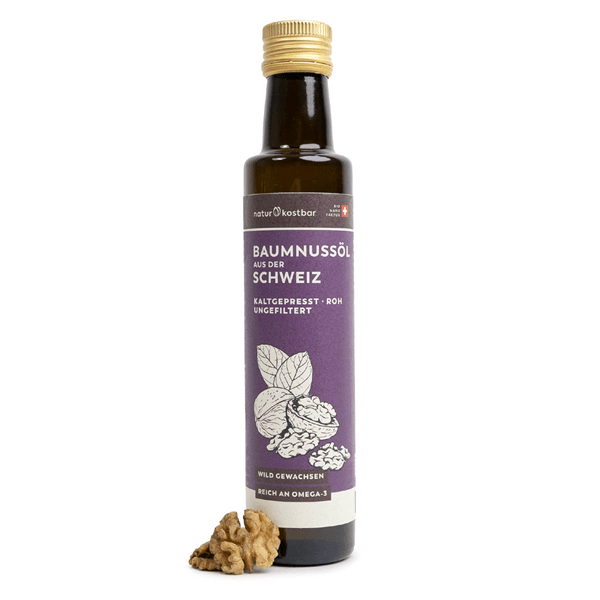
Cold-pressed organic tree nut oil from Swiss tree nuts Strong, majestic tree nut trees spoil us with tree nuts every autumn in the Swiss Seeland. Local farmers collect the wild-grown nuts by hand and bring them to our nutcracker. We process the raw, cracked tree nuts in our factory in Uetendorf. Our water-cooled oil mill ensures that there is no heat build-up during the pressing process and that the temperature of the oil always remains below 37°C. We then allow the unfiltered oil to sediment. This produces our particularly high-quality, cold-pressed tree nut oil with an excellent nutrient content. It provides you with polyunsaturated fatty acids and vitamins. And the aromatic oil enriches every dish with its mild, nutty, delicate flavour; from starters to main courses and desserts. Use Tree nut oil tastes wonderfully aromatic with a mild, nutty, delicate flavour. This oil is a delicious culinary enrichment. It adds flavour to salads, vegetables and desserts, for example, and also enhances hot dishes. Add the oil after cooking to preserve the flavour and valuable ingredients. With a drop or two of the tree nut oil, your dishes will turn into. Note: Store in the refrigerator. Tree nut oil is also suitable for skin care. It has a regenerating effect and smoothes the skin. Why is tree nut oil healthy? With its 72% linolenic acid content, our tree nut oil is particularly rich in polyunsaturated fatty acids. These essential unsaturated fatty acids are particularly important for our organism and are part of a healthy, balanced diet. Thanks to its high content of omega-3 fatty acids, our tree nut oil can also help to maintain a normal blood cholesterol level. Tree nuts also contain lecithin, choline, vitamins B1, B2, B6 and vitamin E, which can help protect our cells from oxidative stress. Why not heat tree nut oil? Cold-pressed oils (except coconut oil) are sensitive to heat and are therefore mainly suitable for cold cooking. Toxic compounds can be formed when heated to high temperatures, e.g. frying. Additional information Ingredients: 100% organic tree nut oil Organic certificate: CH-BIO-086 Allergens: Tree nuts Nutritional values of tree nut oil per 100g energy 3400kJ (830kcal) fat 92g of which monounsaturated fatty acids 16g of which polyunsaturated fatty acids 63g of which saturated fatty acids 7g Carbohydrates - of which sugar - protein - salt - Vitamin E 3.3mg Vitamin K 15µg
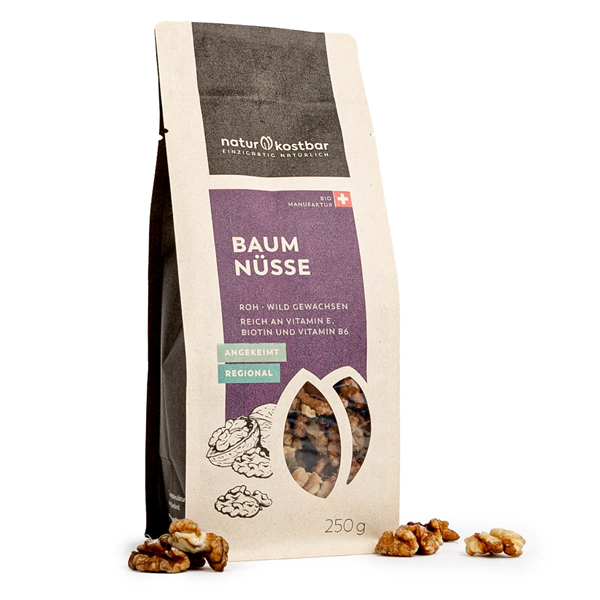
Sprouted walnuts – easier to digest The Swiss organic walnuts are soaked and sprouted at Naturkostbar Manufaktur for several hours. They are then dried for 24 hours at a maximum temperature of 42°C. The sprouting process neutralises the phytic acid present in the walnuts and significantly increases their nutrient density. It also makes the walnuts easier to digest, which in turn improves nutrient absorption. Uses for sprouted walnuts Like normal walnuts, the sprouted walnuts are ideal as a snack on their own or mixed with dried fruit and cocoa beans to make a delicious trail mix. Additional information Contents: 250g bag. Warning: May contain shell fragments. Origin and production: Organic walnuts from Switzerland, sprouted at the Naturkostbar Manufaktur in Uetendorf near Thun. Organic certification: CH-BIO-086 Nutritional information for sprouted walnuts Average nutritional valuesper 100g/100ml%11Reference intake for an average adult (8400 kJ/2000 kcal) Energy 3,060 kJ (742 kcal) 36% Fat 70.8 g 101% of which saturated fatty acids 6.3g 32% of which monounsaturated fatty acids 11.9g 79% of which polyunsaturated fatty acids 49.4g - Carbohydrates 7g 3% of which sugars 2g 2% Fibre 6.7g 13% Protein 15.9g 32% Salt - - Beta-carotene (provitamin A) - - Vitamin A - - Vitamin B1 0.36 mg 33% Vitamin B2 0.1 mg 7% Vitamin B3 1.3 mg 8% Vitamin B6 0.4 mg 29% Vitamin B12 - - Vitamin C - - Vitamin D - - Vitamin E 30 mg 250% Vitamin K - - Biotin 20 µg 40% Calcium 78 mg 10% Chloride 23 mg 3% Chromium - - Iron 3 mg 21% Fluoride - - Folic acid/folacin 140 µg 70% Iodine 2 µg 1% Potassium 420 mg 21% Copper - - Magnesium 140 mg 37% Manganese - - Molybdenum - - Pantothenic acid 0.8 mg 13% Phosphorus 360 mg 51% Selenium - - Zinc 4 mg 40%
Content: 250 Gramm (CHF 7.56 / 100 Gramm)
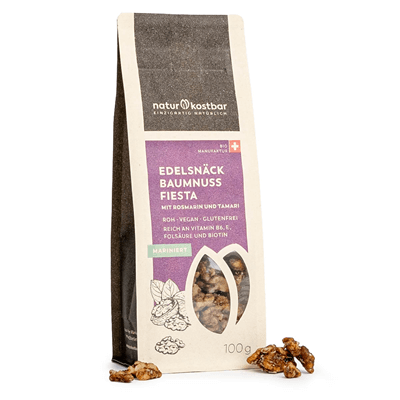
The sprouted, marinated walnuts are now called Edelsnäck Walnut Fiesta Naturkostbar germinates the wild-harvested Swiss walnuts and, after gently drying them (below 40°C), flavours them with a delicious rosemary and tamari marinade – mmm, absolutely delicious! Origin and processing The walnuts come from old, majestic walnut trees in the Swiss Seeland region. Local farmers harvest the wild walnuts by hand. A Swiss nutcracker carefully removes the hard shell. Naturkostbar allows the walnuts to sprout so that they can develop their full nutritional potential. The second important step in the processing is the marinating. The marinade contains Nama Organic Tamari soy sauce, rosemary,coconut blossom sugar, salt and garlic. Natural indulgence The result is crunchy, savoury-sweet tree nuts. They have a well-balanced nutty flavour and entice with a subtle rosemary aroma. ✓ Wild-harvested in Switzerland ✓ Organic, vegan and raw food quality ✓ Sprouted ✓ Gluten-free Uses for marinated walnuts These delicious rosemary walnuts are perfect for any aperitif, as a topping for salads or as brain food at the office. Ingredients Walnuts**, tamari*, coconut blossom sugar*, walnut oil, garlic powder*, rock salt. *from organic farming, **sprouted Nutritional information for marinated walnuts Energy / Nutrient per 100gg/mg/μg%*1*1 Reference intake/daily allowance for an average adult (8400 kJ/2000 kcal) Energy 2,792 kJ (677 kcal) 33% Fat 62.9 g 90% of which saturated fatty acids 5.63g 28% Carbohydrates 11.9g 5% of which sugars 5.2g 6% Protein 14.3g 29% Salt 1.25g 21%
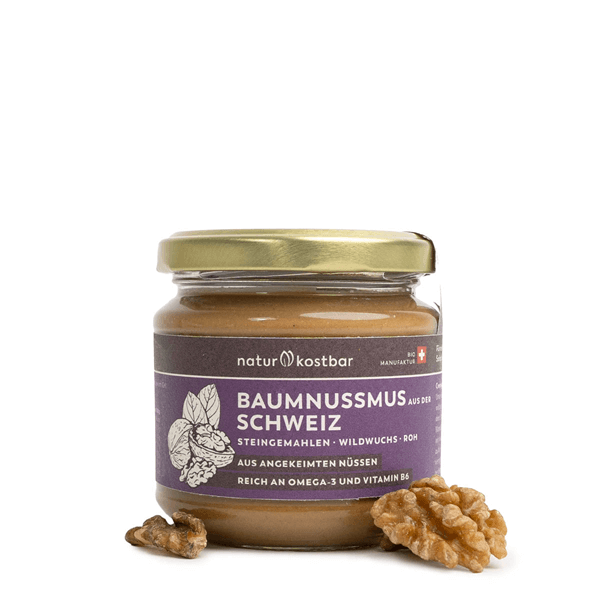
Info: We only stock the small 180g jar of Naturkostbar as standard. The large 550g jar for CHF 34 can be pre-ordered at any time -> info@samaranatura.ch or 044 586 27 27.Organic tree nut puree from Naturkostbar Creamy, smooth puree made from sprouted Swiss wild-grown tree nuts Production: The wild-grown tree nuts come from trees in the Swiss Seeland. After the tree nuts have been cracked, they are processed in the Naturkostbar factory in Uetendorf. The nuts are sprouted, i.e. soaked in water for a few hours and then gently dried, in order to fully develop their mineral and vitamin density. The nuts are then gently and slowly transformed into a creamy puree using a traditional stone mill. Grinding with granite stone is a particularly gentle process: the flavours are released and the puree develops a unique, delicate consistency. Use: The delicious tree nut puree tastes great as a spread and refines crackers soups smoothies sauces Salad dressings Muesli Yoghurt Tree nut milk tip: Mix 1 tablespoon of tree nut butter with 2 litres of water. To sweeten, add 2 dates and, if desired, seasonal berries or superfood powder. Quality: Raw food, from certified organic farming Ingredients: 100% Swiss organic tree nuts Origin of raw materials: Switzerland Organic certification: CH-BIO-086 Nutritional values per 100g Energy 3060kJ (742kcal) fat 70.8g of which saturated fatty acids 6.3g Carbohydrates 7g of which sugar 2g protein 15.9g salt 0g
Content: 180 Gramm (CHF 8.18 / 100 Gramm)
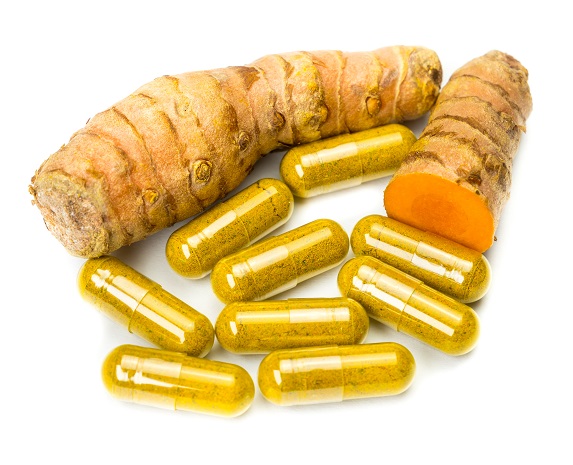
Turmeric capsules (95% curcumin) with piperine & more To complement our popular turmeric powder, we have now added turmeric capsules to our range. These contain not just turmeric powder, but a blend of high-quality plant extracts: Indian turmeric extract with 95% curcumin Indian black pepper extract containing 95% piperine Matcha powder The benefits of capsules Turmeric capsules offer convenience and practicality. Compared to turmeric powders or liquids, our capsules provide an extremely simple way to incorporate the health benefits of turmeric into your daily routine. Why take turmeric capsules? Curcumin is a bioenhancer. Bioenhancers have no pharmacological effect of their own. However, they increase the bioavailability of vitamins and minerals. They can also enhance the effectiveness of medicines used to treat high blood pressure, tuberculosis, cancer, bacterial or fungal infections. People taking such medicines should only use turmeric in consultation with their doctor. It has been scientifically proven thatmild gastrointestinal complaints such as flatulence and bloating can be relieved. Recommended intake Take 1 capsule daily with a main meal, swallowing it with plenty of liquid. Do not exceed the recommended daily dose. This product is not intended as a substitute for a balanced and varied diet or a healthy lifestyle. Nutrients per recommended serving (1 capsule) Curcumin 140mg, piperine 2mg. Ingredients Bulking agent: gum arabic (from sustainably produced acacia fibres), turmeric extract 29%, matcha powder, hydroxypropyl methylcellulose (capsule shell), black pepper extract. Important information Not suitable for children and adolescents. Not suitable for pregnant or breastfeeding women. Consumption may increase the effectiveness of medicines. Keep out of reach of young children. Store in a cool, dry place, away from light. Manufactured in Germany. Contents Each sachet contains approx. 90 capsules, each weighing 533 mg. The net weight is 48 g.
Content: 90 Stück (CHF 32.22 / 100 Stück)
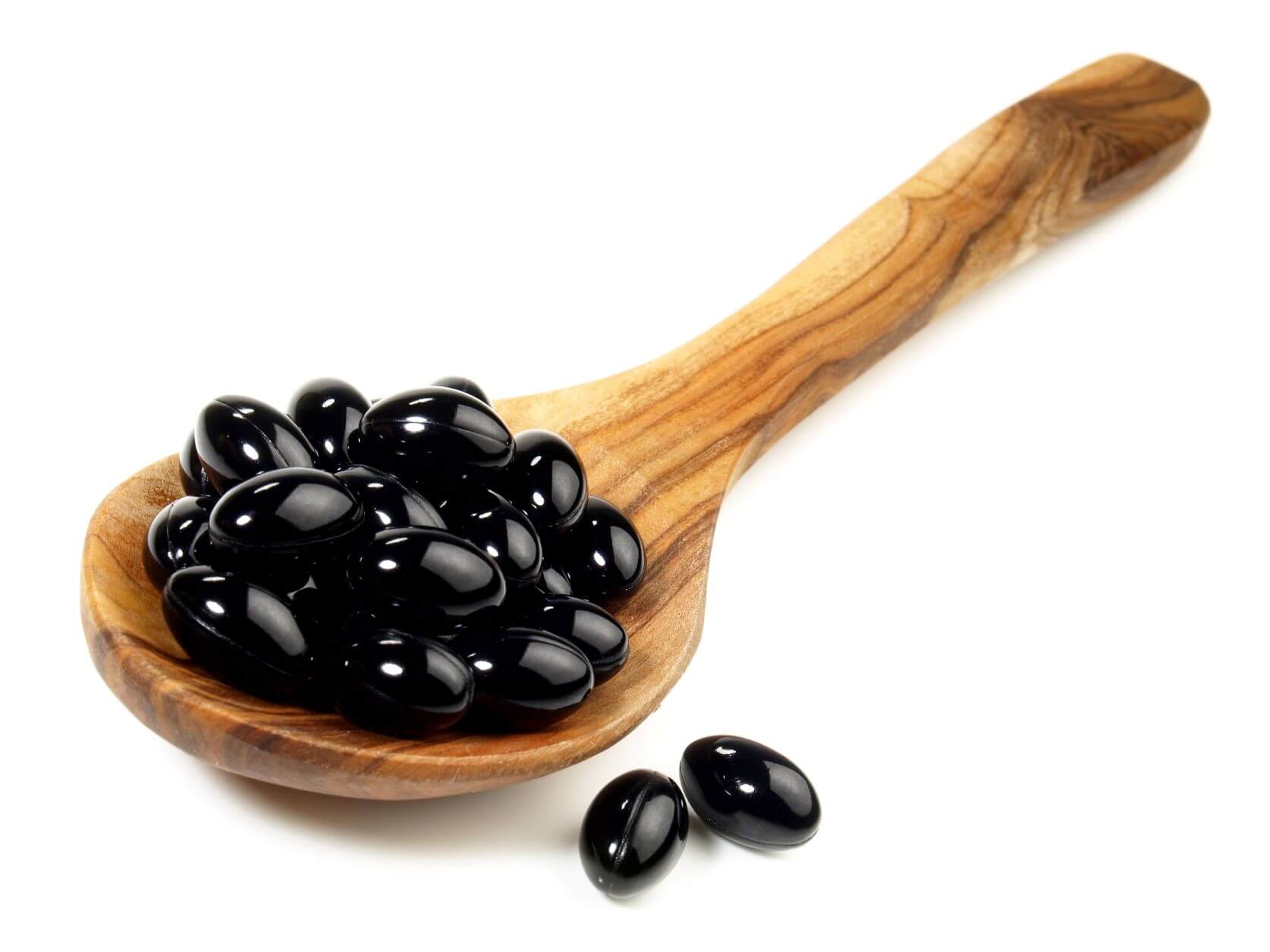
Hawaiian BioAstin® with astaxanthinHawaiian BioAstin® with astaxanthin from the microalgae Haematococcus pluvialis. The carotenoid astaxanthin produced in the blood rain algae is a natural pigment that is also found in fruit and vegetables and gives salmon and crustaceans a reddish colour. Benefits of astaxanthin capsules Antioxidant effectAnti-inflammatory propertiesSupport for eye, skin and brain healthPositive influence on athletic performance Who is it particularly suitable for? People who suffer from increased oxidative stressOlder peoplePeople with skin problemsAthletes Origin and productionThe algae are cultivated in open freshwater ponds on the sunny west coast of Kona (Hawaii) and processed directly on site(video of a flight over the cultivation ponds in Kona, Hawaii). The producer is the market leader in the cultivation of microalgae and has been setting the highest quality standards for three decades. The extraction temperature of the astaxanthin is at least 60 degrees Celsius, which means that the product is not raw. Consumption recommendation Recommended intake: 1-2 capsules daily with the main meal, swallowed with plenty of liquid. Nutrients per 2 capsules BioAstin® 160 mg, of which astaxanthin 8 mg. Ingredients BioAstin® (Haematococcus pluvialis extract, virgin olive oil, safflower oil with high oleic acid content), softgel capsule made from non-genetically modified maize starch, carrageenan (seaweed), glycerine (vegetable), sorbitol, purified water, vitamin E (natural mixed tocopherols from sunflower oil). Bag contents The sachet contains 90 astaxanthin capsules of 0.77g each = total 70g. If 2 capsules are taken per day, one sachet will last for 45 days. Important information Food supplement with astaxanthin: The product is not intended as a substitute for a balanced and varied diet and a healthy lifestyle. The recommended daily dose must not be exceeded. Not suitable for children and adolescents. Not suitable for pregnant and breastfeeding women. In case of medical treatment and uncertainty, consult a specialist about the use of this product. Keep out of the reach of children. Store in a cool, dark and dry place.
Content: 90 Stück (CHF 27.44 / 100 Stück)