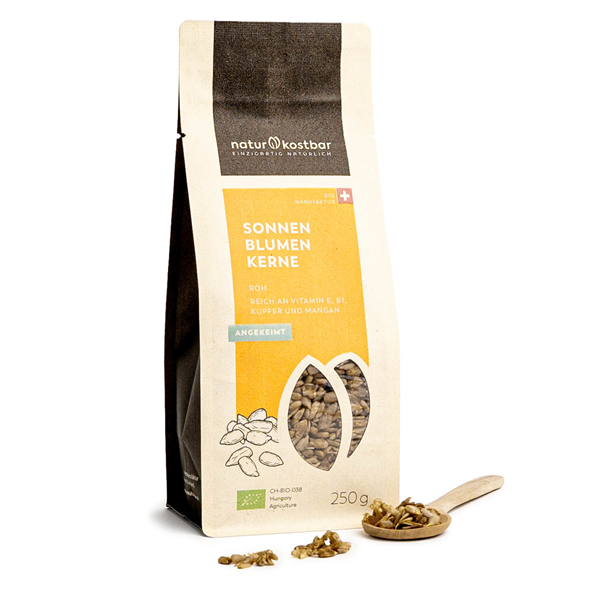
Sunflower seeds sprouted organic Naturkostbar

| Quantity | Unit price | Base price |
|---|---|---|
| To 2 |
CHF 6.90
|
CHF 2.76 / 100 Gramm |
| From 3 |
CHF 6.56
|
CHF 2.62 / 100 Gramm |
Available, delivery time: 1-4 days
Product information "Sunflower seeds sprouted organic Naturkostbar"
Sunflower seeds sprouted - better digestible
These sprouted organic sunflower seeds are easier to digest due to the sprouting process and have more enzymes and a significantly higher nutrient density. The sunflower seeds come from a family farm in Transylvania, Romania. The small farm specialises in sprouted raw food and processes the harvest of numerous organic farmers from Europe. The mindful, natural philosophy is reflected in the excellent quality of the sunflower seeds.
Contents: Bag with 250g.
Use
These sprouted sunflower seeds have a mild, nutty flavour. Thanks to their crunchy consistency, sunflower seeds add flavour to salads, muesli, porridge, dips and are a perfect snack between meals.
Nutritional information sprouted sunflower seeds
| Energy / nutrient per 100g | g/mg/μg | %*1 |
|---|---|---|
| *1 Reference amount/daily intake for an average adult (8400kJ/2000kcal) | ||
| Energy | 2749kJ (665kcal) | 33% |
| fat | 61.4g | 88% |
| of which saturated fatty acids | 6.7g | 34% |
| Carbohydrates | 5.7g | 2% |
| thereof sugar | 2.6g | 3% |
| Protein | 20g | 40% |
| salt | 0.04g | 1% |
Login
These products might also interest you
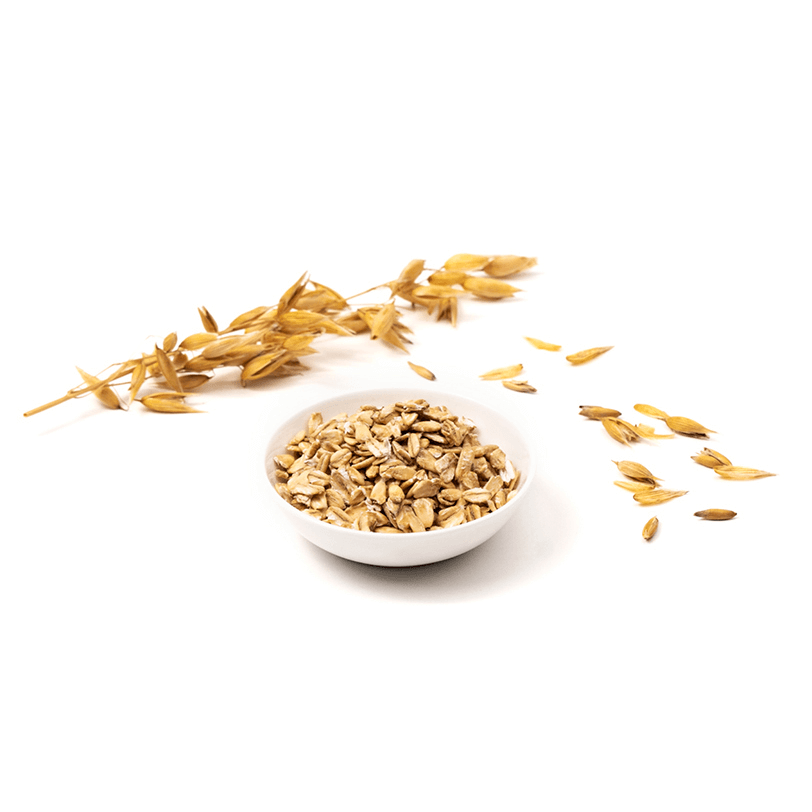
Sprouted oat flakes These organic sprouted oat flakes from Naturkostbar are easier to digest thanks to the sprouting process and contain more enzymes as well as having a significantly higher nutrient density. Sprouting effectively unlocks the dormant life forces within the grain – a true treat for body and soul. Compared to other cereals, oats are significantly richer in nutrients and have become very popular as a healthy breakfast ingredient. Are the oat flakes gluten-free? The sprouted oats contain less than 20 ppm of gluten and are therefore also suitable for a gluten-free diet. Origin The oat flakes come from a family-run farm in Transylvania, Romania. This small farm specialises in sprouted raw foods and processes the harvests of numerous organic farmers across Europe. This mindful, natural philosophy is reflected in the excellent quality of the oat flakes. The sprouted oat flakes are now only dried after flaking, so that they break up less into small pieces. Contents: 500g bag. Usage These sprouted oat flakes have a characteristic, slightly bitter flavour. They make a wholesome addition to almost any muesli creation. Nutritional information: Sprouted oat flakes Nutritional values (average)per 100g/100ml%11Reference intake for an average adult (8400 kJ/2000 kcal) Energy 1,639 kJ (388 kcal) 20% Fat 7.5 g 11% of which saturated fatty acids 1.3g 7% of which monounsaturated fatty acids - - of which polyunsaturated fatty acids - - Carbohydrates 69g 27% of which sugars 1.2g 1% Fibre 3.1g 6% Protein 9.6g 19% Salt 0.03g 1% Beta-carotene (provitamin A) - - Vitamin A - - Vitamin B1 0.68 mg 62% Vitamin B2 0.2 mg 14% Vitamin B3 - - Vitamin B6 1 mg 71% Vitamin B12 - - Vitamin C - - Vitamin D - - Vitamin E - - Vitamin K - - Biotin - - Calcium 374 mg 47% Chloride - - Chromium - - Iron 5.4 mg 39% Fluoride - - Folic acid/folacin - - Iodine - - Potassium - - Copper - - Magnesium 135 mg 36% Manganese - - Molybdenum - - Pantothenic acid - - Phosphorus - - Selenium - - Zinc 3.2 mg 32%
Content: 500 Gramm (CHF 2.26 / 100 Gramm)
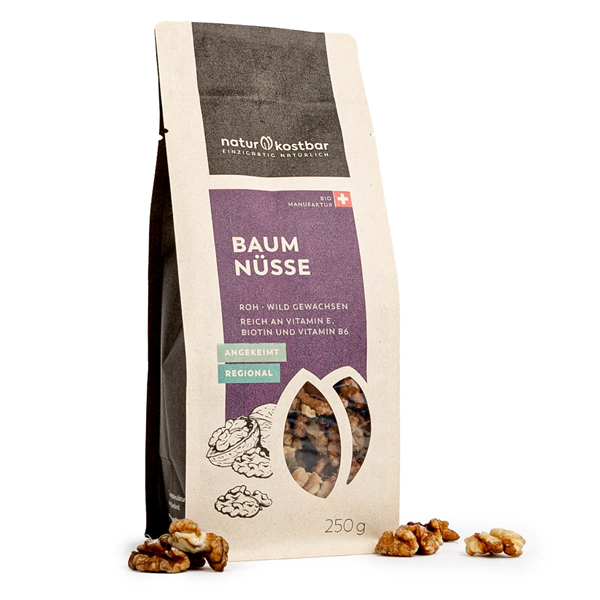
Sprouted walnuts – easier to digest The Swiss organic walnuts are soaked and sprouted at Naturkostbar Manufaktur for several hours. They are then dried for 24 hours at a maximum temperature of 42°C. The sprouting process neutralises the phytic acid present in the walnuts and significantly increases their nutrient density. It also makes the walnuts easier to digest, which in turn improves nutrient absorption. Uses for sprouted walnuts Like normal walnuts, the sprouted walnuts are ideal as a snack on their own or mixed with dried fruit and cocoa beans to make a delicious trail mix. Additional information Contents: 250g bag. Warning: May contain shell fragments. Origin and production: Organic walnuts from Switzerland, sprouted at the Naturkostbar Manufaktur in Uetendorf near Thun. Organic certification: CH-BIO-086 Nutritional information for sprouted walnuts Average nutritional valuesper 100g/100ml%11Reference intake for an average adult (8400 kJ/2000 kcal) Energy 3,060 kJ (742 kcal) 36% Fat 70.8 g 101% of which saturated fatty acids 6.3g 32% of which monounsaturated fatty acids 11.9g 79% of which polyunsaturated fatty acids 49.4g - Carbohydrates 7g 3% of which sugars 2g 2% Fibre 6.7g 13% Protein 15.9g 32% Salt - - Beta-carotene (provitamin A) - - Vitamin A - - Vitamin B1 0.36 mg 33% Vitamin B2 0.1 mg 7% Vitamin B3 1.3 mg 8% Vitamin B6 0.4 mg 29% Vitamin B12 - - Vitamin C - - Vitamin D - - Vitamin E 30 mg 250% Vitamin K - - Biotin 20 µg 40% Calcium 78 mg 10% Chloride 23 mg 3% Chromium - - Iron 3 mg 21% Fluoride - - Folic acid/folacin 140 µg 70% Iodine 2 µg 1% Potassium 420 mg 21% Copper - - Magnesium 140 mg 37% Manganese - - Molybdenum - - Pantothenic acid 0.8 mg 13% Phosphorus 360 mg 51% Selenium - - Zinc 4 mg 40%
Content: 250 Gramm (CHF 7.56 / 100 Gramm)
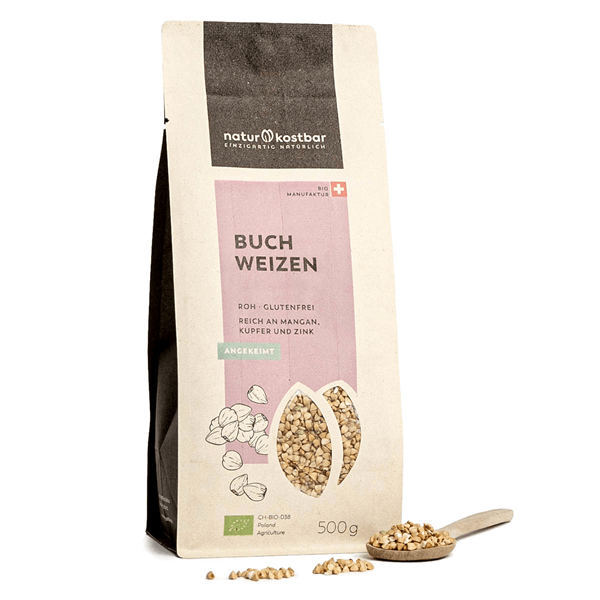
Sprouted buckwheat organic Naturkostbar With their pleasant nutty flavour and crunchy texture, they provide you with a valuable source of important nutrients. Why eat it? Buckwheat contains all the essential amino acids and can therefore promote the development of muscles, organs, cartilage, bones, skin, hair and nails. In addition, this pseudo-cereal is an excellent source of iron and selenium. How to use? These crunchy grains are ideal as a topping for salads, desserts or as an ingredient in your morning muesli. With a gluten content of less than 20 ppm, these buckwheats are also ideal for people on a gluten-free diet. What makes this buckwheat special? These buckwheats are produced by a family-run farm in Transylvania (Romania). This company specialises in sprouted raw food and processes the harvest from numerous organic farms in Europe. In order to develop the full potential of minerals and vitamins, the raw buckwheat grains are sprouted after harvesting. This germination process activates the dormant nutrients in the grain. Gentle drying at a maximum temperature of 42°C preserves these nutrients and gives the kernels their perfect crunchiness.
Content: 500 Gramm (CHF 2.26 / 100 Gramm)
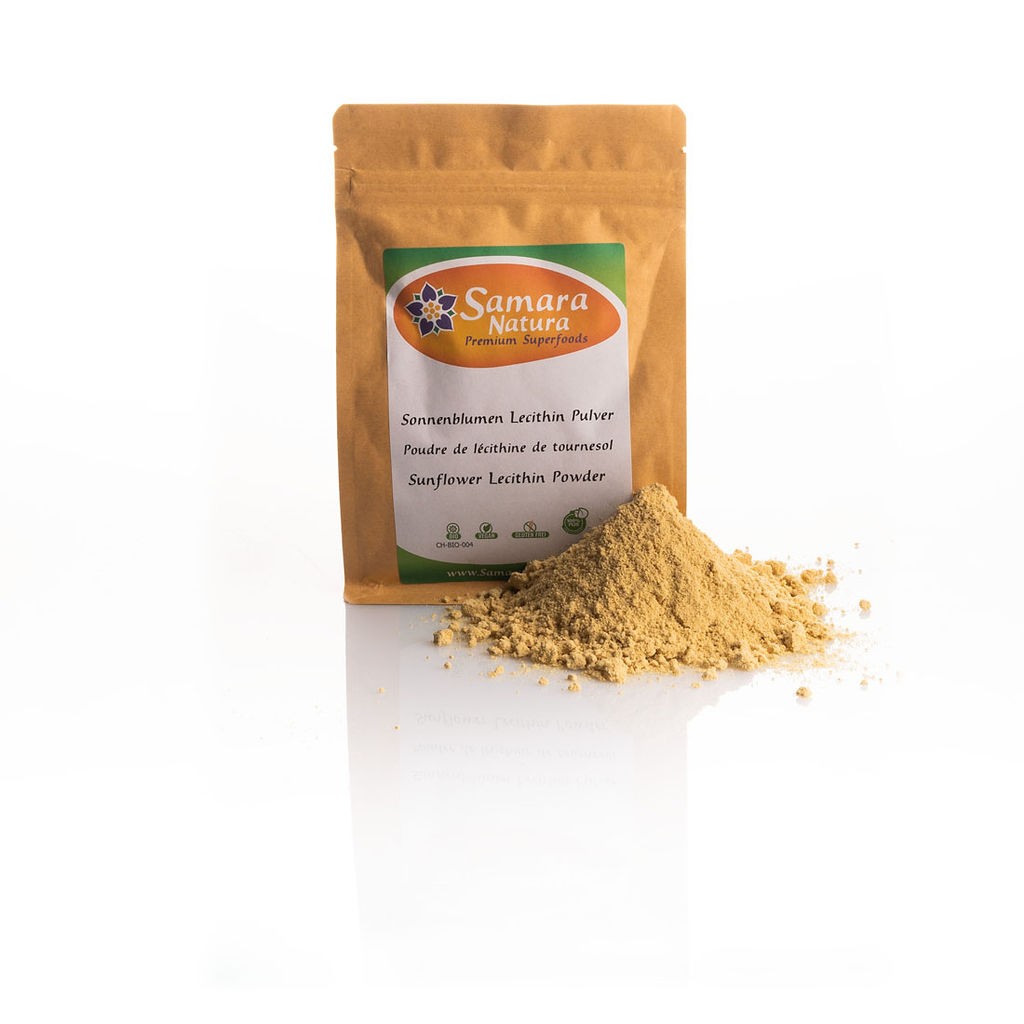
Update: The new batch with a best-before date of 28 February 2027 is now available. Organic sunflower lecithin powder with complete lecithin complex (100% natural) What makes our sunflower lecithin powder special? Our organic sunflower lecithin powder is a versatile natural emulsifier. Thanks to its unique composition, it effectively binds fat and water. Sunflower lecithin contains the natural total lecithin complex (a mixture of various phospholipids) derived from sunflower seeds. Phospholipids are, amongst other things, components of cell membranes and play an important role in our overall metabolism. The yellow sunflower lecithin is tasteless and free from gluten and carrier substances. Furthermore, it is generally GMO-free, as no genetic engineering is used in sunflower cultivation (unlike in soya cultivation). Where and how is our sunflower lecithin powder produced? Our sunflower lecithin powder is produced in China, as this is where the world’s only CO₂ de-oiling plant is located. To extract the oil, the organic sunflower seeds are mechanically pressed. The lecithin is then isolated from the oil using CO₂ extraction. The result is a powdered, de-oiled, pure lecithin. This process completely avoids the use of solvents. How should sunflower lecithin powder be used? Sunflower lecithin has a pleasant taste and is suitable as a food supplement for smoothies and muesli, as well as an emulsifier. Sprinkle 1 heaped tablespoon (approx. 10g) over muesli or add it to smoothies and nut milk. Suitable for chocolate production and for making ice cream. It can also simply be eaten on its own. Sunflower lecithin should be stored at room temperature, protected from light and moisture (always seal the bag tightly). Labelling 100% ORGANIC SUNFLOWER LECITHIN EMULSIFIER (E322). Allergic reactions Although it is generally allergen-free, we have received information from a customer who has a severe allergy to sunflower seeds that they also experience allergic reactions to sunflower lecithin. We therefore recommend that consumers who are allergic to sunflower seeds use sunflower lecithin with caution or avoid it altogether. Possible alternatives include soya lecithin or almond paste, which also contains lecithin. Usage Sunflower lecithin can be used both as a dietary supplement and as an emulsifier for drinks. As a guide for a smoothie or as an addition to muesli, we recommend 1 heaped tablespoon (approx. 10g).For making almond milk, we recommend 25–40 grams of sunflower lecithin per litre. Pack sizes 200g sachet of powder. Best-before date The current batch has a best-before date of 30 June 2026. Nutritional values for sunflower lecithin powder per 100g Energy 3150 kJ/750 kcalFat 91gof which saturated fatty acids 11gof which monounsaturated fatty acids: 9gof which polyunsaturated fatty acids 30gCarbohydrates 8gof which sugars 3gProtein <0.3gSalt 0.0g
Content: 200 Gramm (CHF 14.73 / 100 Gramm)
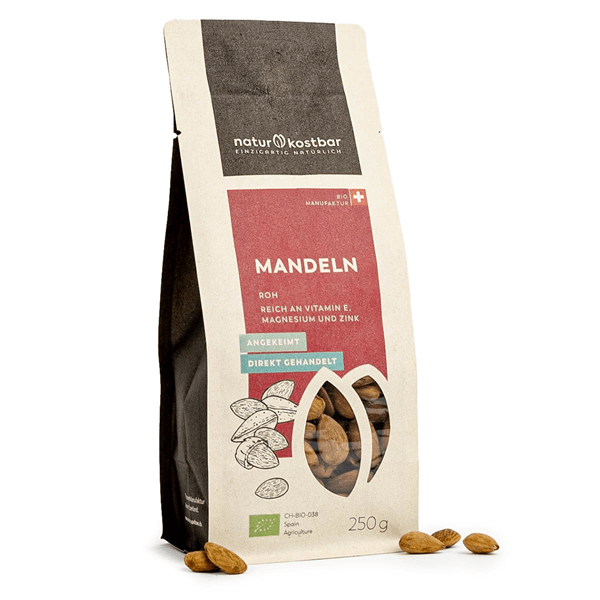
Organic sprouted almonds – double the magnesium and calcium content These organic almonds from Spain are soaked and sprouted at the Naturkostbar factory for several hours. They are then dried for 24 hours at a maximum temperature of 42°C. The sprouting process neutralises the phytic acid present in the almonds and significantly increases their nutrient density. It also makes the almonds easier to digest, which in turn improves nutrient absorption. An analysis of the magnesium and calcium content of raw and sprouted almonds reveals clear differences: Magnesium mg/kg Calcium mg/kg Unsprouted almonds 1140 1430 Sprouted almonds* 2470 3320 *Measured by Wessling Group AG on behalf of Naturkostbar. Uses for sprouted almonds Like normal almonds, sprouted almonds are ideal as a snack on their own or mixed with dried fruit and cocoa nibs to make trail mix. Additional information Contents: 250g bag. Warning: May contain shell fragments. Origin and production: Organic almonds from Spain, sprouted at the Naturkostbar factory in Uetendorf near Thun. Organic certification: CH-BIO-086 Nutritional values for sprouted almonds Nutritional values (average)per 100g/100ml%11Reference intake for an average adult (8400 kJ/2000 kcal) Energy 2508 kJ (607 kcal) 30% Fat 53 g 76% of which saturated fatty acids 5.08g 25% of which monounsaturated fatty acids 36g 240% of which polyunsaturated fatty acids 11.9g - Carbohydrates 3.9g 2% of which sugars 3.5g 4% Fibre 12.6g 25% Protein 22.3g 45% Salt 0.03g 1% Beta-carotene (provitamin A) - - Vitamin A - - Vitamin B1 0.3 mg 27% Vitamin B2 0.4 mg 29% Vitamin B3 4.2 mg 26% Vitamin B6 0.1 mg 7% Vitamin B12 - - Vitamin C - - Vitamin D - - Vitamin E 12 mg 100% Vitamin K - - Biotin 10 µg 20% Calcium 270 mg 34% Chloride 40 mg 5% Chromium - - Iron 4.8 mg 34% Fluoride - - Folic acid/folacin 48 µg 24% Iodine 2 µg 1% Potassium 760 mg 38% Copper - - Magnesium 240 mg 64% Manganese - - Molybdenum - - Pantothenic acid 0.5 mg 8% Phosphorus 510 mg 73% Selenium - - Zinc 6 mg 60%
Content: 250 Gramm (CHF 5.70 / 100 Gramm)
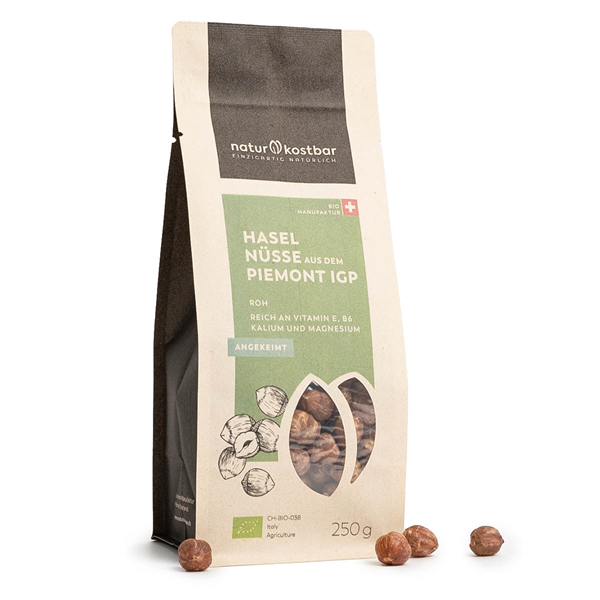
Organic sprouted hazelnuts - double the magnesium and calcium content The organic hazelnuts from Piedmont are soaked and sprouted in the Naturkostbar factory for several hours. They are then dried for 24 hours at a maximum temperature of 42° C. Germination neutralises the phytic acid present in the hazelnuts and significantly increases the nutrient density. In addition, the hazelnuts can be digested better, which also improves nutrient absorption. Use of sprouted hazelnuts Like normal hazelnuts, sprouted hazelnuts are suitable as a snack on their own or mixed with dried fruit and cocoa beans to make a delicious trail mix. Additional information Contents: Bag with 250g. Caution: May contain pieces of shell. Origin and production: Organic hazelnuts from Piedmont (Italy), sprouted in the Naturkostbar Manufaktur in Uetendorf near Thun. Organic certificate: CH-BIO-086 Nutritional values of sprouted hazelnuts Nutritional values Øper 100g/100ml%11 Reference quantity for an average adult (8400kJ/2000kcal) Energy 2650kJ (643kcal) 32% fat 59.5g 85% of which saturated fatty acids 4.2g 21% of which monounsaturated fatty acids 46.6g 311% of which polyunsaturated fatty acids 6.5g - Carbohydrates 6.9g 3% thereof sugar 4.3g 5% Dietary fibre 9.7g 19% Protein 15.2g 30% salt 0.01g 0% B-carotene (provitamin A) - - Vitamin A - - Vitamin B1 0.27mg 25% Vitamin B2 0.1mg 7% Vitamin B3 1.3mg 8% Vitamin B6 0.5mg 36% Vitamin B12 - - Vitamin C - - Vitamin D - - Vitamin E 27mg 225% Vitamin K - - biotin - - calcium 160mg 20% chloride 11mg 1% chromium - - iron 3.6mg 26% fluoride - - Folic acid/folacin 41µg 21% iodine 6.5µg 4% Potassium 720mg 36% Copper - - magnesium 160mg 43% manganese - - molybdenum - - Pantothenic acid 1.2mg 20% phosphorus 320mg 46% selenium - - Zinc 2.9mg 29%
Content: 250 Gramm (CHF 7.56 / 100 Gramm)
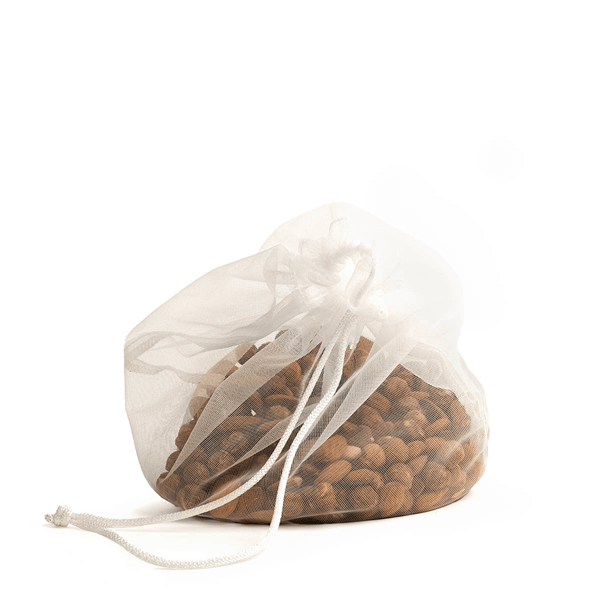
High-quality nylon nut milk bag Making your own nut milk is actually quite simple. Hazelnuts, almonds, macadamia nuts, cashews and even sesame or hemp seeds (shelled or unshelled) are all suitable. We stock a wide range of natural and sprouted nuts. The best thing is to just give it a go – the proof is in the pudding! Advantages and disadvantages of fresh nut milk Freshly made nut milk isn’t just delicious, it’s also a source of vitamins, minerals, enzymes, unsaturated fatty acids and antioxidants. As fresh nut milk contains no additives and is unpasteurised, it goes off after just 24 hours in the fridge. We therefore recommend only making small quantities at a time. Origin of the nut milk bag The high-quality Naturkostbarnut milk bag comes from a small business in Arizona. Two friends – Karla and Elaina – developed and sewed the first nut milk bag here in 1999 for their raw food events. In doing so, they simplified the process of making nut milk, as the dripping and the hassle of using cheesecloth were, understandably, too fiddly for them. With great care and high standards of quality, Karla has been crafting these premium nut milk bags in her workshop ever since. Elaina’s company distributes the products. What material is the nut milk bag made of? The nut milk bag is made from nylon. How do I use the nut milk bag? To make nut milk: Soak one to two cups of nuts overnight in fresh water. During soaking, enzymes (phytases) are produced which break down the phytic acid, making the nuts easier to digest. Pour away the soaking water and rinse the nuts briefly. Blend the nuts with 2–3 cups of fresh water.The more powerful the blender, the better. Strain the blended mixture through the nut milk bag into a saucepan and squeeze gently. You can dry the fibre left in the nut milk bag and process it into nut flour using a blender. Pack the flour in an airtight container and store it in the fridge. It makes a high-fibre ingredient for cakes, biscuits, crêpes, etc.